Search This Blog

Showing posts with label Ancestors. Show all posts

Friday, 10 November 2023

Exciting News!


 I'm absolutely thrilled to announce that I've just signed a new contract with Pen & Sword to republish my book The Children History Forgot! The book has been out of print for some time now, and will appear under the title Young Workers of the Industrial Age: Child Labour in the 18th and 19th Centuries. 

I'll post updates on my blog nearer publication date - currently provisionally the summer of 2024. 

Meanwhile, my other Pen & Sword titles are on special offer at the moment - do take a look if you need some ideas for Christmas presents!

All images from my collection.


Tuesday, 5 February 2019

Saving Lives At Sea - Ancestors

Marryat's lifeboat, 1820. 
My latest feature for Discover Your Ancestors online magazine is on the history of the lifeboat service.

The RNLI’s orange-and-blue lifeboats are a familiar sight on our coastline – and on TV. Its brave crews have saved lives at sea for almost two centuries.


Often several generations of the same family have served on lifeboat crews, and my article includes tips for researching your lifeboat ancestors. You can also find out more about lifeboat history here on the RNLI website. The RNLI even has its own archive and library, and you can also visit one of its six museums.

Image from author's collection: 'Captain Marryat’s design for a new lifeboat', Gentleman’s Magazine, May 1820.

Tuesday, 19 June 2018

Manchester Cathedral

The earliest written record of Manchester’s churches may be the two mentioned in William the Conqueror’s Domesday Book of 1086. St Mary’s and St Michael’s held a ‘carucate’ of land (about 120 acres). St Mary’s may have been located on or near the site of the modern Cathedral. St Michael’s may have been at Ashton-under-Lyne.
In 1421 Thomas La Warre, the lord of the manor, founded a ‘college’ of a warden and eight fellows to care for Manchester parish. The ‘collegiate church’ was endowed with lands, and a brand new building was built. Local worthies and merchants like the Stanley family beautified the new church.
Collegiate Church interior.

If your ancestor lived in Manchester parish before the 1850s, they were most likely baptized or married at the Collegiate Church (later the Cathedral). This is because for historical reasons, when a person was baptised or married at any church within the parish, the family paid two fees, one to the incumbent of their church of choice – and one fee to the Collegiate Church. But if people held the ceremony at the Collegiate Church, they only paid one fee. Mass baptisms and weddings were a regular sight at the Collegiate Church, so you should check those registers first if you are looking for a Manchester ancestor.

In 1847 the diocese of Manchester was created, and the Collegiate Church became a cathedral, dedicated to St Mary, St Denys and St George. The best way to access the Cathedral registers is via Ancestry.co.uk (free on Manchester library PCs) or on microfilm at Manchester Central Library. The Lancashire Online Parish Clerks website has some free transcripts of the Cathedral and Collegiate Church parish registers. My book also has more information on the history of the Cathedral and its records.

The Cathedral suffered greatly from bomb damage during WWII, but was painstakingly rebuilt. The modern day Cathedral has a visitor centre, which is open daily.

Tuesday, 24 April 2018

Manchester Suffragettes and Suffragists

Lydia Ernestine Becker, suffragist.
Today a statue of Millicent Garrett Fawcett was unveiled near Parliament. My latest feature for Discover Your Ancestors online magazine explores the fight for women's rights by Manchester suffragettes and suffragists during the late nineteen and early twentieth centuries.

In the mid-to-late 1860s, Manchester committees to campaign for women’s property and voting rights were founded by Elizabeth Wolstenholme (later Elmy), Lydia Ernestine Becker, Emily Davies, Alice Scatcherd and others.

‘Suffragists’ like Lydia Becker and Margaret Ashton argued that voting reform should be fought for using only peaceful, constitutional means. The suffragists scored a major victory in 1869 when property-owning women were given the right to vote in local government elections and act as Poor Law Guardians.

But women (and working-class men) still could not vote in national elections. Sheer frustration at successive governments' refusal to give women the vote led 'suffragettes' like Manchester-born Emmeline Pankhurst and her daughters to take direct action. However, it was not until 1928 that all women over the age 21 of were given the vote, and put on an equal footing with men.
The Pankhurst Centre, Manchester

My book Tracing Your Manchester and Salford Ancestors has several tips for researching suffragette and suffragist sources in Manchester libraries and specialist archives. I also thoroughly recommend visiting Emmeline Pankhurst’s home at 62 Nelson St, Manchester, which is now a museum and heritage centre, if you wish to find out more about the suffragettes' story.

Images:
Lydia Ernestine Becker (1827–1890), an early campaigner for women’s political rights and founder member of the National Society for Women’s Suffrage in 1867. Manchester Faces and Places Vol. 1, J. G. Hammond & Co., c. 1895. Author’s collection.

62 Nelson St, Manchester, now the Pankhurst Centre. Emmeline Pankhurst and her daughters lived here from 1897–1907. © Sue Wilkes.

Wednesday, 10 January 2018

Full Steam Ahead! Made in Manchester

Ancoats mills at dinnertime.
The earliest factories were water-powered, so they were built by fast-flowing streams. The advent of steam power meant that factories could now be built wherever coal was plentiful, so Manchester and Salford were prime spots for industry.

One of the first manufacturers to use steam to power his mill machinery was Peter Drinkwater, who built a cotton-spinning mill in Manchester in 1789. Drinkwater’s mill had the first Boulton and Watt steam engine in the city. Around this time, James Bateman and William Sherratt set up a factory in Salford which made mill machinery components, and a pirated version of Boulton and Watt’s rotary steam engine.

Cotton factories and their contents were highly combustible, and Philips and Lee built the first ‘fireproof’ mill in the area (with cast-iron beams) in 1801.This mill, on Chapel Street in Salford, was also the first factory in Britain lit by gas.


By 1816, Manchester contained forty-three working mills; the largest employer was McConnel & Kennedy, with over 1,000 workers. These early factories ran day and night, which was very hard on their child workers.

The Manchester Statistical Society reported in 1837–8 that Manchester had 5,272 cotton spinning and weaving mills powered by steam; Salford had 761 steam-powered cotton mills. Manchester had 756 bleaching, dyeing and print-works powered by steam, and Salford had 521 steam-powered factories. Foundries, silk mills, breweries, saw-mills, collieries and chemical works in the area were also steam-powered.
Nasmyth's factory flat at Manchester. 

Scotsman James Nasmyth (1808–90), one of the most famous engineers of his day, set up his own business at Dale Street in Manchester in the 1830s.

He later founded the Bridgewater Foundry at Patricroft, Eccles, and the first steam hammer in Britain was forged there.


Sir Joseph Whitworth (1803–87)’s Chorlton Street works in Manchester made machine tools, guns and cannon. William Fairbairn had a huge works on Canal Street in Ancoats which made boilers and bridges. Platt Brothers made textile machinery at Oldham; this firm also had its own forges, rolling-mills and brick-works. Sharp, Roberts & Co.’s world-famous Atlas Works, founded in the late 1820s in Manchester, made locomotive engines.


As Victoria’s reign advanced, Manchester’s industries continued to thrive. At Gorton, Beyer-Peacock began manufacturing locomotives in the 1850s, the Ashbury Railway Carriage Company made railway carriages and waggons, and Crossley Brothers made engines and pumps.

The steam-engine galleries at Manchester's Museum of Science and Industry often have the engines in steam, and you can get a real sense of their sound and energy when they are busy working!


Images:
Nasmyth’s restored steam hammer on display near Eccles. Copyright Sue Wilkes.
Nasmyth’s Dale Street factory.
A steamer passing Trafford Swing Bridge. Illustration by H. E. Tidmarsh, Manchester Old and New Vol. III., Cassell & Co., c.1894.
James Watt’s first rotary steam engine.
Ancoats mills at dinnertime, Manchester. Illustration by H. E. Tidmarsh, Manchester Old and New Vol. II, (Cassell & Co., c. 1894). 

Tuesday, 20 June 2017

Regency Manchester Guest Post

From J. Aston's Picture of Manchester, 1826, courtesy Google Books.
Visit the fabulous All Things Georgian blog by fellow Pen and Sword authors Joanne Major and Sarah Murder to read my guest post on Regency Manchester!

Wednesday, 17 May 2017

Was Your Ancestor A Peterloo Casualty?

Peterloo print, courtesy Library of Congress.
This summer, Manchester and Lancashire Family History Society (MLFHS) is launching a project to find the descendants of the people who were present at the Peterloo Massacre on 16 August 1819.

On this dreadful day in Manchester's long history, sixty to eighty thousand people - including women and children -  had assembled at St Peter’s Field to attend a meeting on parliamentary reform, with Henry 'Orator' Hunt as the keynote speaker.

Although the meeting was peaceful, local magistrates, fearing that a riot was imminent, ordered yeomanry cavalry into the crowd to arrest Hunt.

The Manchester and Salford Yeomanry rode into the crowd, brandishing their sabres. But the people could not move to give them room.The horses panicked; the yeomanry lost their temper, and began hacking their way through. Over four hundred people were injured - many wounds were from sabre cuts - and between eleven and fifteen people died (accounts disagree).
Plaque commemorating the Peterloo victims.

The true number of casualties has never been completely ascertained. Many books have been written on Peterloo, including this one by Professor Michael Bush; my new book has some tips on researching Peterloo, too. There's also info and transcripts of contemporary documents here on the Peterloo Witness Project.

MLFHS is setting up a new website to discover people's family history stories which will go live on 1 June. If you are interested in contributing to this project, please visit the website when live, or contact the project manager Rod Melton by email at peterloo@mlfhs.org.uk.

Or if you are visiting Manchester Central Library after the project launches, Rod Melton will be available each Tuesday between 10:30 and 15:00. Please go to the Manchester and Lancashire Family History desk and ask for Rod and he will come down to see you.

The hope is to create a fitting and lasting memorial to all the victims of that fateful day.

Thursday, 6 April 2017

New Release: Tracing Your Manchester and Salford Ancestors

I'm thrilled to announce that Tracing Your Manchester and Salford Ancestors has been released early! It's currently on special offer here on the Pen & Sword website, and should soon be in stock on Amazon.
Suffragist Lydia E. Becker.

Here's the blurb:
'For readers with family ties to Manchester and Salford, and researchers delving into the rich history of these cities, this informative, accessible guide will be essential reading and a fascinating source of reference. 
    Sue Wilkes outlines the social and family history of the region in a series of concise chapters. She discusses the origins of its religious and civic institutions, transport systems and major industries. Important local firms and families are used to illustrate aspects of local heritage, and each section directs the reader towards appropriate resources for their research. No previous knowledge of genealogy is assumed and in-depth reading on particular topics is recommended. The focus is on records relating to Manchester and Salford, including current districts and townships, and sources for religious and ethnic minorities are covered. A directory of the relevant archives, libraries, academic repositories, databases, societies, websites and places to visit, is a key feature of this practical book'.
Salford hero Mark Addy.

Tomorrow, I'm visiting the WDYTYA Live! show at the NEC, and if all goes to plan, I'll be signing copies of my new book at the Pen & Sword stand. Hope to see you there!

Black-and-white images from Manchester Faces and Places, Vol. I, J.G. Hammond & Co., c.1889. 
Manchester New Synagogue and Beth Hamedrash, Cheetham Hill.

Monday, 20 March 2017

84 Plymouth Grove, Manchester

84 Plymouth Grove.
Recently I had a very enjoyable visit to Mrs Gaskell's former home in Manchester - somewhere I've longed to explore for ages.

In this house (no. 42 in Gaskell's lifetime) Elizabeth wrote Cranford, Ruth, North and South, The Life of Charlotte Bronte, and her last, unfinished work, Wives and Daughters.

(Mary Barton was written at one of the Gaskells' previous houses, 121 Upper Rumford St in Manchester).


Family portraits and heirlooms.

Elizabeth grew to love her new home; there was plenty of room for family and friends, and it had a large garden for her children to play in.

William had his own study for his writing and pastoral work; Elizabeth often wrote at a round desk in the dining room.

After Elizabeth's sudden death in 1865, her husband William and unmarried daughters Meta and Julia stayed in the house. The two sisters were well known locally for their charity work.


Elizabeth's wedding veil. 

The house has been restored and furnished in a similar fashion to how the Gaskells would have known it; you can also see some family heirlooms, including Elizabeth's wedding veil, which was worn by her daughter Marianne on her own wedding day.


You have to pay for admission, but your ticket lasts for 12 months, so don't lose it! It was a cold, wet day when I visited, but it would be nice to explore the garden again in the summer.


Blue Plaque.
The dining room.

Thursday, 2 March 2017

The March of the Blanketeers: March 1817

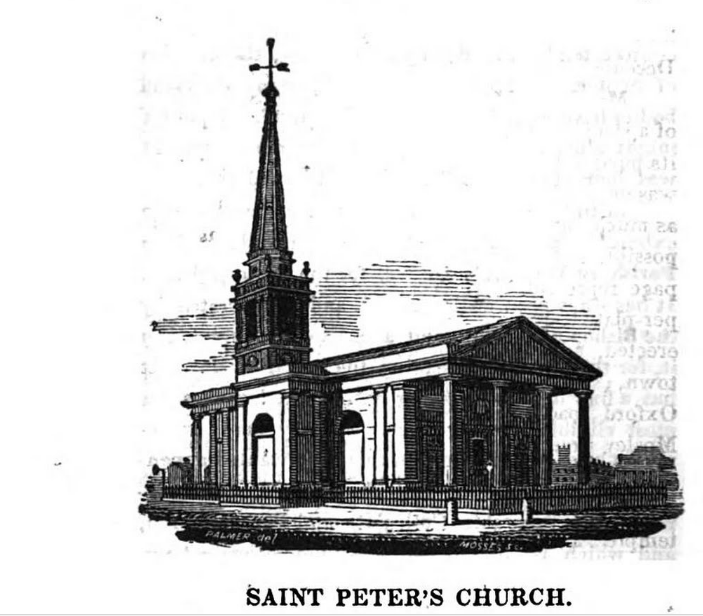
St Peter's Church in the early 1800s. 
Following the Spa Fields riot in London in 1816, the authorities in north-west England were very worried about local unrest. This was a time of great hardship for workers like the cotton weavers; many were starving.

The increasingly oppressive Lord Liverpool administration believed it faced a widespread underground movement plotting revolution. On 3 March 1817, the government suspended the Habeas Corpus Act: people could now be imprisoned without trial. 

All the Radicals in northwest England - those campaigning for parliamentary reform like weaver Samuel Bamford - were kept under close surveillance. Several spies were at work in the Manchester area, including Michael Hall (code-name ‘No. 1’) and James Rose (‘No.2’). 
Sometime around this date, Liverpudlian
Spy report from Hall and Rose, Dec 1816. HO40/10.
Joseph Mitchell, William Benbow and others decided to stage a grand march from Manchester to London. If those in power understood the depths of the weavers’ suffering, surely they would lower prices and help them find work? Each man would carry a petition to the Prince Regent; once he realized their distress, of course he would help them. Everyone would carry a blanket for their journey (so they were dubbed the ‘Blanketeers’).

The Blanketeers planned carefully. Each man would take three days’ provision in a knapsack; oatmeal and water was ‘the most nutritious and cheap’ food. They hoped that sympathisers along the route would put them up for the night, or maybe they could sleep in church halls. Some cotton spinners sent subscriptions of 5s each, and one friendly society sent £20.

The men would set off for London in groups of ten, headed by a leader with a petition tied round his arm; each leader would be under the control of a captain. Everything was now set for their grand march. 

But the government were not prepared to risk the spectre of a large body of men descending on the capital. What if riots broke out, as had so recently happened at Spa Fields? On the afternoon of 8 March, Bow St magistrate Robert Baker arrived in Manchester with warrants for the arrest of the northern reformers; several were caught and imprisoned.  

The plan was to stop the Blanketeers before they could pass the river Mersey. Baker was still sanguine that few would join the march; the weather was extremely poor. Nevertheless, Sir John Byng’s troops were ready and waiting to pounce as the Blanketeers gathered on the morning of 10 March. 
Letter re the Blanketeers' march, 10 March 1817. The signature was cut off the letter.
That evening, a Manchester man wrote to his father with exciting news: ‘We have today had the largest meeting of the lower orders ever known in this Town. They met near to St Peter’s Church where a Stage was erected for the Speakers to address them. The Soldiers and Constables were all upon the alert and about 11 O’clock the Horse Soldiers rode in upon them and succeeded in securing the whole of the Speakers and about 20 or 30 more of the ringleaders. They were sent to the New Bailey [the prison in Salford].

More Blanketeers were arrested at Heaton Norris, Stockport and Macclesfield by the yeomanry cavalry. Only one man reached London to hand in his petition: the grand march was over. 
The arrested Blanketeers were never brought to trial; they rotted in prison for several months before being released. 


Monday, 20 February 2017

Lancashire Archives: Red Rose Collections

Lancashire Archives, Preston has just launched its new online digital resource, the Red Rose Collections. (It replaces the old Lancashire Lantern website). This wonderful resource includes: over 30,000 historic photos, an index to old Lancashire newspapers, an index to historical documents including Whittingham Asylum records, an index to the Preston Guild Rolls 1397-1992, an index of officers who served in Lancashire Constabulary, and the Fleetwood Online Archive of Trawlers.
If you find a record relating to the ancestor you are interested in, then you can contact Lancashire Archives and order a copy (but sadly an ordering facility is not currently available for the photos of Fleetwood trawlers).
There is also an ongoing project to index people and places named in the local history book collection, these indexes will appear on the Lancashire Libraries catalogue.
I did a 'quick search' for 'Manchester', and 'Salford' in the online search box and there were over 2000 results for Manchester and nearly 800 for Salford, so if your ancestors came from those cities or any other towns in historic Lancashire, it's well worth your time exploring the site.

It's worrying, however, that Lancashire County Council is thinking of making more changes to services like libraries owing to the unprecedented squeeze on local authority funding by the government - this is on top of the recent closures of five Lancashire's museums.
To think when I was growing up, I took it for granted that amenities like libraries and museums and social housing were an immutable part of the landscape. By the Tories' austerity ideology has run its full course we will have nothing left. There would be plenty of money for all these facilities if the big corporations and businesses paid a meaningful amount of tax instead of parking it offshore. In my humble opinion, anyway.

Tuesday, 3 January 2017

Back To Work!

I hope you all had a fantastic break! I have got lots of work to do over the next few weeks, so there may be radio silence for a while. In the meantime, for the bicentenary of Jane Austen's death, I have a feature on Austen's life coming up in the Discover Your Ancestors 2017 bookazine.
On the family history front, the January issue of Your Family History has my article on researching small businesses. Sometime in April, my new book, Tracing Your Manchester and Salford Ancestors will be published by Pen & Sword.
Events are also being planned for the bicentenary of the Pentrich Rebellion this June, and you can read the story of the rebels and their fate in Regency Spies.
Image: ‘The late E.W. Roylance’. At least four generations of the Roylance family, grocers and importers, were engaged in the Irish and foreign butter trade in the Manchester area. H.B. Wilkinson, Old Hanging Ditch, Sherratt & Hughes, 1910.

Tuesday, 25 October 2016

Roman Catholic Ancestors


Liverpool Metropolitan Cathedral.
My latest feature for Your Family History magazine (November issue) is on tracing Roman Catholic ancestors.

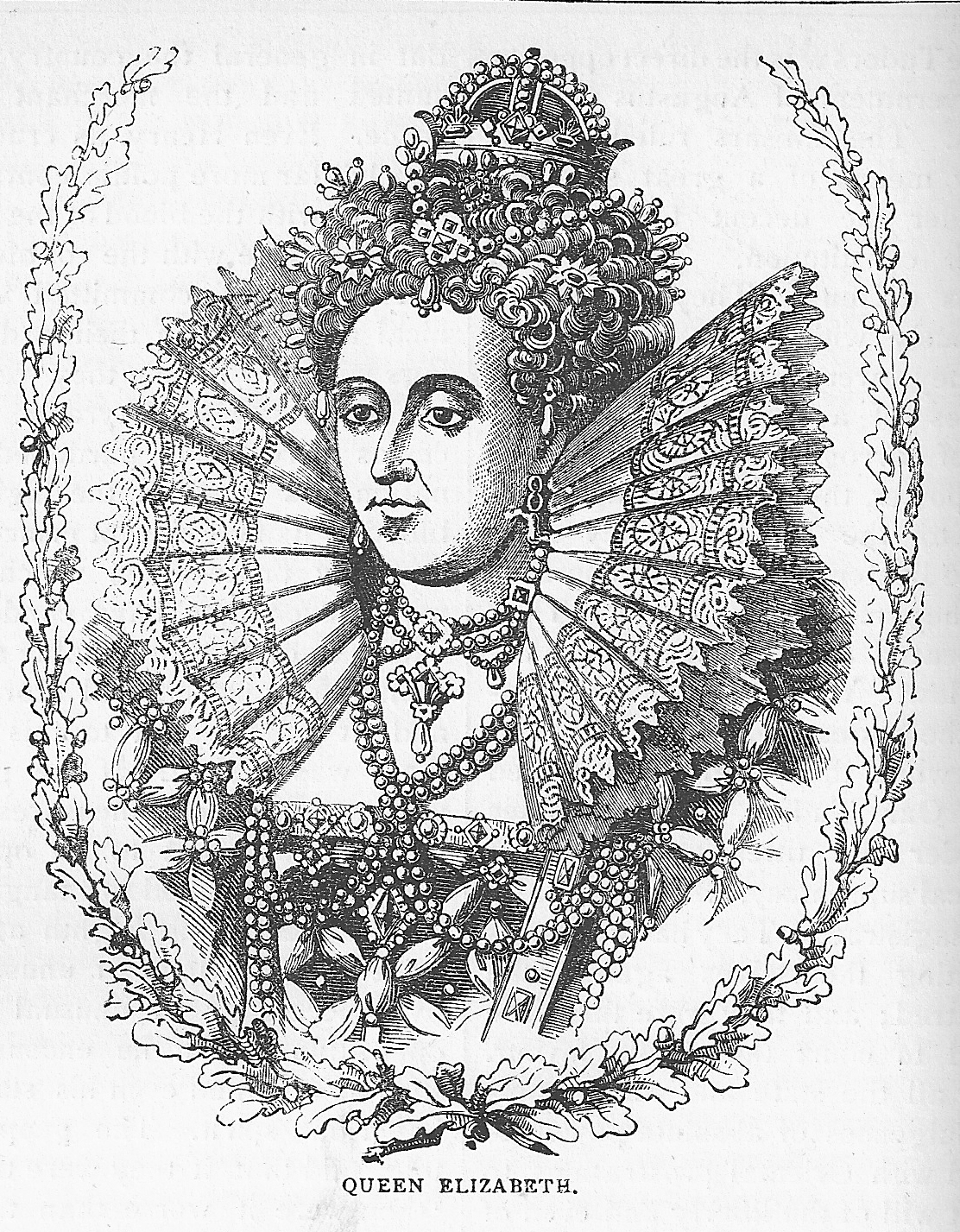
In 1534 Henry VIII severed the country’s links with Rome and the Pope, and the Anglican Church was born. Elizabeth I confirmed the Anglican Church’s status with the Act of Supremacy (1559), and the introduction of the Book of Common Prayer. 

 Although there were penalties for ‘recusancy’, Roman Catholics wished to be baptized and married according to the rites of their church. Lancashire families in particular clung on stubbornly to the ‘old religion’. So your Catholic ancestors may have been baptized, or married, once in an Anglican church, and again in a Catholic church in secret.
Things improved for Catholics following the Catholic Emancipation Act of 1829.

Furness Abbey.
I’ll be exploring this subject further in Tracing Your Manchester and Salford Ancestors, which will be published by Pen and Sword in the spring of next year. In the meantime, the MLFHS website has a free list of RC churches in Manchester and Salford, with addresses and dates of their opening and closure, and name changes.
Images:

Liverpool Metropolitan Cathedral, consecrated in 1967. © Sue Wilkes.
Elizabeth I. Pictorial Record of Remarkable Events, (Frederick Warne & Co., 1896).
Chapter House, Furness Abbey. Engraved by R. Sands from a drawing by T. Allom. People’s Gallery of Engravings Vol.2 (Fisher, Son & Co., 1845). 

Monday, 5 September 2016

Lancashire's Heritage Crisis

Weaving shed, Queen St Mill.
On Saturday we visited Queen Street Mill at Harle Syke, Briarcliffe, near Burnley. This amazing site is Lancashire's last surviving steam-powered weaving mill.

The mill, a Grade I listed building, is home to a nationally important collection of textile machinery, along with its sister site, Helmshore Mills at Rossendale (another fantastic museum, which I visited while researching my book Narrow Windows, Narrow Lives).
The mill chimney.


Queen Street Mill originally housed 1,000 powerlooms; it was built in 1894 for the Queen St Mill Manufacturing Company.

You can see 'Peace', the 500hp engine which powers the weaving shed, and the boiler house is still home to the original Lancashire boiler. It was stiflingly hot in the boiler house (2 newer Lancashire boilers, made at Hyde in 1901, heat the water for the engine). Water is supplied from the mill pond.
When the engine is 'in steam', you can see several looms at work; the weaving shed houses about 300 looms. The noise was absolutely deafening, so it must have been unbelievably loud when all the looms were in use. The warehouse has several examples of different looms, including a Jacquard loom capable of weaving a tapestry. I was also very interested to see a demonstration of terry-towelling weaving, which I haven't seen before. You can buy towels, aprons and fabric woven at the mill in the gift shop.

Lancashire boilers need a lot of coal for fuel.
Peace, the 500hp mill engine.
I am sorry to say that Queen St and Helmshore both face imminent closure, along with three other Lancashire heritage sites  - victims of council cuts necessitated by Tory austerity policies which have disproportionately targeted the north and inner-city regions. The other Lancashire museums now at risk are the Judges' Lodgings, Lancaster; the Maritime Museum, Fleetwood; and the Museum of Lancashire, Preston
The closure of these five museums - now in a last-ditch fight to save their collections - will save the council just £64.2million, according to the Museums Association.
It seems a relatively small price to pay to keep these irreplaceable heritage sites open to the public, so if you happen to be a multi-millionaire or billionaire philanthropist with some spare cash, please contact the museums if you would like to help.
Queen St Mill and many other sites nationwide are open free of charge next weekend as part of the Heritage Open Days event, so do take this opportunity to visit.

Terry-towelling loom at Queen St mill.
Jacquard loom at Queen St Mill.
I am desperately saddened by the prospect of these museums' closure, and I sincerely hope that a way can be found to preserve them for future generations, so that tomorrow's children can see how their Lancashire ancestors lived and worked.
All photos © Sue Wilkes.