Search This Blog

Showing posts with label Radicals. Show all posts

Wednesday, 17 May 2017

Was Your Ancestor A Peterloo Casualty?

Peterloo print, courtesy Library of Congress.
This summer, Manchester and Lancashire Family History Society (MLFHS) is launching a project to find the descendants of the people who were present at the Peterloo Massacre on 16 August 1819.

On this dreadful day in Manchester's long history, sixty to eighty thousand people - including women and children -  had assembled at St Peter’s Field to attend a meeting on parliamentary reform, with Henry 'Orator' Hunt as the keynote speaker.

Although the meeting was peaceful, local magistrates, fearing that a riot was imminent, ordered yeomanry cavalry into the crowd to arrest Hunt.

The Manchester and Salford Yeomanry rode into the crowd, brandishing their sabres. But the people could not move to give them room.The horses panicked; the yeomanry lost their temper, and began hacking their way through. Over four hundred people were injured - many wounds were from sabre cuts - and between eleven and fifteen people died (accounts disagree).
Plaque commemorating the Peterloo victims.

The true number of casualties has never been completely ascertained. Many books have been written on Peterloo, including this one by Professor Michael Bush; my new book has some tips on researching Peterloo, too. There's also info and transcripts of contemporary documents here on the Peterloo Witness Project.

MLFHS is setting up a new website to discover people's family history stories which will go live on 1 June. If you are interested in contributing to this project, please visit the website when live, or contact the project manager Rod Melton by email at peterloo@mlfhs.org.uk.

Or if you are visiting Manchester Central Library after the project launches, Rod Melton will be available each Tuesday between 10:30 and 15:00. Please go to the Manchester and Lancashire Family History desk and ask for Rod and he will come down to see you.

The hope is to create a fitting and lasting memorial to all the victims of that fateful day.

Thursday, 2 March 2017

The March of the Blanketeers: March 1817

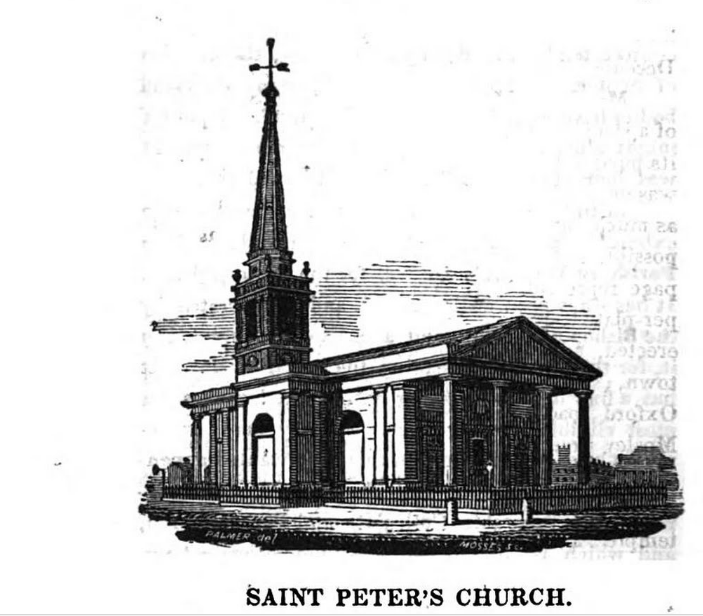
St Peter's Church in the early 1800s. 
Following the Spa Fields riot in London in 1816, the authorities in north-west England were very worried about local unrest. This was a time of great hardship for workers like the cotton weavers; many were starving.

The increasingly oppressive Lord Liverpool administration believed it faced a widespread underground movement plotting revolution. On 3 March 1817, the government suspended the Habeas Corpus Act: people could now be imprisoned without trial. 

All the Radicals in northwest England - those campaigning for parliamentary reform like weaver Samuel Bamford - were kept under close surveillance. Several spies were at work in the Manchester area, including Michael Hall (code-name ‘No. 1’) and James Rose (‘No.2’). 
Sometime around this date, Liverpudlian
Spy report from Hall and Rose, Dec 1816. HO40/10.
Joseph Mitchell, William Benbow and others decided to stage a grand march from Manchester to London. If those in power understood the depths of the weavers’ suffering, surely they would lower prices and help them find work? Each man would carry a petition to the Prince Regent; once he realized their distress, of course he would help them. Everyone would carry a blanket for their journey (so they were dubbed the ‘Blanketeers’).

The Blanketeers planned carefully. Each man would take three days’ provision in a knapsack; oatmeal and water was ‘the most nutritious and cheap’ food. They hoped that sympathisers along the route would put them up for the night, or maybe they could sleep in church halls. Some cotton spinners sent subscriptions of 5s each, and one friendly society sent £20.

The men would set off for London in groups of ten, headed by a leader with a petition tied round his arm; each leader would be under the control of a captain. Everything was now set for their grand march. 

But the government were not prepared to risk the spectre of a large body of men descending on the capital. What if riots broke out, as had so recently happened at Spa Fields? On the afternoon of 8 March, Bow St magistrate Robert Baker arrived in Manchester with warrants for the arrest of the northern reformers; several were caught and imprisoned.  

The plan was to stop the Blanketeers before they could pass the river Mersey. Baker was still sanguine that few would join the march; the weather was extremely poor. Nevertheless, Sir John Byng’s troops were ready and waiting to pounce as the Blanketeers gathered on the morning of 10 March. 
Letter re the Blanketeers' march, 10 March 1817. The signature was cut off the letter.
That evening, a Manchester man wrote to his father with exciting news: ‘We have today had the largest meeting of the lower orders ever known in this Town. They met near to St Peter’s Church where a Stage was erected for the Speakers to address them. The Soldiers and Constables were all upon the alert and about 11 O’clock the Horse Soldiers rode in upon them and succeeded in securing the whole of the Speakers and about 20 or 30 more of the ringleaders. They were sent to the New Bailey [the prison in Salford].

More Blanketeers were arrested at Heaton Norris, Stockport and Macclesfield by the yeomanry cavalry. Only one man reached London to hand in his petition: the grand march was over. 
The arrested Blanketeers were never brought to trial; they rotted in prison for several months before being released. 


Thursday, 29 September 2016

Invisible Women?


Mary Wollstonecraft

Mary Wollstonecraft (1759–97) was one of the few women who spoke out during the turbulent era of Regency Spies to demand greater rights, and better education, for the female sex. Mary’s Vindication of the Rights of Man (1790) was a fiery reply to Edmund Burke’s reactionary response to the French Revolution’s ideals, Reflexions on the Revolution in France. Two years later, her Vindication of the Rights of Woman made her famous at home and abroad. But her untimely death following the birth of her daughter Mary, followed by husband William Godwin’s no-holds-barred biography, led to her ideas disappearing from view for many years.
But what did ordinary women think? Did they dream of a better society – or even of revolution? Sadly I did not have the space (or time) to explore this topic in Regency Spies, as noticed by Emma Jolly in her insightful review earlier this year.   
We know from newspaper reports that women like Hannah Smith (hanged at Lancaster Castle in 1812 for a Manchester food riot) sometimes took direct action during times of hardship. And female reformers from Oldham and Manchester were part of the vast crowd at Peterloo. (There’s more information on ‘Radical Women’, including Chartists, in my recent article in the September issue of Your Family History).
Peterloo Massacre
While researching Regency Spies, I found that women were only rarely mentioned as spies in the Home Office papers I studied (although as noted in my book, some evidence from this period is missing).  
One instance of a female spy is ‘Mary Brown’, listed in a ‘Key to Agents’ Names in Hampden Clubs’ in 1817. Women were seemingly more likely to act as informants; landladies sometimes had useful information for the authorities, as Radical meetings were often held in their pubs. (If any readers know of the exploits of any female spies, I would love to hear from you!).
Women were only occasionally mentioned by spies like William Oliver in their reports to the Home Office on rebel/revolutionary meetings. Oliver took great care to list all the men present, but this does not necessarily mean that women were absent; it could just mean that he thought that men were more of a threat to law and order.  
However, Henry Sampson, the Nottingham spy who was providing local reports on the Pentrich rebels, does say that Jeremiah Brandreth’s wife Ann was present while they were discussing ‘the Job’ (the rebellion) – although Sampson does not give her name. After the ill-fated rising, Ann (then pregnant with her fourth child) walked all the way from their home in Sutton-in-Ashfield to Derby to see Jeremiah while he was awaiting execution.
Mary Lee HO42/168


Also amongst the Home Office papers is a statement made by Mary Lee of Holmfirth (HO42/168, 5 July 1817). She had to give evidence regarding the planned uprising in the Huddersfield area that year; her husband Richard was knee-deep in the preparations. She told the authorities that the first time’ she ‘heard anything of a Revolution’ was on 19 May, when a man called and told Richard that ‘the Revolution was put off’. But Richard claimed that he ‘did not know there was to be a Revolution’. 
It must have been very difficult for women like Mary to give evidence on oath, knowing that their evidence could have dire consequences for their menfolk.


Images:
Mary Wollstonecraft.
Dr Syntax in an inn listening to reformers’ talk. Courtesy Library of Congress LC-USZC4-3647.  
The Peterloo massacre. The Yeomanry slash men, women and children with their sabres at a meeting to demand parliamentary reform at St Peter’s Field, Manchester as the Riot Act is read from a window. J. L. Marks, No. 2 Sandy's Row Bishopsgate St., 1819. Courtesy Library of Congress. LC-USZ62-138639  
Deposition of Mary Lee at the National Archives, Kew. HO42/168.


Wednesday, 3 February 2016

Radicals and Reform


Famous Radicals.

By the early 1790s, it was blindingly obvious to liberal-minded thinkers that Britain's corrupt electoral system was long overdue for reform. Unless you were a member of the governing elite, of course - the rich had inherited the earth, and their sons were destined to rule over the middle and lower classes.
The Radicals included some prominent Whigs like Charles James Fox and Sir Francis Burdett. They wanted the abolition of rotten boroughs, the introduction of annual parliaments, and a more representative franchise. Reformers harked back to the Magna Carta, the Bill of Rights and the Glorious Revolution of 1688, which they believed enshrined men’s civil liberties and rights. They looked back to a long-lost Saxon golden age in which all men had the vote. (On the other hand, the government asserted that there was no historical precedent for universal suffrage).
Major John Cartwright (1740–1824) was convinced that ‘many of the political evils of the day’ emanated from ‘ignorance of the principles of the constitution’.  This former naval officer, a neat, upright gentleman, had served with distinction until the American War of Independence, but resigned in disgust over what he perceived as Britain's unjust treatment of the colonists.
Charles James Fox.
Cartwright, a prolific writer and campaigner, believed that petitioning parliament was the only way to achieve radical reform. The Major was a founder member of the Society of Constitutional Information in 1780, along with John Horne Tooke and others. Even Pitt the Younger, then the great white hope of the reform movement, was a member – ironic considering his later treatment of the Radicals.
Thomas Paine.
In the 1790s, Thomas Paine’s revolutionary ideas were taken up by the Society of Constitutional Information and by the ‘corresponding societies’. These societies wrote to one another about parliamentary reform and the rights of man, and spread these ideas widely in Britain. One group, the United Englishmen, expressed the views of many freethinkers in its ‘Declaration, Resolutions and Constitution’: ‘The House of Commons...is now thoroughly corrupted, and from being the representative of a great and free People, is become a junto of Placemen, Pensioners and Court Dependents...The only effectual remedy...is a radical Reform of the Representation of the People in Parliament’ (PC/1/42/144, 1798).
Corresponding societies were formed in London, Manchester, Leeds,
Matthew Campbell Browne.
Nottingham, Norwich and Sheffield. The Sheffield Society for Constitutional Information had nearly two thousand members. The Society resolved that Paine should be thanked ‘for the affectionate concern he has shown in his second work on Behalf of the Poor, the Infant and the Aged; who notwithstanding the opulence which blesses other parts of the community, are by the grievous weight of Taxes, rendered the miserable victims of Poverty and wretchedness’. (Resolutions of the SSCI, 14 March 1792, Sheffield Archives, MD 251).
The government's spies kept close watch on the corresponding societies. Although most of the societies' members were peaceful, there were a select few with revolutionary intentions, as we shall see.
Images:

Noted Radicals: John Wilkes, John Horne Tooke, Sir Francis Burdett (5th Baronet), William Cobbett and Henry Hunt. History of England, Henry Fisher, Son, & Co., 1828. Author’s collection.

Charles James Fox, Dr Johnson’s Mrs Thrale, T.N. Foulis, 1910. Author’s collection.
‘Mad Tom, or the Man of Rights’. Courtesy Library of Congress, LC-USZ62-3847.
Citizen Matthew Campbell Browne, ‘Delegate from the Sheffield & Leeds Constitutional Societies to the British Convention’ at Edinburgh in 1794. Engraving by John Kay, 1794. Hugh Paton (ed.), A Series of Original Portraits and Caricature Etchings by the late John Kay, Vol. 2, (Adam and Charles Black, 1877). Author’s collection.

Wednesday, 27 January 2016

Pitt The Younger

Today I'm a guest on fellow Pen & Sword author Catherine Curzon's wonderful Georgian blog. William Pitt the Younger was a reforming spirit in his early days as a politician, but changed his mind in the aftermath of the turbulent French Revolution and war with France. Pitt became an implacable opponent of parliamentary reform, and his spies kept close watch on the corresponding societies which grew up to discuss Radical ideas like those of Thomas Paine.

Images: France; Freedom. Britain: Slavery
An unusual opposition print, 1789. On the left can be seen Jacques Necker, the French finance minister, in a land of 'Freedom’; on the right, Pitt rules over a land of ‘Slavery’. Courtesy Library of Congress, LC-USZC2-3583

Britannia between Scylla & Charybdis
Pitt steers a small boat carrying Britannia, The Constitution, towards a castle with a flag inscribed "Haven of Public Happiness". They are pursued by ‘sharks’ Sheridan, Fox, and Dr Priestley (the Radical). James Gillray, 1793.Courtesy Library of Congress, LC-USZC4-3137

Sunday, 10 January 2016

Thomas Paine


Paine by John Kay.

Another 'person of interest' to the British government was Thomas Paine (1737–1809), the son of a Thetford staymaker. His writings were truly revolutionary. His first great work, Common Sense (1776), was a plea for American independence.


His second major work, Rights of Man (part I) was a riposte to Edmund Burke’s Reflexions on the Revolution in France (1790), a powerful attack on French revolutionary ideals, and a plea for maintaining the current status quo.
Edmund Burke


But it was the second part of Paine’s Rights of Man (1792) which arguably had the largest influence on men’s thinking. He attacked the institution of monarchy: ‘Man has no power over posterity in matters of personal right; and therefore no man, or body of men, had, or can have, a right to set up hereditary government...we cannot conceive a more ridiculous figure of government, than hereditary succession’. 

He advocated the abolition of the poor laws. The state should provide for the poor, babies and old people. To add fuel to the flames, Paine’s Age of Reason (1794–5) lambasted organized religion.

Paine’s pioneering ideas spread like wildfire. His works had a massive circulation and were eagerly adopted by the Society of Constitutional Information (which he had joined), and by the so-called ‘corresponding societies’.


Tom Paine laces Britannia into a revolutionary corset.
In May 1792, Paine's Rights of Man was banned by the British government, but this act of censorship simply boosted sales of his work. Pitt's government now charged Paine with seditious libel; he fled to France, but was found guilty in absentia. Britain now became a very dangerous place for those who wanted to disseminate Paine's works, as we shall see.  

Illustrations: Thomas Paine, Kay's Original Portraits, courtesy the Internet Archive. 
Edmund Burke. Collotype after the painting by Sir Joshua Reynolds. Dr Johnson’s Mrs Thrale, T.N. Foulis, 1910. Author’s collection. 
'Fashion before ease'. Gillray cartoon, 1793, courtesy Library of Congress, LC-USZC4-3146.