Search This Blog

Showing posts with label child labour. Show all posts

Tuesday, 6 May 2025

The Power of the Press


My latest feature for Jane Austen's Regency World (May/June issue) is on the advent of printing newspapers and books by steam-power, instead of a printing press worked by hand. On 29 November 1814, the first ever copy of The Times newspaper entirely printed by machine appeared. 

The new printing-press, invented by Frederick Koenig, required just two child workers to tend the machine and feed it with paper, instead of two highly trained printers.

By the late 1820s, an improved version of Koenig's press, designed by Edmund Cowper and Augustus Applegarth, could print 5,000 newspaper pages every hour. 

Image: An Applegarth and Cowper printing machine, with child workers. This machine was used for printing books. Luke Hebert, The Engineer’s and Mechanic’s Encyclopedia, Vol. II, Thomas Kelly, London, 1836, Nigel Wilkes Collection. 

Tuesday, 10 December 2024

Child Workers in Britain's Coal Mines

A child miner in 1842.
In 1842, a Children's Employment Commission was set up to discover the true facts about child labour in Britain's coal mines. 

We do not know precisely how many children worked underground in the middle of the nineteenth century. The commission only established the proportion of children and young people to adults, which varied according to district. For example, over one-third of the workforce was under eighteen in the Durham, Northumberland, Glamorgan and Derbyshire mines.

Wellcome Collection. Child workers 'hurrying'. 

The age when children first entered the pit depended on the thickness of the coal seams, family poverty, and local custom. Children as young as four were recorded. On average girls and boys began working underground when they were eight or nine years old. 

The youngest children were 'trappers'. They opened and closed the ‘trap-doors’ which regulated air-flow through the pit. The trappers sat alone for hours in the dark, unless they had a candle. Six-year-old Susan Reece, a trapper in a South Wales pit, said she ‘didn’t much like the work’.

Older children moved coal for the ‘getter’ or ‘hewer’ from the coal-face to the bottom of the mine-shaft. Thin seams (only twenty inches high) could only be worked by using children to drag or push the loads of coal, sometimes up a steep slope. This was called ‘hurrying’ or ‘putting’. 

Children hauled tubs of coal using a girdle or belt and chain, which they paid for out of their wages. The belt blistered and cut the children’s skin; their bodies became stunted from prolonged stooping.

Descending into the pit, 1870s.
In some pits, young boys were ‘engineers’;  they controlled the engine which wound parties of workers up and down the mine-shaft. They had to stop the basket or tub carrying the people at exactly the right moment. If not, the tub and its passengers continued up and over the overhead pulley, injuring them or dashing them into the mine-shaft below.  

In east Scotland, women and girls of all ages carried coal on their backs to the surface via a succession of steep, rickety ladders. The loads they carried were incredibly heavy. Some fathers ruptured themselves as they lifted a load onto their daughter’s back.

Women and children also worked above ground at the pit-brow in many areas. 

Coal mines were (and still are) very dangerous places to work in. Explosions from gases like fire-damp were commonplace; and there were thousands of run-of-the-mill accidents, like being run over by a coal waggon, or a roof collapse. In 1838, there were 349 fatalities in English collieries; over one-third of those killed were under eighteen. 

An explosion in a coal mine, 1870s.

The Mines Reform Act of 1842 banned all women and girls from the pits. The minimum age for boys entering the pit was lowered to ten, but they could be engine-men as young as fifteen. However, it proved difficult to enforce the Act. Boys under ten were found working below ground over ten years after the Mines Reform Act.

 
Oldest and youngest miners in a colliery, c.1906.


Monday, 30 September 2024

Out Now!


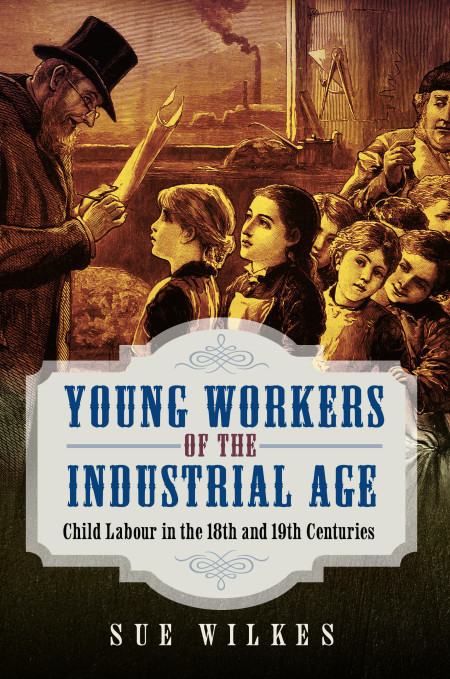
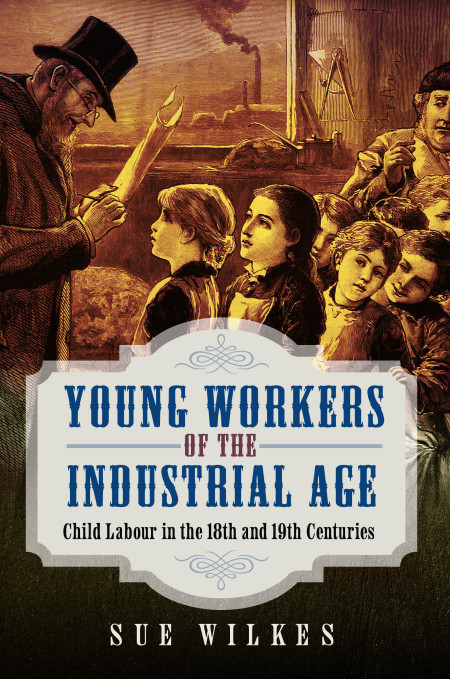
My latest release, Young Workers of the Industrial Age, is out now!

It's currently on special offer at Pen and Sword, or alternatively you can buy it on Amazon UK. 

American readers can pre-order it here on Amazon US  - it will be released in the USA on 30 November. 

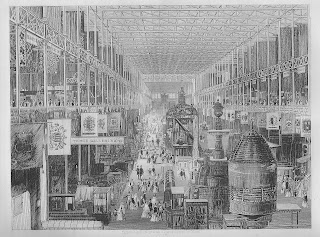
The Great Exhibition, 1851.
Once upon a time, in the reign of Queen Victoria, a fairytale palace of glass was built. 

The Great Exhibition of 1851 showed the wonders of Britain’s industry and empire.

But there was a dark truth behind this glittering display. Great Britain’s industrial might was built on the backs of men, women and little children.


In A Welsh Coal Mine.


Children of all ages worked day and night. They toiled in the silk mills, cotton factories and bleachworks. 

They toiled beneath the ground in coal mines, far from the light of day. And they toiled in the dark heart of the glasshouses, lit only by the blaze of the furnaces.

Children worked on the land, too. Their work, like helping bring in the harvest. was regulated by the seasons. 

The Gleaner, 1830s. 

It was incredible just how many different trades and industries used child labour in Britain. Children also worked in people's homes as domestic servants.

Over the next few blog posts, I’ll be taking a look at some of these occupations, and the perils that children faced in some of them.


All images from the author's collection. 


Tuesday, 14 May 2024

'A Very Pretty Spotted Muslin'


In Northanger Abbey, Miss Tilney wore a 'very pretty spotted muslin'.  My latest feature in my ongoing series for Jane Austen's Regency World (May/June issue) is on calico-printing. You will be able to find out more about the lives of child workers in the calico-printing industry in my forthcoming book, Young Workers of the Industrial Age, to be published by Pen & Sword this autumn. 


Images from the author's collection:

Above: Morning Dress, Lady’s Monthly Museum, February 1801. Figure on the right is wearing a ‘printed cotton gown’ with a ‘stone-coloured pelisse, trimmed with fur. A white velvet bonnet, crossed with green velvet bands’. 

Image right: Block printer and tierer or ‘tear girl’. Children as young as six worked for twelve hours or more helping block printers. Charles Knight’s Pictorial Gallery of Arts Vol. I, (c.1862).

Tuesday, 9 January 2024

Ready To Pre-Order!


I'm very pleased to say that 'Young Workers of the Industrial Age' is now available to pre-order from Amazon UK! It's currently scheduled for publication in hardback in September this year. 

Friday, 10 November 2023

Exciting News!


 I'm absolutely thrilled to announce that I've just signed a new contract with Pen & Sword to republish my book The Children History Forgot! The book has been out of print for some time now, and will appear under the title Young Workers of the Industrial Age: Child Labour in the 18th and 19th Centuries. 

I'll post updates on my blog nearer publication date - currently provisionally the summer of 2024. 

Meanwhile, my other Pen & Sword titles are on special offer at the moment - do take a look if you need some ideas for Christmas presents!

All images from my collection.


Thursday, 18 June 2015

Child Candlemakers

My latest feature for Who Do You Think You Are? magazine is on candlemaker ancestors.One of the most famous candlemaking firms was Price’s Patent Candles, founded by William Wilson (1830). The firm had a two acre site by the banks of the Thames at Vauxhall Bridge, and another large works at Battersea.
Price's candles were originally made from coconut oil and tallow; they were cheap, and burnt brightly and clearly. In the 1840s the firm expanded and took over Samuel Child’s night-light works at Brompton. The night-light manufacture was moved to Vauxhall; the factory was enormous. Another night-light factory (Albert’s) at Belmont was taken over by Price’s, and moved to new premises under the arches of the South Western Railway.
By the early 1850s, Price’s switched to making candles from palm oil, which were marketed as an ‘ethical’ product. Palm oil exports were more profitable for African producers than slavery, which still thrived even though it was banned in Britain and the colonies since 1834.
The palm oil ships unloading their freight at Vauxhall were known locally as the ‘African Blockading Squadron’. Every Price’s candle burnt was said to ‘put out a slave’ (Fraser’s Magazine, July 1852).
The candle factory would find it difficult to market itself as an ‘ethical’ concern nowadays because of its heavy reliance on child labour. The children often worked nights from six p.m. until six a.m. The ‘patent’ candles were made by huge machines which processed the fat into giant ‘cakes’. The cakes were melted in vats, and the liquid poured into moulds (unlike traditional candles made by repeated dipping a wick in tallow or wax). Boys helped move the cakes of fat to the vats ready for melting. Children packed the candles in boxes.
When the firm took over Child’s night-light factory it acquired more child workers (children’s nimble fingers were well-suited to making night-lights)  A writer who visited the factory thought the production line, with its ‘little army of boys in clean blouses and caps’ and ‘long rows of girls in pinafores’ looked like a school-room. 
Boys punched out cardboard and tin components to make ‘cups’ to hold the fat in the night-lights. Some fixed the wicks in the lights, and others filled the cups with the fat or ‘stearine.’ Girls plaited cotton wicks for the night-lights.
James P. Wilson, managing director of Price’s Patent Candle Factory, was deeply religious, and wanted to look after his young workers’ health and morals.  In 1848 Wilson set up schools at his own expense for his child factory workers. Wilson's factory schools became famous, and he was swamped by letters of congratulation from well-wishers including factory inspector Robert Baker and writers Harriet Beecher Stowe and Mrs Gaskell. 

Images:
Price’s Patent Candle factory. Record of the 1862 Exhibition, (William Mackenzie, c.1863).
Mrs Gaskell. Mrs Gaskell and Knutsford, 2nd edition, Clarkson & Griffiths, Manchester, 1905. 

Saturday, 10 January 2015

Scotland's Industrial Past and Present

Map of Scotland, 1845.
Michael Portillo's Great British Railway Journeys is back with a new series. This week on the programme he visited some industrial sites and we've been treated to some fascinating archive footage of workers. During the second episode he had a ride on the Waverley paddle steamer, and visited the David Livingstone Centre at Blantyre - I was especially interested as I did not realize that the famous missionary was a child worker in a cotton factory. Episode 3 was another treat as Mr Portillo visited a modern steel rolling mill, the Clyde Falls at New Lanark, and explored the Union Canal and the Falkirk Wheel, which I would love to visit one day. Over the next few weeks, I'll be taking a look at some of the fabulous heritage sites I visited last year, but haven't had time to blog about yet, as I'm busy writing Regency Spies.

Tuesday, 25 November 2014

Birmingham Brass Founders


Brass, an alloy of copper and zinc, is a wonder material. It’s highly malleable, does not rust when exposed to air, takes a high polish, and lcan be cast into any shape. Birmingham artisans made cutlery and iron tools since at least Tudor times, and in the 18th century the city was famous for its metal ‘toys’ (buttons, buckles, etc.). Matthew Boulton of Soho was a toy-manufacturer.

Brass casting.
Brass manufacture is said to have been introduced to Birmingham in 1740 by a Mr Turner, on Coleshill St. The growth of the city’s famous canal network made it easy to transport raw materials and finished goods. By the mid-19th century Birmingham’s brass bolts, wire, lamps and chandeliers, nails, cabinet and gas fittings were exported worldwide. Firms like Winfield’s capitalised on the increasing popularity of brass bedsteads.
Brass strip casting.
Winfield’s exhibited at the Great Exhibition of 1851 in the Crystal Palace, Hyde Park.The royal commissioners and executive committee of the Exhibition visited Birmingham that summer: ‘At the factory of Mr Winfield, for brass-founding, a very touching scene took place...after being conducted around the interior, and having the different branches of the business explained to them...[the visitors] were ushered into a large school-room... A bell was sounded, and immediately all the work-people, male and female, came flocking into this apartment...all were dressed in their everyday attire – the paper apron and cap retained, and in most instances the shirt-sleeves turned up over the elbows. A choir was immediately formed, and a vocal performance commenced’.  A senior clerk of the firm, who gave a congratulatory address to its august visitors, had reportedly worked for Winfield’s for 25 years (Illustrated London News, 28 June 1851).
Making brass moulds.

A government investigator interviewed adults and children at Winfield’s Cambridge St works in the 1860s (3rd Report, Children’s Employment Commission).  Brass foundries were important employers for boys (girls worked in the packing rooms). Children started work around age 7, or more usually age 9 or 10. 
The choking, poisonous fumes in the founding and casting shops affected adult and child workers. The men making ‘yellow’ brass in particular suffered from lung diseases. Henry Peel (27), a brass-caster at Timothy Smith & Sons, said that ‘you get old’ at age forty: ‘I hope to live over 40’.

You can find out more about Birmingham brass manufacture, and how to trace ancestors who worked in the industry, in the December issue of Who Do YouThink You Are? magazine. 
Illustrations of brass strip casting, the brass workers' frieze, and the canals are from the English Illustrated Magazine, 1883. Making moulds and brass casting are from the Boys' Book of Trades, c.1890s. Author's collection. 

Wednesday, 3 September 2014

The Fight To Save Britain's Chimney Sweeps

My latest feature for Who Do You Think You Are? magazine looks at the battle to save Britain's tiny chimney sweeps. Our ancestors’ chimneys needed sweeping regularly. When soot from a fire accumulated inside a chimney, smoke blew back unpleasantly into people’s rooms instead of going up the chimney. If too much soot built up inside the flue, the chimney could catch fire.Some chimneys were only nine inches (22.5 cm) square, so children as young as 5 years old were used to climb them and clean them. 
Although reformer Jonas Hanway campaigned about the miserable lives of child sweeps in the 1780s, it took almost a century for parliament to enact legislation tough enough to stop the use of 'climbing boys'. My feature also has tips for researching your chimney sweep ancestors.
Image from the author's collection: A child sweep carrying the brushes for his trade, illustration by Emile Bayard for Holiday Keepsake, Gall & Inglis, c.1880.

Tuesday, 8 April 2014

Street Sweepers and Shoe-Blacks

In my earlier blog posts I wrote about the poverty suffered by many Georgian and Victorian children and orphans. Many swept streets or cleaned shoes to earn a pittance. The shoe-black brigades were voluntary organizations linked to the ragged school movement. (As I've mentioned previously, child labour was all part of growing up during the eighteenth and nineteenth centuries).

This week author Michelle Higgs, whose new book A Visitor's Guide to Victorian England is out now, has very kindly allowed me to write a guest post for her blog, and you can find out more about child street-sweepers and the shoe-black boys here. Michelle gives updates on her work and fun facts about Victorian England on her Twitter feed @MichelleHiggs11.

Image from my collection:   
Homeless street-sweepers sleeping under a railway arch in London in the 1880s. Cassell’s Family Magazine, Cassell & Co. Ltd (London, 1883).

Monday, 24 February 2014

Street Children


Poor children in the eighteenth and nineteenth centuries were expected to work from an early age – shockingly early to modern eyes (although sadly child labour is still commonplace in many developing countries). 
 
If you strolled down a street in Georgian or Victorian England, you could hardly fail to notice the many children dressed in rags, and obviously in need of a good meal. Children helped their parents with their work at home (perhaps preparing wool or cotton for the loom), or found work in a factory, or if very poor, sold matches or gingerbread on the streets.   

Very small children were in great demand as chimney sweeps (as it was easy for them to climb chimneys), and unscrupulous parents sold their children to master sweeps for a few pounds. 

Alternatively poor children went to the poorhouse or workhouse for relief.  Children (not necessarily orphans) were often apprenticed by parish officials to ‘learn a trade’, so that they would not be a burden on the parish rates.  
Several charities grew up to look after destitute children, and I’ll look at the work of some of these institutions in my next blog post.


Images from the author’s collection:
‘The Poor Cripple Girl’ selling gingerbread, ‘The Orphans' selling matches, and ‘The Little Chimney Sweep’, from Henry Sharpe Horsley, The Affectionate Parent’s Gift, T.Kelly, 1827.

Thursday, 1 August 2013

Children of the Pits Exhibition

Last week we visited the 'Children of the Pits' exhibition at Radstock Museum. I was particularly looking forward to seeing the exhibition because it was inspired by my book The Children History Forgot, and we were not disappointed.

We were given a tremendous welcome by exhibition organiser Wendy Walker, researcher Anny Northcote and chairman Clem Maidment.


A big 'thank you' to everyone who took the time to chat to us, and particularly Wendy, who showed us round the museum.
The exhibition was put together by a team of researchers, and illustrated with photos and artefacts from the museum collection, and artwork by Kilmersdon Art Group. It shows the conditions endured by the young child miners of the Somerset coalfield in the nineteen and twentieth centuries.

Somerset was once a busy mining area, and even in comparatively modern times, young lads pulled sledges (putts) loaded with coal underground using the notorious 'guss and crook' (below), a harness made of rope (which went around the waist) and a chain, which was attached to the putt. 

In 1907 at Dunkerton, the carting boys went on strike for higher wages. The boys were paid one penny a ton for the first 50 yards they dragged the coal, then halfpenny per ton for each succeeding 50 yards. The loads they dragged weighed 10-12 tons; this type of work was done by machinery or animals in other areas.  One can imagine what hard, exhausting work it was. 

This was a long, bitter dispute: strikers were fired on by the mine manager's son, and the boys did not win any extra money. The 'guss and crook' was used in the Somerset area until the late 1940s.

The 'Children of the Pits' exhibition runs until the end of August.  There are lots of interesting displays showing how people in the Radstock area lived and worked, and some Napoleonic era artefacts.  Do drop in and visit if you get the chance.

The Children History Forgot explores working conditions for children in many different industries in the nineteeth century, and reformers' battles to improve their lives and help them go to school.
And if you would like to research your own ancestors' working lives when they were children, my new book Tracing Your Ancestors' Childhood will be out soon: you can pre-order it from Amazon or direct from Pen and Sword.

All photos © Sue Wilkes. My photos of the Museum's displays and exhibits taken by kind permission of Wendy Walker. 
Images:
Model of a young miner pulling a sled with the guss and crook at Radstock Museum.
Wendy Walker and Anny Northcote pictured at the museum with the exhibition poster and some artwork by Kilmersdon Art Group.
Guss and crook exhibit.
Photo of child miners in the 1900s - Radstock Museum exhibit (above left).
Pit winding gear wheel from Kilmersdon Colliery.
Radstock Museum (below).

Miner's cap and candle exhibit (right).  Miners carried a candle pushed into their cap for light.