Search This Blog

Showing posts with label Manchester. Show all posts

Thursday, 15 August 2019

Countdown To Peterloo!

Manchester Heroes! Courtesy Library of Congress.
Tomorrow is the 200th anniversary of the Peterloo Massacre. I thought it would be useful to chart some of the key events which led to the tragedy in Manchester, and its aftermath. 

6 December 1816: The Spa Field Riots, London. Henry Hunt gives a speech on parliamentary reform.

10 March 1817: The Blanketeers' March. Later this month, the Home Office recruits the notorious Oliver the Spy.

June 1817: The Pentrich and Huddersfield Risings are quashed by the authorities.

January 1819. Huge parliamentary reform meeting held at St Peter's Field, Manchester.

June-July 1819. First women reformers' unions formed in Lancashire.

6 August 1819. Mysterious fire breaks out at Tabley House (home of Sir John Fleming Leicester, commander of the Cheshire Yeomanry). This suspected arson attack means that Sir John is absent on the 16th when the Cheshire Yeomanry musters at Manchester.
Henry Hunt.

8 August 1819. Henry "Orator" Hunt arrives in the Manchester area.

16 August 1819: The Peterloo Massacre. There's a detailed timeline of events on the day here on the Peterloo1819 website. A reported 15-18 people are killed, and hundreds injured, including men, women and children. The names of the victims, and others known to be present on the day, can be found here on the Peterloo Names website.

November-December 1819. The Government introduces the "Six Acts" to suppress "sedition".

20 January 1820. Death of George III.

February 1820: The Cato Street Conspirators are arrested.

March 1820: Henry Hunt, Samuel Bamford, John Thacker Saxton and others are tried at York for their seditious "conspiracy" at Peterloo. Hunt and Bamford later received prison sentences.

Lots of events are planned for the bicentenary commemorations this weekend, and there's a round-up of them here.

Monday, 14 January 2019

Manchester Jacobites

Manchester Jacobites
My latest feature for Highlander magazine is on the story of the Manchester Jacobites. Bonnie Prince Charlie caused uproar when he swept through the city twice in 1745. The ‘Young Pretender’ hoped to reclaim the throne for his father, the self-styled King James III of England and James VIII of Scotland. 

Charles Edward Stuart
Earlier in the century, a Jacobite mob almost destroyed the Presbyterian Chapel in Manchester, and several local worthies supported the abortive 1715 rebellion. In February 1716, peruke-maker Thomas Syddall and four other men were executed at Lancaster scaffold for following the ‘Old Pretender’. 

During the '45, the city's defence was completely bungled. On the afternoon of Thursday 28 November 1745, to its eternal shame, ‘Manchester was taken by a Serjeant, a Drum, and a Woman’. The main Jacobite army arrived the following morning; they marched into St Ann’s Square.  

On 1 December, the Bonnie Prince left Manchester, heading south towards London, along with the newly formed 'Manchester Regiment' composed of enthusiastic local recruits, commanded by Colonel Francis Towneley. Little did the Manchester rebels realize that they would later pay a terrible price for their loyalty to the Prince...


Temple Bar in the 1750s

Images from the author's collection:
Top left: Manchester Jacobites.  Manchester Old and New Vol. 1, Cassell & Co., c.1894. 
Above, right: Bonnie Prince Charlie, the ‘Young Chevalier’. 
Left: The heads of executed Mancunian Colonel Towneley and Salford man George Fletcher on Temple Bar, London, in the 1750s. Old and New London Vol.I, Cassell, Petter & Galpin, c.1873

Tuesday, 19 June 2018

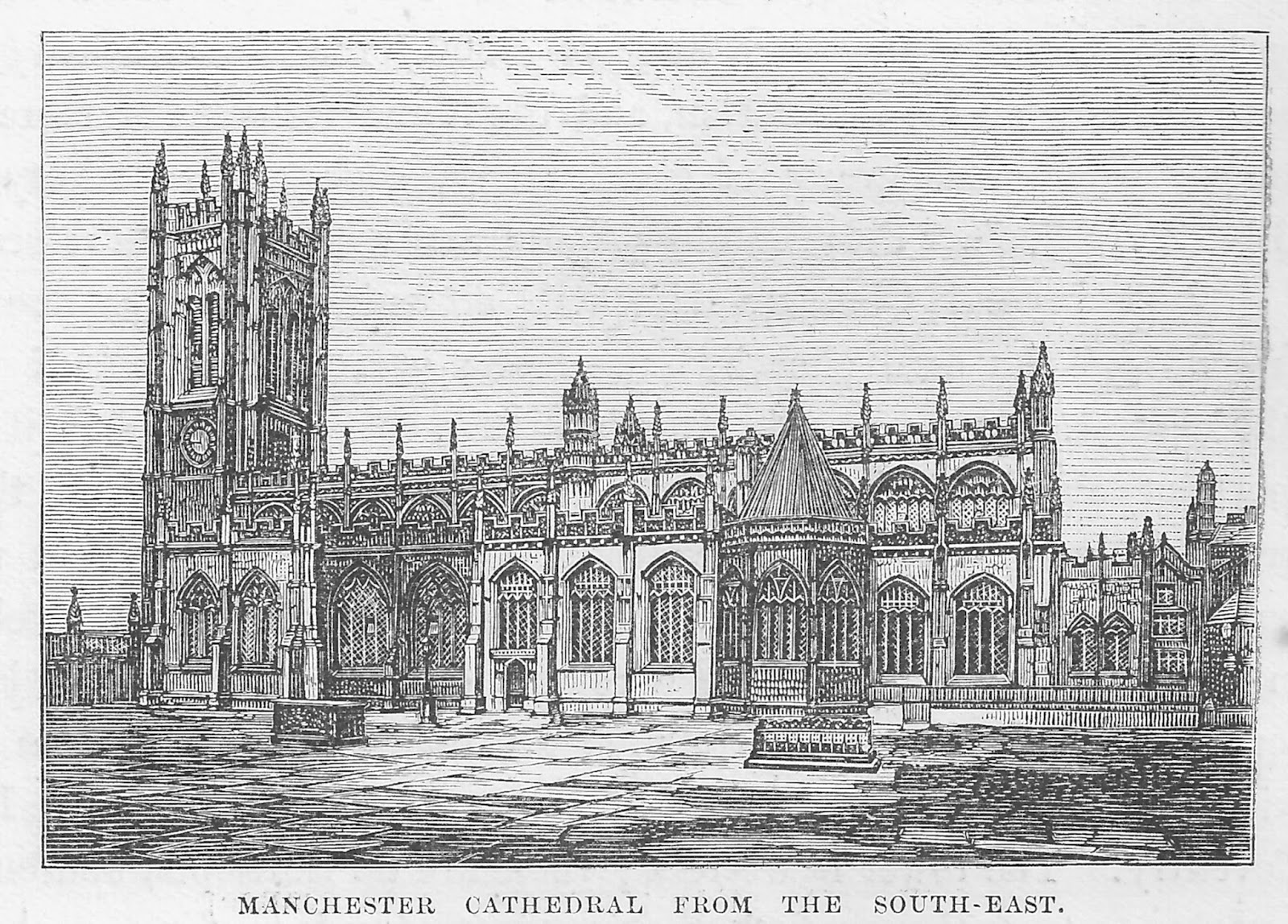
Manchester Cathedral

The earliest written record of Manchester’s churches may be the two mentioned in William the Conqueror’s Domesday Book of 1086. St Mary’s and St Michael’s held a ‘carucate’ of land (about 120 acres). St Mary’s may have been located on or near the site of the modern Cathedral. St Michael’s may have been at Ashton-under-Lyne.
In 1421 Thomas La Warre, the lord of the manor, founded a ‘college’ of a warden and eight fellows to care for Manchester parish. The ‘collegiate church’ was endowed with lands, and a brand new building was built. Local worthies and merchants like the Stanley family beautified the new church.
Collegiate Church interior.

If your ancestor lived in Manchester parish before the 1850s, they were most likely baptized or married at the Collegiate Church (later the Cathedral). This is because for historical reasons, when a person was baptised or married at any church within the parish, the family paid two fees, one to the incumbent of their church of choice – and one fee to the Collegiate Church. But if people held the ceremony at the Collegiate Church, they only paid one fee. Mass baptisms and weddings were a regular sight at the Collegiate Church, so you should check those registers first if you are looking for a Manchester ancestor.

In 1847 the diocese of Manchester was created, and the Collegiate Church became a cathedral, dedicated to St Mary, St Denys and St George. The best way to access the Cathedral registers is via Ancestry.co.uk (free on Manchester library PCs) or on microfilm at Manchester Central Library. The Lancashire Online Parish Clerks website has some free transcripts of the Cathedral and Collegiate Church parish registers. My book also has more information on the history of the Cathedral and its records.

The Cathedral suffered greatly from bomb damage during WWII, but was painstakingly rebuilt. The modern day Cathedral has a visitor centre, which is open daily.

Tuesday, 24 April 2018

Manchester Suffragettes and Suffragists

Lydia Ernestine Becker, suffragist.
Today a statue of Millicent Garrett Fawcett was unveiled near Parliament. My latest feature for Discover Your Ancestors online magazine explores the fight for women's rights by Manchester suffragettes and suffragists during the late nineteen and early twentieth centuries.

In the mid-to-late 1860s, Manchester committees to campaign for women’s property and voting rights were founded by Elizabeth Wolstenholme (later Elmy), Lydia Ernestine Becker, Emily Davies, Alice Scatcherd and others.

‘Suffragists’ like Lydia Becker and Margaret Ashton argued that voting reform should be fought for using only peaceful, constitutional means. The suffragists scored a major victory in 1869 when property-owning women were given the right to vote in local government elections and act as Poor Law Guardians.

But women (and working-class men) still could not vote in national elections. Sheer frustration at successive governments' refusal to give women the vote led 'suffragettes' like Manchester-born Emmeline Pankhurst and her daughters to take direct action. However, it was not until 1928 that all women over the age 21 of were given the vote, and put on an equal footing with men.
The Pankhurst Centre, Manchester

My book Tracing Your Manchester and Salford Ancestors has several tips for researching suffragette and suffragist sources in Manchester libraries and specialist archives. I also thoroughly recommend visiting Emmeline Pankhurst’s home at 62 Nelson St, Manchester, which is now a museum and heritage centre, if you wish to find out more about the suffragettes' story.

Images:
Lydia Ernestine Becker (1827–1890), an early campaigner for women’s political rights and founder member of the National Society for Women’s Suffrage in 1867. Manchester Faces and Places Vol. 1, J. G. Hammond & Co., c. 1895. Author’s collection.

62 Nelson St, Manchester, now the Pankhurst Centre. Emmeline Pankhurst and her daughters lived here from 1897–1907. © Sue Wilkes.

Wednesday, 10 January 2018

Full Steam Ahead! Made in Manchester

Ancoats mills at dinnertime.
The earliest factories were water-powered, so they were built by fast-flowing streams. The advent of steam power meant that factories could now be built wherever coal was plentiful, so Manchester and Salford were prime spots for industry.

One of the first manufacturers to use steam to power his mill machinery was Peter Drinkwater, who built a cotton-spinning mill in Manchester in 1789. Drinkwater’s mill had the first Boulton and Watt steam engine in the city. Around this time, James Bateman and William Sherratt set up a factory in Salford which made mill machinery components, and a pirated version of Boulton and Watt’s rotary steam engine.

Cotton factories and their contents were highly combustible, and Philips and Lee built the first ‘fireproof’ mill in the area (with cast-iron beams) in 1801.This mill, on Chapel Street in Salford, was also the first factory in Britain lit by gas.


By 1816, Manchester contained forty-three working mills; the largest employer was McConnel & Kennedy, with over 1,000 workers. These early factories ran day and night, which was very hard on their child workers.

The Manchester Statistical Society reported in 1837–8 that Manchester had 5,272 cotton spinning and weaving mills powered by steam; Salford had 761 steam-powered cotton mills. Manchester had 756 bleaching, dyeing and print-works powered by steam, and Salford had 521 steam-powered factories. Foundries, silk mills, breweries, saw-mills, collieries and chemical works in the area were also steam-powered.
Nasmyth's factory flat at Manchester. 

Scotsman James Nasmyth (1808–90), one of the most famous engineers of his day, set up his own business at Dale Street in Manchester in the 1830s.

He later founded the Bridgewater Foundry at Patricroft, Eccles, and the first steam hammer in Britain was forged there.


Sir Joseph Whitworth (1803–87)’s Chorlton Street works in Manchester made machine tools, guns and cannon. William Fairbairn had a huge works on Canal Street in Ancoats which made boilers and bridges. Platt Brothers made textile machinery at Oldham; this firm also had its own forges, rolling-mills and brick-works. Sharp, Roberts & Co.’s world-famous Atlas Works, founded in the late 1820s in Manchester, made locomotive engines.


As Victoria’s reign advanced, Manchester’s industries continued to thrive. At Gorton, Beyer-Peacock began manufacturing locomotives in the 1850s, the Ashbury Railway Carriage Company made railway carriages and waggons, and Crossley Brothers made engines and pumps.

The steam-engine galleries at Manchester's Museum of Science and Industry often have the engines in steam, and you can get a real sense of their sound and energy when they are busy working!


Images:
Nasmyth’s restored steam hammer on display near Eccles. Copyright Sue Wilkes.
Nasmyth’s Dale Street factory.
A steamer passing Trafford Swing Bridge. Illustration by H. E. Tidmarsh, Manchester Old and New Vol. III., Cassell & Co., c.1894.
James Watt’s first rotary steam engine.
Ancoats mills at dinnertime, Manchester. Illustration by H. E. Tidmarsh, Manchester Old and New Vol. II, (Cassell & Co., c. 1894). 

Sunday, 8 October 2017

Manchester's Coaching Days

Pickford's Royal Fly-van.
Before the mid-eighteenth century, Manchester merchants who wished to move goods like textiles faced considerable obstacles. The region’s roads were extremely poor. Covered waggons and saddle-horses struggled over ‘roads’ pitted with huge ruts which rain turned into dangerous traps for the unwary traveller.  Most goods were moved using packhorses; obviously animals could not carry large quantities at once.
Even in central Manchester, the roads were so bad that no business person or well-to-do family kept their own carriage until Madame Drake, of Long Millgate, set up her carriage in 1758.

Turnpikes became a popular method of upgrading roads locally. The road to Stockport was probably the first in the Manchester area to be turnpiked, by the Manchester and Buxton Turnpike Trust in 1725. A quarter of a century later, however, a ‘flying coach’ still took four and a half days to reach London from Manchester.
Last days of the Manchester Defiance. 

In 1760, Manchester got its first stagecoach service, when John Hanforth and his partners set up regular runs from London to Manchester and Liverpool to Manchester. Merchants and traders could now reach the capital in three days, ‘if God permit’. By the late 1770s, Pickford’s flying coach took two days to reach London.

And during Britain’s lengthy war with France, when news broke of the Peace of Amiens in 1802, the Defiance and Telegraph coaches brought the longed-for tidings from the capital to Manchester within twenty-four hours (usually the run took thirty hours).
But it was the Canal Age which put Manchester at the forefront of the transport revolution, as we shall see.

Monday, 14 August 2017

The Birth of Cottonopolis


Manchester in the 1740s.
Although Manchester  became synonymous with the cotton industry, in medieval times, it was known for woollens and linens. Tradition has it that Edward II invited skilled Flemish weavers to settle in north-west England during the 1330s. The term Manchester ‘cottons’ was in use as early as the sixteenth century, but these ‘cottons’ were made of wool.

By the early 1640s the area’s textile industries were firmly established. Cotton yarn (imported via Ireland) was woven with linen yarn made from flax to make sturdy ‘fustian’ cloth.
Families like the Chethams, Mosleys and Tippings became very wealthy buying and selling woollen cloths, linens, cotton yarn, and fustians. The wholesalers and master-manufacturers of Manchester became famous.  As these ‘Manchester men’ became richer they built fine homes and large warehouses for their goods.
In the early 1700s pretty, light all-cotton calicoes imported from India and the East threatened to wipe out Britain’s woollen industry. An act of 1721 banned the wearing of, weaving or selling of any printed all-cotton ‘stuffs’ or ‘calicoes’ whether imported or made in Britain. However, ‘fustians’ were exempted, to protect Manchester’s workers.  Woollen and worsted weavers petitioned parliament to ban fustians, too, but the ‘Manchester Act’ of 1736 upheld the exemption. All-cotton printed goods remained banned, however.
Handloom weaving.


During the 1740s, Manchester merchants bought the warps and raw cotton and gave the materials to weavers who worked in their own homes aided by their families. The raw cotton was carded (the fibres were straightened to form a long, fluffy ‘roving’), the rovings were spun into yarn, the yarn was wound onto bobbins, and finally woven into cloth on a loom.

John Kay’s flying shuttle (1733) made hand-weaving easier. Then several key inventions speeded up first the spinning, then weaving of cotton. Lewis Paul and John Wyatt had the idea of thinning out cotton fibre using rollers, and James Hargreaves’s machine, the ‘spinning jenny,’ patented in 1770, revolutionised spinning.
Hargreaves' spinning jenny at North Mill, Belper

Arkwright's water frame at North Mill, Belper.
Preston barber Richard Arkwright built on the work of Lewis Paul and Thomas Highs and created a spinning machine called a ‘water-frame’. Richard Arkwright petitioned parliament to get the ban on all-cotton cloths repealed in 1774. This gave a huge boost to the cotton industry. Then Samuel Crompton’s spinning ‘mule’ (1779) made strong yarn fine enough for weaving all-cotton cloth (calico) and delicate muslin.

Mule spinning room
Mr Gartside’s weaving establishment, opened in 1765, may have been one of the earliest factories in Manchester. (This factory appears to have used an early type of automated ribbon loom, a ‘swivel loom’. Each loom was tended by one weaver). By the 1780s there were two mills in Manchester; Richard Arkwright and partners had one near Angel Meadow, and Mr Thackeray had one at Granby Row.

The big breakthrough for mechanized weaving came when Edmund Cartwright patented a powered loom in 1785. In a future blog post, I’ll look at how steam power affected Manchester during the industrial revolution.

Friday, 21 July 2017

Manchester and Salford Burials

Monuments at St Ann's church, Manchester.
Today I'm looking at a grave subject - finding burials for your Manchester and Salford ancestors. Your first stop should be the Manchester and Lancashire Family History Society (MLFHS) website which has got useful guides on finding burialsburial grounds in the area, another list of graveyards, and a searchable database of memorial inscriptions.

It's very worthwhile joining the MLFHS as you will then have full access to their online databases.


Manchester City Council has a burial search facility for Blackley Crematorium, and Blackley, Gorton, Philips Park, Southern, and Manchester General cemeteries (fee payable to see the full details).

Sadly few grave monuments survive in Manchester city centre itself except for those outside St. Ann's church  (above left).


The Lancashire OPC free website is also very useful for baptisms and burials in the area, and new transcriptions are being added all the time.

Church and chapel registers can also be accessed at Manchester Central Library, and details are available here.
Salford Local History Library has excellent local and family history collections, too.

Image (right): a receipt for grave 237, Salford Brough Cemetery, 23 September 1879 for Jos. Gartell( or Garlett?). Author's collection.

Friday, 23 June 2017

Fenian Fever

Today I'm very pleased to welcome fab author Angela Buckley to my blog! Angela has a new book out - a true-life Manchester murder mystery.

Fenian Fever
By
Angela Buckley

Smithfield Market.
On 11 September 1867, a vigilant police constable spotted two suspicious-looking men hanging around Smithfield Market in central Manchester. The officer suspected them of planning to burgle a shop, and when one of the men pulled out a gun, he arrested them. The prisoners, who gave false names, were charged with loitering. During their detention, communication between the police in Manchester and the Irish authorities revealed the two men’s true identities: Colonel Thomas Kelly and Captain Timothy Deasy of the Irish Republican Brotherhood, who were wanted on suspicion of terrorism. Both veterans of the American Civil War, they had come to England to take part in actions against the British government to force the issue of home rule.

A week later, the prisoners were to be transferred to Belle Vue Gaol, at the edge of the city.
Charles Brett's memorial.
Travelling in a horse-drawn Black Maria with other offenders, including women, Kelly and Deasy were accompanied by Sergeant Charles Brett, who was locked inside the van with them. Several more officers followed behind. As the convoy passed under a bridge at Ardwick Green, a volley of stones hit the van forcing it to stop. The police were then quickly surrounded by armed men, who shot both the horses and wounded at least two officers. Unable to enter the locked Black Maria, the assailants screamed through the ventilation slot for the keys, which were held by Sergeant Brett. In a desperate attempt to protect the prisoners on board, especially the women, the young police officer refused to hand over the keys. A gunman poked his rifle through the slot and shot Sergeant Brett through the head. The bullet passed through his skull and lodged in his helmet.

'Manchester Martyrs'. 
Once they were released, Colonel Kelly and Captain Deasy fled the scene. Within three days of the incident, the police had arrested some 50 Irish men, 26 of whom were charged. Later that year, on 25 November 1867, William Allen, Michael Larkin and Michael O’Brien were hanged for Sergeant Brett’s murder - they became known as the ‘Manchester Martyrs’. Following the death of Sergeant Brett, ‘Fenian fever’ had spread like wildfire throughout Britain, causing the Victorians to fear the very real threat of Irish nationalists and their deadly campaign. This deep-seated terror would have a dramatic impact on three Irish brothers who also stood trial for murder in Manchester, a decade later. 
 
Memorial to Manchester Martyrs, Moston.
On 1 August 1876, PC Nicholas Cock was walking his beat at midnight in the township of Chorlton-cum-Hardy, about four miles from Manchester city centre. The young officer had stopped at the junction of West Point, where three main thoroughfares converge, to chat with one of his colleagues and a passing law student. The three men went their separate ways and, a few minutes later, two shots rang out in the dark. PC James Beanland and student John Massey Simpson ran back to the junction to find PC Cock lying on the ground in a pool of blood - he had been shot. When Nicholas Cock later died of his injuries, a manhunt began.

On hearing the terrible news, PC Cock’s superior, Superintendent James Bent, knew instantly who the culprits were and he arrested three local Irish labourers soon after. The Habron brothers had crossed the path of PC Cock many times and he had been responsible for their being charged with drunkenness on at least two occasions. Residents of Chorlton had even overheard the brothers threatening to do away with PC Cock. Despite the circumstantial nature of the evidence against them, which was based on boot prints found near the scene of the crime, Superintendent Bent managed to secure a conviction against the youngest brother William, aged 18, who received the death sentence. It is likely that this was only possible due to the prejudice towards the Irish community which was still prevalent at all levels of Victorian society. The conviction was followed by a desperate race to spare William Habron from the gallows. Three years later, a startling confession by a notorious career criminal finally revealed the truth about who killed Constable Cock.
  
Who Killed Constable Cock? by Angela Buckley is out now in ebook and paperback. You can find out more about Angela’s work on her website, www.angelabuckleywriter.com and on her Facebook page Victorian Supersleuth.

Images

1. Smithfield Market, Manchester. Copyright free - from author’s collection. 

2. The memorial to Sergeant Charles Brett, St Ann’s church, Manchester. © A Buckley. 

3. Poster commemorating the Manchester Martyrs. Source: Wikicommons. 

4. Memorial to the Manchester Martyrs at Moston Cemetery. Source: Wikicommons, 


Tuesday, 20 June 2017

Regency Manchester Guest Post

From J. Aston's Picture of Manchester, 1826, courtesy Google Books.
Visit the fabulous All Things Georgian blog by fellow Pen and Sword authors Joanne Major and Sarah Murder to read my guest post on Regency Manchester!

Wednesday, 17 May 2017

Was Your Ancestor A Peterloo Casualty?

Peterloo print, courtesy Library of Congress.
This summer, Manchester and Lancashire Family History Society (MLFHS) is launching a project to find the descendants of the people who were present at the Peterloo Massacre on 16 August 1819.

On this dreadful day in Manchester's long history, sixty to eighty thousand people - including women and children -  had assembled at St Peter’s Field to attend a meeting on parliamentary reform, with Henry 'Orator' Hunt as the keynote speaker.

Although the meeting was peaceful, local magistrates, fearing that a riot was imminent, ordered yeomanry cavalry into the crowd to arrest Hunt.

The Manchester and Salford Yeomanry rode into the crowd, brandishing their sabres. But the people could not move to give them room.The horses panicked; the yeomanry lost their temper, and began hacking their way through. Over four hundred people were injured - many wounds were from sabre cuts - and between eleven and fifteen people died (accounts disagree).
Plaque commemorating the Peterloo victims.

The true number of casualties has never been completely ascertained. Many books have been written on Peterloo, including this one by Professor Michael Bush; my new book has some tips on researching Peterloo, too. There's also info and transcripts of contemporary documents here on the Peterloo Witness Project.

MLFHS is setting up a new website to discover people's family history stories which will go live on 1 June. If you are interested in contributing to this project, please visit the website when live, or contact the project manager Rod Melton by email at peterloo@mlfhs.org.uk.

Or if you are visiting Manchester Central Library after the project launches, Rod Melton will be available each Tuesday between 10:30 and 15:00. Please go to the Manchester and Lancashire Family History desk and ask for Rod and he will come down to see you.

The hope is to create a fitting and lasting memorial to all the victims of that fateful day.

Thursday, 27 April 2017

Manchester and Salford Ancestors Now Out On Kindle!

Manchester Cathedral. 
Just a quick post to say that Tracing Your Manchester and Salford Ancestors is now available as an e-book from Pen and Sword, and as a Kindle edition on Amazon! It's also available from Amazon USA in Kindle format. 
If you are visiting Manchester Central Library, you can also buy it over the counter, which will save you paying postage. My book is also available on the Manchester and Lancashire Family History Society online bookshop. 
Entries are now open for my Goodreads Giveaway, too, so do please have a go!

Thursday, 6 April 2017

New Release: Tracing Your Manchester and Salford Ancestors

I'm thrilled to announce that Tracing Your Manchester and Salford Ancestors has been released early! It's currently on special offer here on the Pen & Sword website, and should soon be in stock on Amazon.
Suffragist Lydia E. Becker.

Here's the blurb:
'For readers with family ties to Manchester and Salford, and researchers delving into the rich history of these cities, this informative, accessible guide will be essential reading and a fascinating source of reference. 
    Sue Wilkes outlines the social and family history of the region in a series of concise chapters. She discusses the origins of its religious and civic institutions, transport systems and major industries. Important local firms and families are used to illustrate aspects of local heritage, and each section directs the reader towards appropriate resources for their research. No previous knowledge of genealogy is assumed and in-depth reading on particular topics is recommended. The focus is on records relating to Manchester and Salford, including current districts and townships, and sources for religious and ethnic minorities are covered. A directory of the relevant archives, libraries, academic repositories, databases, societies, websites and places to visit, is a key feature of this practical book'.
Salford hero Mark Addy.

Tomorrow, I'm visiting the WDYTYA Live! show at the NEC, and if all goes to plan, I'll be signing copies of my new book at the Pen & Sword stand. Hope to see you there!

Black-and-white images from Manchester Faces and Places, Vol. I, J.G. Hammond & Co., c.1889. 
Manchester New Synagogue and Beth Hamedrash, Cheetham Hill.

Monday, 20 March 2017

84 Plymouth Grove, Manchester

84 Plymouth Grove.
Recently I had a very enjoyable visit to Mrs Gaskell's former home in Manchester - somewhere I've longed to explore for ages.

In this house (no. 42 in Gaskell's lifetime) Elizabeth wrote Cranford, Ruth, North and South, The Life of Charlotte Bronte, and her last, unfinished work, Wives and Daughters.

(Mary Barton was written at one of the Gaskells' previous houses, 121 Upper Rumford St in Manchester).


Family portraits and heirlooms.

Elizabeth grew to love her new home; there was plenty of room for family and friends, and it had a large garden for her children to play in.

William had his own study for his writing and pastoral work; Elizabeth often wrote at a round desk in the dining room.

After Elizabeth's sudden death in 1865, her husband William and unmarried daughters Meta and Julia stayed in the house. The two sisters were well known locally for their charity work.


Elizabeth's wedding veil. 

The house has been restored and furnished in a similar fashion to how the Gaskells would have known it; you can also see some family heirlooms, including Elizabeth's wedding veil, which was worn by her daughter Marianne on her own wedding day.


You have to pay for admission, but your ticket lasts for 12 months, so don't lose it! It was a cold, wet day when I visited, but it would be nice to explore the garden again in the summer.


Blue Plaque.
The dining room.

Thursday, 2 March 2017

The March of the Blanketeers: March 1817

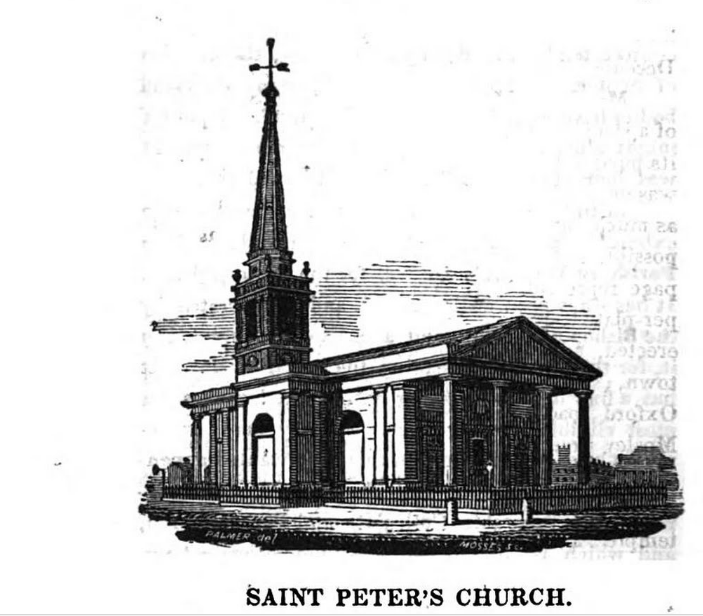
St Peter's Church in the early 1800s. 
Following the Spa Fields riot in London in 1816, the authorities in north-west England were very worried about local unrest. This was a time of great hardship for workers like the cotton weavers; many were starving.

The increasingly oppressive Lord Liverpool administration believed it faced a widespread underground movement plotting revolution. On 3 March 1817, the government suspended the Habeas Corpus Act: people could now be imprisoned without trial. 

All the Radicals in northwest England - those campaigning for parliamentary reform like weaver Samuel Bamford - were kept under close surveillance. Several spies were at work in the Manchester area, including Michael Hall (code-name ‘No. 1’) and James Rose (‘No.2’). 
Sometime around this date, Liverpudlian
Spy report from Hall and Rose, Dec 1816. HO40/10.
Joseph Mitchell, William Benbow and others decided to stage a grand march from Manchester to London. If those in power understood the depths of the weavers’ suffering, surely they would lower prices and help them find work? Each man would carry a petition to the Prince Regent; once he realized their distress, of course he would help them. Everyone would carry a blanket for their journey (so they were dubbed the ‘Blanketeers’).

The Blanketeers planned carefully. Each man would take three days’ provision in a knapsack; oatmeal and water was ‘the most nutritious and cheap’ food. They hoped that sympathisers along the route would put them up for the night, or maybe they could sleep in church halls. Some cotton spinners sent subscriptions of 5s each, and one friendly society sent £20.

The men would set off for London in groups of ten, headed by a leader with a petition tied round his arm; each leader would be under the control of a captain. Everything was now set for their grand march. 

But the government were not prepared to risk the spectre of a large body of men descending on the capital. What if riots broke out, as had so recently happened at Spa Fields? On the afternoon of 8 March, Bow St magistrate Robert Baker arrived in Manchester with warrants for the arrest of the northern reformers; several were caught and imprisoned.  

The plan was to stop the Blanketeers before they could pass the river Mersey. Baker was still sanguine that few would join the march; the weather was extremely poor. Nevertheless, Sir John Byng’s troops were ready and waiting to pounce as the Blanketeers gathered on the morning of 10 March. 
Letter re the Blanketeers' march, 10 March 1817. The signature was cut off the letter.
That evening, a Manchester man wrote to his father with exciting news: ‘We have today had the largest meeting of the lower orders ever known in this Town. They met near to St Peter’s Church where a Stage was erected for the Speakers to address them. The Soldiers and Constables were all upon the alert and about 11 O’clock the Horse Soldiers rode in upon them and succeeded in securing the whole of the Speakers and about 20 or 30 more of the ringleaders. They were sent to the New Bailey [the prison in Salford].

More Blanketeers were arrested at Heaton Norris, Stockport and Macclesfield by the yeomanry cavalry. Only one man reached London to hand in his petition: the grand march was over. 
The arrested Blanketeers were never brought to trial; they rotted in prison for several months before being released. 


Monday, 20 February 2017

Lancashire Archives: Red Rose Collections

Lancashire Archives, Preston has just launched its new online digital resource, the Red Rose Collections. (It replaces the old Lancashire Lantern website). This wonderful resource includes: over 30,000 historic photos, an index to old Lancashire newspapers, an index to historical documents including Whittingham Asylum records, an index to the Preston Guild Rolls 1397-1992, an index of officers who served in Lancashire Constabulary, and the Fleetwood Online Archive of Trawlers.
If you find a record relating to the ancestor you are interested in, then you can contact Lancashire Archives and order a copy (but sadly an ordering facility is not currently available for the photos of Fleetwood trawlers).
There is also an ongoing project to index people and places named in the local history book collection, these indexes will appear on the Lancashire Libraries catalogue.
I did a 'quick search' for 'Manchester', and 'Salford' in the online search box and there were over 2000 results for Manchester and nearly 800 for Salford, so if your ancestors came from those cities or any other towns in historic Lancashire, it's well worth your time exploring the site.

It's worrying, however, that Lancashire County Council is thinking of making more changes to services like libraries owing to the unprecedented squeeze on local authority funding by the government - this is on top of the recent closures of five Lancashire's museums.
To think when I was growing up, I took it for granted that amenities like libraries and museums and social housing were an immutable part of the landscape. By the Tories' austerity ideology has run its full course we will have nothing left. There would be plenty of money for all these facilities if the big corporations and businesses paid a meaningful amount of tax instead of parking it offshore. In my humble opinion, anyway.

Tuesday, 25 October 2016

Roman Catholic Ancestors


Liverpool Metropolitan Cathedral.
My latest feature for Your Family History magazine (November issue) is on tracing Roman Catholic ancestors.

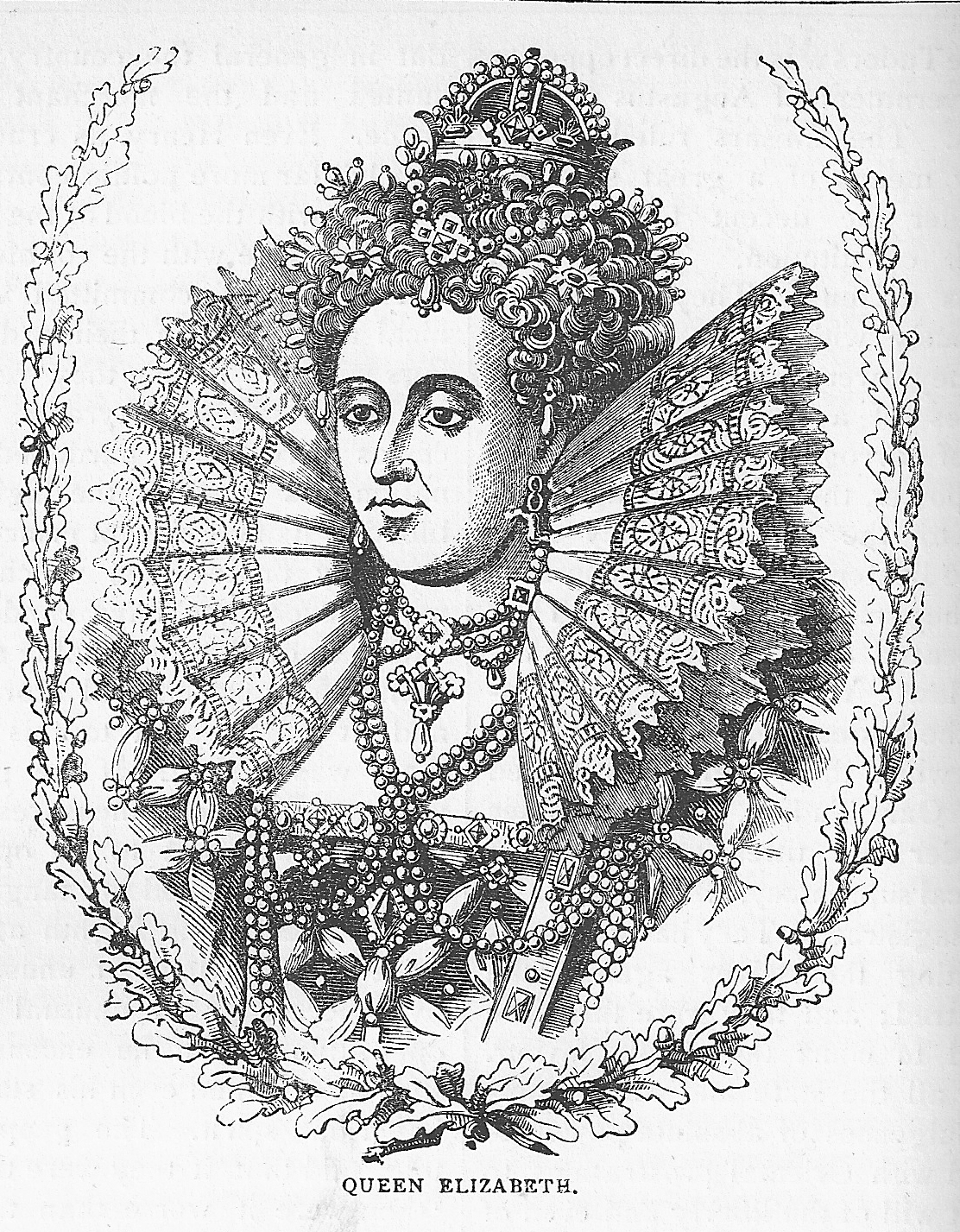
In 1534 Henry VIII severed the country’s links with Rome and the Pope, and the Anglican Church was born. Elizabeth I confirmed the Anglican Church’s status with the Act of Supremacy (1559), and the introduction of the Book of Common Prayer. 

 Although there were penalties for ‘recusancy’, Roman Catholics wished to be baptized and married according to the rites of their church. Lancashire families in particular clung on stubbornly to the ‘old religion’. So your Catholic ancestors may have been baptized, or married, once in an Anglican church, and again in a Catholic church in secret.
Things improved for Catholics following the Catholic Emancipation Act of 1829.

Furness Abbey.
I’ll be exploring this subject further in Tracing Your Manchester and Salford Ancestors, which will be published by Pen and Sword in the spring of next year. In the meantime, the MLFHS website has a free list of RC churches in Manchester and Salford, with addresses and dates of their opening and closure, and name changes.
Images:

Liverpool Metropolitan Cathedral, consecrated in 1967. © Sue Wilkes.
Elizabeth I. Pictorial Record of Remarkable Events, (Frederick Warne & Co., 1896).
Chapter House, Furness Abbey. Engraved by R. Sands from a drawing by T. Allom. People’s Gallery of Engravings Vol.2 (Fisher, Son & Co., 1845).