Lancashire Archives, Preston has just launched its new online digital resource, the Red Rose Collections. (It replaces the old Lancashire Lantern website). This wonderful resource includes: over 30,000 historic photos, an index to old Lancashire newspapers, an index to historical documents including Whittingham Asylum records, an index to the Preston Guild Rolls 1397-1992, an index of officers who served in Lancashire Constabulary, and the Fleetwood Online Archive of Trawlers.
If you find a record relating to the ancestor you are interested in, then you can contact Lancashire Archives and order a copy (but sadly an ordering facility is not currently available for the photos of Fleetwood trawlers).
There is also an ongoing project to index people and places named in the local history book collection, these indexes will appear on the Lancashire Libraries catalogue.
I did a 'quick search' for 'Manchester', and 'Salford' in the online search box and there were over 2000 results for Manchester and nearly 800 for Salford, so if your ancestors came from those cities or any other towns in historic Lancashire, it's well worth your time exploring the site.
It's worrying, however, that Lancashire County Council is thinking of making more changes to services like libraries owing to the unprecedented squeeze on local authority funding by the government - this is on top of the recent closures of five Lancashire's museums.
To think when I was growing up, I took it for granted that amenities like libraries and museums and social housing were an immutable part of the landscape. By the Tories' austerity ideology has run its full course we will have nothing left. There would be plenty of money for all these facilities if the big corporations and businesses paid a meaningful amount of tax instead of parking it offshore. In my humble opinion, anyway.
I'm an author specialising in family history, social history, industrial history and literary biography. Real stories; real people; real lives.
Search This Blog
Showing posts with label archives. Show all posts
Monday, 20 February 2017
Tuesday, 25 October 2016
Roman Catholic Ancestors
| Liverpool Metropolitan Cathedral. |
My latest feature for Your Family History magazine (November
issue) is on tracing Roman Catholic ancestors.
In 1534 Henry VIII severed the country’s links with Rome and
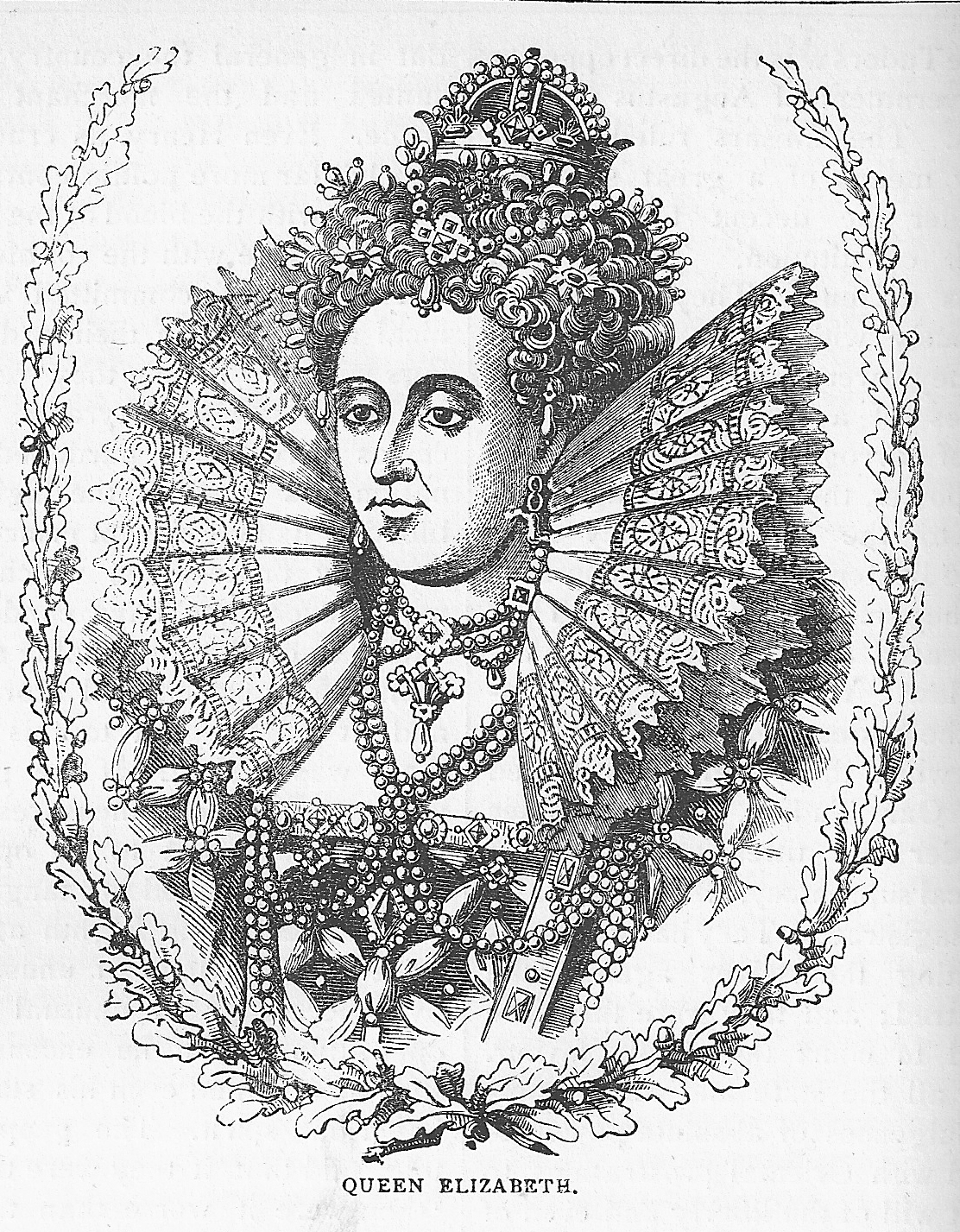
the Pope, and the Anglican Church was born. Elizabeth I confirmed the Anglican
Church’s status with the Act of Supremacy (1559), and the introduction of the
Book of Common Prayer.
Although there were penalties for ‘recusancy’, Roman
Catholics wished to be baptized and married according to the rites of their
church. Lancashire families in particular clung on stubbornly to the ‘old
religion’. So your Catholic ancestors may have been baptized, or married, once
in an Anglican church, and again in a Catholic church in secret.
Things improved for Catholics following the Catholic Emancipation Act of 1829.
![]() |
| Furness Abbey. |
I’ll be exploring this subject further in Tracing Your Manchester and Salford
Ancestors, which will be published by Pen and Sword in the spring of next
year. In the meantime, the MLFHS website has a free list of RC churches in Manchester and Salford, with addresses and dates of their opening
and closure, and name changes.
Images:
Liverpool Metropolitan Cathedral, consecrated in 1967. © Sue
Wilkes.
Elizabeth I. Pictorial
Record of Remarkable Events, (Frederick Warne & Co., 1896).
Chapter House, Furness Abbey. Engraved by R. Sands from a
drawing by T. Allom. People’s Gallery of Engravings Vol.2 (Fisher, Son &
Co., 1845).
Tuesday, 11 March 2014
Foundlings and Orphans
One of the most famous children’s charities was the
Foundling Hospital for unwanted and abandoned infants, founded in 1741 by
Captain Thomas Coram. The first premises
used by the hospital were some houses in Hatton Garden; later a grand new
building was erected near Gray’s Inn. William Hogarth was one of the hospital’s patrons; later famous philanthropist Sir Thomas Bernard was a member of the hospital committee.
When mothers gave their unwanted baby to the hospital, they left
a small token to help identify their child in case they ever wanted to reclaim
it (only a tiny number ever did). A silk
purse, a coin, and even a lottery ticket were some of the items deposited (John
Brownlow, Memoranda, or Chronicles of the
Foundling Hospital, Sampson Low, 1847).
Many charities like the Foundling Hospital, the Female Orphan Asylum at Lambeth (founded by John Fielding in 1758), and the Edinburgh
Orphan School, apprenticed out the children in their care when they were old
enough.
Some charities specialised in caring for the children of
soldiers or seamen, like the Royal Hospital Schools at Greenwich, the ‘cradle
of the navy’, founded in 1715. However it
was not until 1783 that a special school-room and dormitories for 200 children
were built inside the Royal Greenwich Hospital. In 1821 the Royal Hospital Schools merged with
the Royal Naval Asylum for naval seamen’s orphans (founded in Paddington in
1798). The schoolboys in the Hospital
moved to the Queen’s House at Greenwich (where the Asylum had moved in
1818). If your ancestor was cared for by
one of these institutions, my book Tracing Your Ancestors' Childhood has more
information on archives and the types of records available.
Despite the work of charities like these, during the nineteenth
century cities like London had ever-growing numbers of orphaned, destitute and
criminal children and in my next blog post I’ll be discussing the way that the
Victorians tackled these problems.
Images from the author’s collection:
Captain Thomas Coram. Hogarth’s Complete Works, Third
Series. Chatto & Windus, 1874.
Orphan School, Edinburgh, Views of Edinburgh and Its Vicinity, 1819.
Royal Naval Schools, Greenwich: ‘the cradle of the navy’. Old and New London Vol. VI, (Cassell,
Petter & Galpin, c. 1895).
Monday, 10 February 2014
Bands of Hope
In my recent feature on youth organizations for Who Do You Think You Are? magazine I looked at the societies and organizations for children and young people which grew up during the nineteenth and early twentieth societies: Scouts and Guides, Bands of Hope, the Boys' Brigade, Church Lads' Brigade, etc.
Images from author's collection:
Procession of juvenile abstainers passing the Scott monument at Edinburgh, Illustrated London News, 19 July 1851.
Titles of temperance tracts 1910.
A book review (image below and left) mentions the Lancashire and Cheshire Band of Hope Union's concerts, with music by William Hoyle, at the Free Trade Hall in Manchester.
The misuse of alcohol has caused many social evils down the ages, and in
the 1830s several temperance societies like the Independent Order of Rechabites sprang up in the UK. Joseph
Livesey of Preston was perhaps the greatest spokesman of the movement.‘Seven men of Preston’,
including Livesey, signed the pledge (not to drink intoxicating liquors) at
Preston on 1 September 1832.
Preacher Jabez Tunnicliff founded a temperance
society for children and the first Band of Hope
meeting was held at the South Parade Baptist Church, Leeds In
1847. Members
signed a pledge book promising to abstain from alcohol, and were given a
certificate in return.
Bands of Hope
provided activities such as games, sports and outings for their child members.
You can use the records of societies like these to research your ancestors' childhood, and there's more in-depth guidance on the location of their archives, and the types of records available, in my latest book for Pen & Sword.
To get you started, the University of Central Lancashire has put digitised images of
its temperance collections online here. Images from author's collection:
Procession of juvenile abstainers passing the Scott monument at Edinburgh, Illustrated London News, 19 July 1851.
Titles of temperance tracts 1910.
A book review (image below and left) mentions the Lancashire and Cheshire Band of Hope Union's concerts, with music by William Hoyle, at the Free Trade Hall in Manchester.
Monday, 16 April 2012
Tracing Your Ancestors’ Childhood
I’m thrilled to announce that I’ve just signed a new book contract for Pen & Sword! In Tracing Your Ancestors’ Childhood, I’ll be exploring the history of childhood and education in England and Wales, and discussing relevant records and archives for family historians. I’ll be looking at your ancestors’ childhood experiences at home, school, work, and in institutions such as workhouses for the period from 1750-1950. This handy reference guide will include court records, charities, wartime children, and child emigrants to the USA, Australia and Canada.
I’ll update this blog when more information becomes available about a release date.
Photo: The author growing up in Salford in the 1960s. Author’s collection.
I’ll update this blog when more information becomes available about a release date.
Photo: The author growing up in Salford in the 1960s. Author’s collection.
Monday, 2 April 2012
Birmingham Children's Lives
I recently discovered a very interesting new blog about children's lives, a project by Birmingham Archives and Heritage. The blog has historical photos of children and images of documents which give an insight into their lives such as school logbooks, so do take a look if you are interested in exploring your ancestors' childhood records.
Birmingham was home to the metal trades, such as the manufacture of steel pens. The two biggest factories were Joseph Gillott & Co. and Hinks,Wells & Co. In the 1860s, conditions in Gillott's factory were clean, and few children under thirteen were employed, but at Hinks's works like Jack Parden worked in rags because the vitriol used to clean the steel strips for the pens splashed onto their clothes. The boys often cut their hands on the metal strips.
I hope to have some exciting news for you soon, so keep checking back for updates!
Image: Rolling steel for pens at Hinks, Wells & Co., Birmingham. Some of the boy helpers were as young as nine years old. Illustrated London News, 22 February 1851.
Birmingham was home to the metal trades, such as the manufacture of steel pens. The two biggest factories were Joseph Gillott & Co. and Hinks,Wells & Co. In the 1860s, conditions in Gillott's factory were clean, and few children under thirteen were employed, but at Hinks's works like Jack Parden worked in rags because the vitriol used to clean the steel strips for the pens splashed onto their clothes. The boys often cut their hands on the metal strips.
I hope to have some exciting news for you soon, so keep checking back for updates!
Image: Rolling steel for pens at Hinks, Wells & Co., Birmingham. Some of the boy helpers were as young as nine years old. Illustrated London News, 22 February 1851.
Wednesday, 22 February 2012
Canal Boat Registers
Canal boat or ‘health’ registers were a sanitary measure following George Smith of Coalville’s successful campaign for the statutory regulation of living conditions on board canal boats. Some canal boats, particularly the narrowboats of the midland canals, were extremely overcrowded. The Canal Boat Acts of 1877 and 1884 specified minimum standards for living space and accommodation. Systems of registration and inspection were set up by local sanitary authorities to ensure that the law was complied with. The registers, if they have survived, are a good source for finding out more about your canal ancestors.
For example, the Wigan Canal Boat Registers for the Wigan Urban Registration Authority from 1878 to 1951 have been transcribed and put online by the Wigan Archives Service in collaboration with the Waterways Archive.
The boat’s entry in the register gives the date when the boat was first registered, owner’s name and address, master’s name, place of registration and number, specified what type of boat it was (e.g. fly boat), the number of people it was permitted to carry, and the cabin dimensions. The inspectors' records like these (also transcribed from the Wigan Archives collection), may also contain useful information on your ancestors.
Images: George at the National Waterways Museum, Ellesmere Port. A 1910 Leeds and Liverpool short boat built for the Wigan Coal and Iron Co.; a rare survivor. The crew cabin is aft. © Sue Wilkes.
Facsimile of a requisition form for a master boatman’s registration certificate under the Canal Boats Act, 1877. Our Canal Population (London, 1879). Author’s collection.
For example, the Wigan Canal Boat Registers for the Wigan Urban Registration Authority from 1878 to 1951 have been transcribed and put online by the Wigan Archives Service in collaboration with the Waterways Archive.
The boat’s entry in the register gives the date when the boat was first registered, owner’s name and address, master’s name, place of registration and number, specified what type of boat it was (e.g. fly boat), the number of people it was permitted to carry, and the cabin dimensions. The inspectors' records like these (also transcribed from the Wigan Archives collection), may also contain useful information on your ancestors.
Images: George at the National Waterways Museum, Ellesmere Port. A 1910 Leeds and Liverpool short boat built for the Wigan Coal and Iron Co.; a rare survivor. The crew cabin is aft. © Sue Wilkes.
Facsimile of a requisition form for a master boatman’s registration certificate under the Canal Boats Act, 1877. Our Canal Population (London, 1879). Author’s collection.
Subscribe to:
Posts (Atom)