Search This Blog

Showing posts with label Cheshire. Show all posts

Thursday, 2 March 2017

The March of the Blanketeers: March 1817

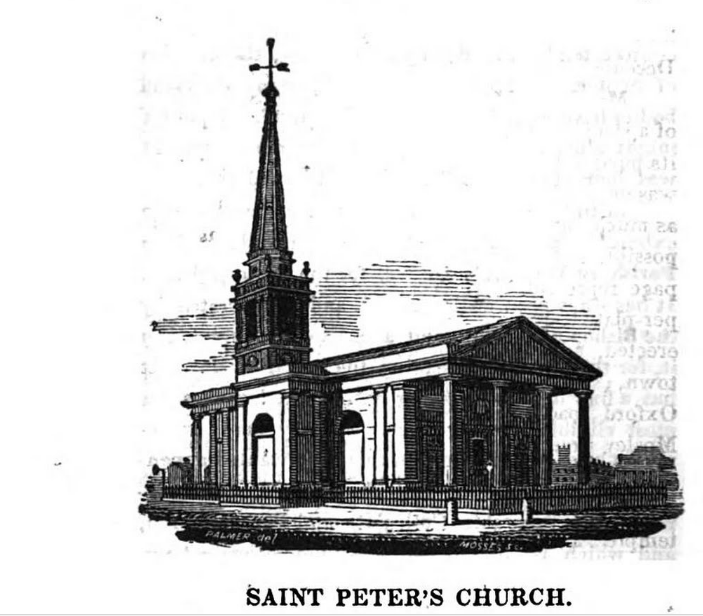
St Peter's Church in the early 1800s. 
Following the Spa Fields riot in London in 1816, the authorities in north-west England were very worried about local unrest. This was a time of great hardship for workers like the cotton weavers; many were starving.

The increasingly oppressive Lord Liverpool administration believed it faced a widespread underground movement plotting revolution. On 3 March 1817, the government suspended the Habeas Corpus Act: people could now be imprisoned without trial. 

All the Radicals in northwest England - those campaigning for parliamentary reform like weaver Samuel Bamford - were kept under close surveillance. Several spies were at work in the Manchester area, including Michael Hall (code-name ‘No. 1’) and James Rose (‘No.2’). 
Sometime around this date, Liverpudlian
Spy report from Hall and Rose, Dec 1816. HO40/10.
Joseph Mitchell, William Benbow and others decided to stage a grand march from Manchester to London. If those in power understood the depths of the weavers’ suffering, surely they would lower prices and help them find work? Each man would carry a petition to the Prince Regent; once he realized their distress, of course he would help them. Everyone would carry a blanket for their journey (so they were dubbed the ‘Blanketeers’).

The Blanketeers planned carefully. Each man would take three days’ provision in a knapsack; oatmeal and water was ‘the most nutritious and cheap’ food. They hoped that sympathisers along the route would put them up for the night, or maybe they could sleep in church halls. Some cotton spinners sent subscriptions of 5s each, and one friendly society sent £20.

The men would set off for London in groups of ten, headed by a leader with a petition tied round his arm; each leader would be under the control of a captain. Everything was now set for their grand march. 

But the government were not prepared to risk the spectre of a large body of men descending on the capital. What if riots broke out, as had so recently happened at Spa Fields? On the afternoon of 8 March, Bow St magistrate Robert Baker arrived in Manchester with warrants for the arrest of the northern reformers; several were caught and imprisoned.  

The plan was to stop the Blanketeers before they could pass the river Mersey. Baker was still sanguine that few would join the march; the weather was extremely poor. Nevertheless, Sir John Byng’s troops were ready and waiting to pounce as the Blanketeers gathered on the morning of 10 March. 
Letter re the Blanketeers' march, 10 March 1817. The signature was cut off the letter.
That evening, a Manchester man wrote to his father with exciting news: ‘We have today had the largest meeting of the lower orders ever known in this Town. They met near to St Peter’s Church where a Stage was erected for the Speakers to address them. The Soldiers and Constables were all upon the alert and about 11 O’clock the Horse Soldiers rode in upon them and succeeded in securing the whole of the Speakers and about 20 or 30 more of the ringleaders. They were sent to the New Bailey [the prison in Salford].

More Blanketeers were arrested at Heaton Norris, Stockport and Macclesfield by the yeomanry cavalry. Only one man reached London to hand in his petition: the grand march was over. 
The arrested Blanketeers were never brought to trial; they rotted in prison for several months before being released. 


Monday, 1 June 2015

The Lion Salt Works Re-opens!

Restored Stove House 5, with salt pan in foreground.
Last week I was lucky enough to enjoy a sneak preview of the Lion Salt Works' fabulous new visitor site at Northwich. Over £10 million has been spent on this mammoth restoration project, and the result is an outstanding new heritage attraction - unique in the UK.
The Salt Works, founded by the Thompson family in 1894, made salt by boiling brine in large open pans.
Open pan salt making, 1850.
The brine for the pans was pumped up from underneath the site, and you can still see the remains of the 'nodding donkey' pump. The site was in a very poor state of preservation prior to its restoration, but now visitors can explore two restored pan houses and three stove houses.


The former Red Lion pub at the site entrance has displays relating to the salt workers, and local artefacts, including a pretty salt ship.
The Salt Works will open to the public on Friday 5 June. There are lots of fun interactive exhibits for children in the museum, and a playground, and butterfly garden to explore. Entrance is free to the cafe and play area.
Huge salt crushing mill, Lion Salt Works.


There's a special offer, too, if you are a Salt. f you can show photo ID proof that your name is Salt, you can visit the museum free of charge. (This offer runs until 31 May 2016).
All author photos © Sue Wilkes. Video courtesy of West Cheshire museums.

Thursday, 31 October 2013

Cheshire Soulcakers


The quiet Cheshire villages of Antrobus and Comberbach have their own very special celebrations for All Hallows’ Eve - the Soul-cakers - a tradition dating back hundreds of years.

The Soul-cakers, or Soul Gangs, tour local pubs with their ancient Mummers' Play and its star performer, the supernatural Wild Horse.  Country folk in Cheshire and parts of Derbyshire once believed their ancestors’ souls could return to the family fireside at this time; they made special ‘soul-cakes’ as offerings to appease the family spirits.

The tradition differed from village to village.  Before WWI, around Malpas, Tarporley and Frodsham, children and adults marched from house to house, singing traditional ‘soul-caking’ songs in return for small, spicy ‘soul-cakes’ (similar to parkin cake).   

‘Soul a soul a soul cake

Please good missus, a soul cake...’                                                                                                                                   

In other villages, ‘Mummers’ plays were performed by the Soul-cakers, going from house to house.  Afterwards they passed the hat round for a collection - and some soul-cakes.

Over forty Cheshire villages are thought to have had versions of the play, but the Great War proved disastrous for the tradition; so many men never returned. Luckily Major Arnold Boyd, a Cheshire naturalist and author in the 1920s, was interested in the play.  Major Boyd wrote down the words, called a ‘nominy,’ which had been passed down through the generations, and helped the play survive. 

The Play has many unusual characters, for example, the Letter-in, Black Prince, King George, the Quack Doctor, and ‘Dick’ the Wild Horse and his Driver, resplendent in Cheshire Hunt livery. All the parts, played by men, are thought to represent the souls of the dead.

Wild Horse’s head is a horse’s skull, with its jaws wired so it can ‘snap’ its teeth alarmingly at the audience, and is worked by a man covered with a blanket.  His legs form the horse’s back legs, and a short pole supports the skull at the horse’s front end. 

Nowadays, the Soul-cakers play in local pubs, beginning on Hallowe’en, instead of house to house. The Antrobus Soul-cakers have raised hundreds of pounds for charity over the years. The plays have enjoyed a revival in other Cheshire towns and villages like Chester, Comberbach, Alderley, and Mobberley.  You can search for forthcoming events here on the Master Mummers Directory.


Image © Sue Wilkes: the Comberbach Mummers performing in 2000, with ‘Wild Horse’. 
'Riding a Mumming'. From J. Brand, Popular Antiquities, London, 1841. 


Thursday, 18 April 2013

Chester's Bid for City of Culture 2017

Chester has launched its bid to become UK City of Culture in 2017.  You can find out more and show your support for the bid here.


The city is packed with amazing history to explore, such as its Roman amphitheatre and its unique Rows, and I wish it all the best for its bid.
Images: Watergate St, Chester.

Stranger’s Companion in Chester, 4th edition, c. 1828.
Photo:

The Rows on Bridge St. © Sue Wilkes.

Monday, 4 March 2013

Talks in 2013

So far this year I have got two talks lined up, so please make a note in your diaries.  On Thursday 13 June I will be giving a talk on 'Stolen Childhoods'  to Witton Women's Institute at St Wilfred's Parish Centre (Witton Street) in Northwich; the meeting opens at 7.45 pm and my talk begins at 8pm.  I'll be discussing child labour in northwest England during the industrial revolution.

And on Saturday 30 November, Chester Library is holding a Jane Austen's Christmas event.  At 2pm I'll be giving a talk on Christmas time in Austen's day, and will read some extracts from my book Regency Cheshire.  Hope to see you there!


Images:

Mule Spinning Room, 1860s. Child piecers and scavengers at work in a cotton spinning mill, supervised by the overlooker. Charles Knight’s Pictorial Gallery of Arts Vol. I, (c.1862).
Rows in Watergate St, Chester. Stranger’s Companion in Chester, 4th edition, c.1828

Wednesday, 30 January 2013

History With A Bang: The Battle of Nantwich


Last weekend we put on our thermals and had a trip to Nantwich. Every year the townsfolk celebrate Holly Holy Day, which commemorates the battle which took place here on 25 January 1644.


During the Civil Wars the loyalties of counties, towns and families were divided between the cause of Charles I, who believed in the ‘divine right’ of kings to do as he wished with his country, and the Parliamentarians who believed that the King should govern with the consent of parliament.


Cheshire, too, was split between the two factions: Chester was staunchly royalist, but Nantwich was Parliamentarian.  During the winter of 1643, Nantwich was besieged by Lord John Byron’s forces.  On 25 January, Sir Thomas Fairfax (‘Black Tom’) lifted the siege and many Royalist troops were captured.  


The Sealed Knot and the Holly Holy Day Society stage a thrilling re-enactment of the battle annually at Mill Island after a procession through the town centre. As you can see, the combatants sport wonderfully detailed costumes. During the battle, cannon and musket are fired, and a good time is had by all. We really enjoyed it!