Search This Blog

Showing posts with label Your Family History. Show all posts

Tuesday, 25 October 2016

Roman Catholic Ancestors


Liverpool Metropolitan Cathedral.
My latest feature for Your Family History magazine (November issue) is on tracing Roman Catholic ancestors.
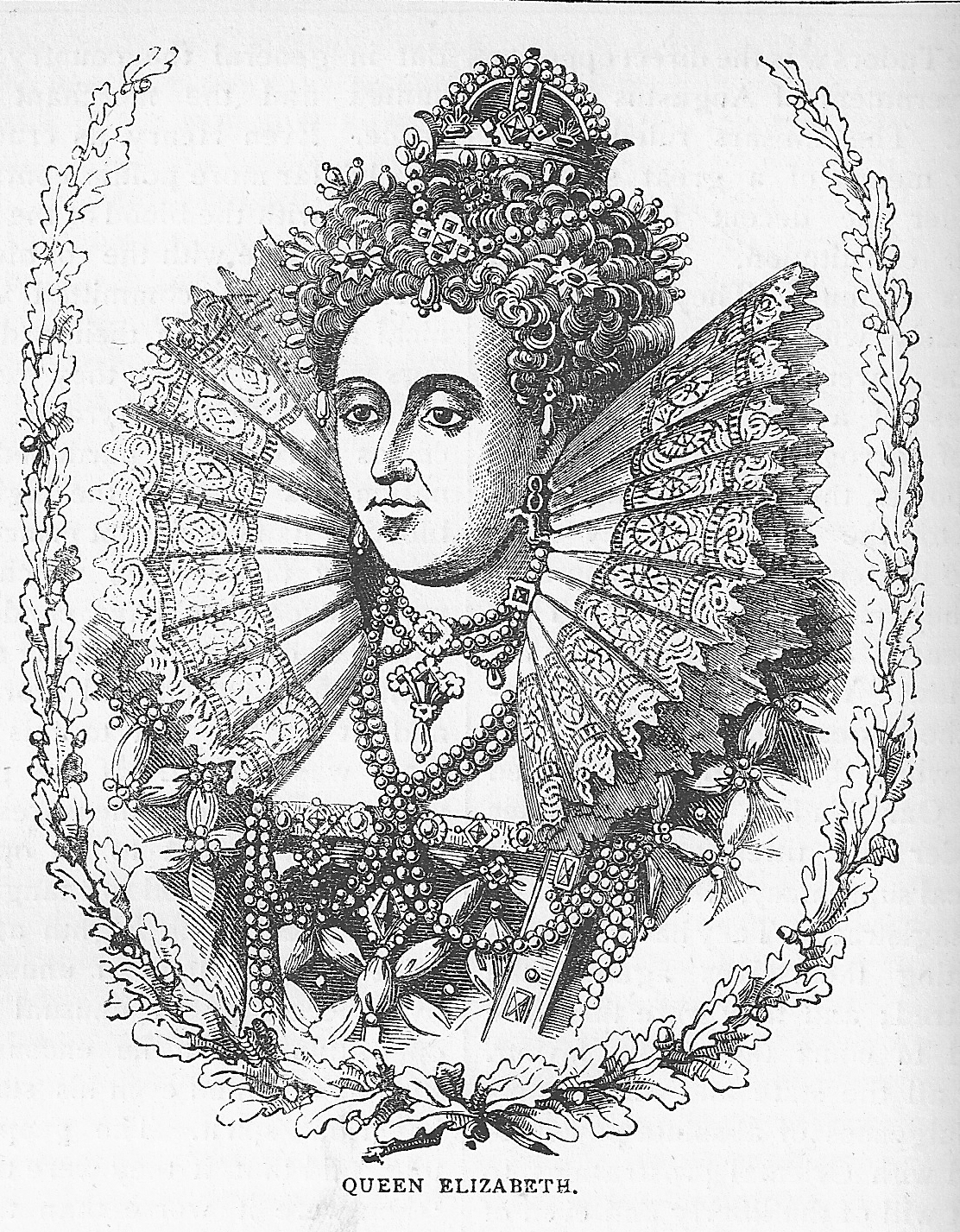
In 1534 Henry VIII severed the country’s links with Rome and the Pope, and the Anglican Church was born. Elizabeth I confirmed the Anglican Church’s status with the Act of Supremacy (1559), and the introduction of the Book of Common Prayer. 

 Although there were penalties for ‘recusancy’, Roman Catholics wished to be baptized and married according to the rites of their church. Lancashire families in particular clung on stubbornly to the ‘old religion’. So your Catholic ancestors may have been baptized, or married, once in an Anglican church, and again in a Catholic church in secret.
Things improved for Catholics following the Catholic Emancipation Act of 1829.

Furness Abbey.
I’ll be exploring this subject further in Tracing Your Manchester and Salford Ancestors, which will be published by Pen and Sword in the spring of next year. In the meantime, the MLFHS website has a free list of RC churches in Manchester and Salford, with addresses and dates of their opening and closure, and name changes.
Images:

Liverpool Metropolitan Cathedral, consecrated in 1967. © Sue Wilkes.
Elizabeth I. Pictorial Record of Remarkable Events, (Frederick Warne & Co., 1896).
Chapter House, Furness Abbey. Engraved by R. Sands from a drawing by T. Allom. People’s Gallery of Engravings Vol.2 (Fisher, Son & Co., 1845). 

Tuesday, 15 March 2016

Tracing Your Regency-Era Ancestors

My latest feature for the new-look Your Family History magazine (April issue) explores the wealth of Georgian records available to help you smash the pre-civil registration barrier: parish registers, poor law records, apprenticeships, Home Office papers, criminal records, militia lists, newspapers and magazines, etc. 

There's also a great review of Regency Spies, and you can also 'Meet the Author' and read an interview with yours truly!
Image: 

‘A Street Row’. Footpads and robbers were rife in Regency England. The night-watchman waves his rattle to call for help. Illustration by George and Robert Cruikshank, Life in London, John Camden Hotten, Piccadilly, 1869. Author’s collection.

Wednesday, 12 June 2013

Discover Your Ancestors Review


Launching a new family history publication may be considered a brave step by some following the recent demise of the online Discover My Past (back issues still available), and the much lamented Family History Monthly.   

However, the new Discover Your Ancestors Periodical is hoping to build on the success of the glossy annual bookazine, available from newsagents or the publisher. The monthly magazine is published in association with theGenealogist.

The first issue (May) had an article on tracking down archives by expert author Simon Fowler, social history articles on the early aviators and on child labour, a look at records available for Essex, book reviews and more.The June issue focussed on the suffragette movement, records for the legendary Dambusters squadron, how to research Welsh Anglican and Nonconformist ancestors, plus a look at Birmingham resources and more.

Looking at the first two issues, I would say that the magazine is initially aimed at those starting out in family history.  However, hardened campaigners should still find the social history articles and focus on particular records valuable, particularly if you like to put your ancestors’ lives in context. Next month's features are listed here, including one on vaccination registers by yours truly.

Subscribers can download the whole magazine in pdf. format or you can just browse each article online. Unfortunately I can’t comment on how easy the magazine is to read on mobile devices as I am old-fashioned and just use my phone for texts and calls!

The monthly periodical is 20 pages long, fully illustrated, and comes with free subscriber data.  It costs £1 per month (£12 for a year’s subscription). 
This compares with £4.99 for BBC Who Do You Think You Are? (100 pages long).  Your Family History and Family Tree are both £4.99 I think (the latter is £3.99 for its digital edition).  These magazines also have subscriber offers and offer free data sets.

As always with the family history magazines, I think which you choose very much depends on your budget, how experienced a researcher you are, and which datasets are useful for your personal research.  You may like to flit between each magazine according to which records are being discussed that month, or you may prefer to treat yourself to a subscription so that you don’t have to remember to buy it each month, and so that you can keep up with the latest news.  

Do you prefer a print magazine which you can thumb through (in or out of the bath!), or do you prefer to read articles on your mobile device or PC?  I’d love to hear your views!


Monday, 10 October 2011

Parish Apprentices’ Stories

For hundreds of years, orphans and poor children whose parents could not afford to feed them were cared for by the parish. They faced an uncertain future.

Parish overseers saved ratepayers’ money by apprenticing children into trades. This saved these children’s upkeep, and in theory, the children could earn a wage when grown up. In practice, the ‘skills’ they learnt were often useless for earning a living after they had served their time.
In general, children were apprenticed from around age ten, although there were reports of younger children being ‘bound’. Boys could be apprenticed until they were twenty-four (twenty-one after 1767); girls were apprenticed until they were twenty-one, or until they got married.
Parish overseers did not need parents’ consent for these apprenticeships. Children apprenticed far away from their home parish, for example, like those sent into the early textile mills, might not see their parents for many years. Families who objected had their parish relief stopped.
Children were apprenticed into many different trades: textiles, coal mining, farm labour, domestic service, the navy, etc. Some masters and mistresses treated the children well. Others treated them very cruelly, even ‘respectable’ members of society such as Mr and Mrs Sloane, who were prosecuted for their horrific treatment of parish apprentice Jane Wilbred.
You can find out more about the lives of parish apprentices and the stories of children and teenagers such as Jane Wilbred, Anne Naylor and Mary Anne Parson in The Children History Forgot. And my feature for this month’s Your Family History magazine has tips on how to use apprenticeship records to research your ancestors.

Images: The Apprentice House at Quarry Bank Mill, Styal. The Styal mill children were parish apprentices. They were treated more humanely at Styal than at many other cotton factories © Sue and Nigel Wilkes.

Police try to hold back an angry mob in Giltspur St, London, as George Sloane (accused of ‘frightful cruelty’ against his servant Jane Wilbred), is taken to appear before the magistrates. Illustrated London News, 4 January 1851. Author’s collection

Monday, 3 October 2011

The Children History Forgot Reviews and Press Comment


 'I read your books The Children History Forgot and Tracing Your Canal Ancestors.  They were fantastic... I loved both books.  I knew poor children had it rough but had no idea just how bad their conditions were, or the appalling way they were treated. It was certainly an eye-opener!' Mr Andrew Bell, Shetland.

‘Sue Wilkes’ latest book is an impressive account, both describing the exploitation of child labour at the very heart of British society, and the struggle for reform over the issue. The book starts with the collapse of the centuries-old apprenticeship system with the rapid developments of the Industrial Revolution, and shows how…children from as young as seven years old were increasingly forced to work as parish apprentices in factories, often on fifteen-hour days. Reformers such as Robert Owen in New Lanark tried to improve conditions… but progress was slow.

Wilkes skilfully describes the battles fought for reform on all fronts, in the mines, the agricultural sector, the factories and even the humble domestic chimney, in an attempt to allow children to right to simply be children once more. A powerful account recalling a forgotten workforce on which an empire was built’. Discover My Past England, September 2011.


'While we may often bemoan current health and safety regulation, just imagine what life would be like were there none... no laws regarding working with dangerous chemicals; no safety equipment... and no education, no hope of a better life but for a fortunate few. Yet this was the draconian reality of life for a silent majority... Wilkes' work is eminently fascinating, and is a necessary and valuable piece of research into an era that may have gone - at least on these shores - but should not be forgotten'. Your Family History, Issue 20.

'Sue Wilkes traces the human cost - in human and economic terms - of Britain's success... Wilkes gives graphic descriptions of the "fearful conditions" in which children worked... This book is meticulously researched with fascinating documentary evidence and excellent illustrations. It can be recommended as an informative and compelling work... it engages and educates from start to finish.' Parson Woodforde Society Quarterly Journal, Autumn 2011.

‘Sue Wilkes’ latest book tells the story of the long fight for… reform during the late Georgian and Victorian eras and takes a fascinating insight into the working lives of our ancestors’. Chester Chronicle, Flintshire Chronicle, 8 September 2011.

'The style is colloquial... this book... will... successfully appeal to its intended readership'.  Book reviews, Transactions of the Historic Society of Lancashire and Cheshire, Vol. 160, 2011.