Search This Blog

Showing posts with label Charlotte Brontë. Show all posts

Monday, 20 March 2017

84 Plymouth Grove, Manchester

84 Plymouth Grove.
Recently I had a very enjoyable visit to Mrs Gaskell's former home in Manchester - somewhere I've longed to explore for ages.

In this house (no. 42 in Gaskell's lifetime) Elizabeth wrote Cranford, Ruth, North and South, The Life of Charlotte Bronte, and her last, unfinished work, Wives and Daughters.

(Mary Barton was written at one of the Gaskells' previous houses, 121 Upper Rumford St in Manchester).


Family portraits and heirlooms.

Elizabeth grew to love her new home; there was plenty of room for family and friends, and it had a large garden for her children to play in.

William had his own study for his writing and pastoral work; Elizabeth often wrote at a round desk in the dining room.

After Elizabeth's sudden death in 1865, her husband William and unmarried daughters Meta and Julia stayed in the house. The two sisters were well known locally for their charity work.


Elizabeth's wedding veil. 

The house has been restored and furnished in a similar fashion to how the Gaskells would have known it; you can also see some family heirlooms, including Elizabeth's wedding veil, which was worn by her daughter Marianne on her own wedding day.


You have to pay for admission, but your ticket lasts for 12 months, so don't lose it! It was a cold, wet day when I visited, but it would be nice to explore the garden again in the summer.


Blue Plaque.
The dining room.

Thursday, 24 March 2016

Charlotte Bronte Anniversary

This year is the 200th anniversary of the birth of Charlotte Brontë on 21 April 1816, and you can read my feature on the birth of the Brontë family legend in Issue 5 of the Discover Your Ancestors bookazine. Lots of events are planned for the forthcoming bicentenaries of the births of Charlotte, Branwell, Emily, and Anne Brontë, and you will be able to find out more on the Brontë200 website (currently under construction).  
The same issue of the magazine has another feature by me on secondary education and teacher training. University and college records can be a good way of researching your ancestors' schooldays, as well as finding information on other family members.  


Images:


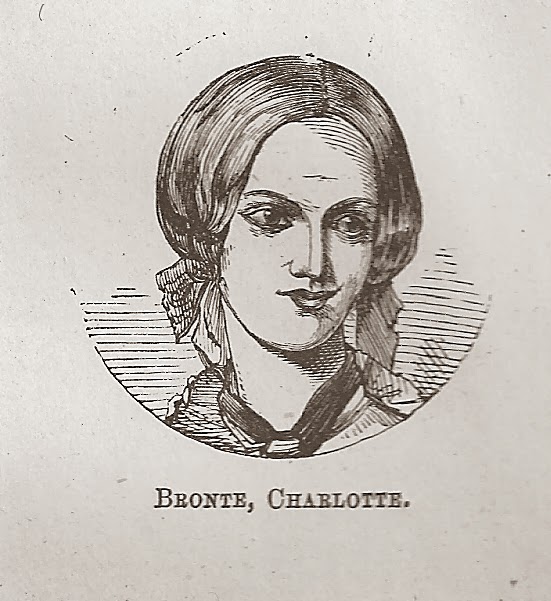
Charlotte Brontë. Engraving for Clement Shorter, The Brontës And Their Circle, J.M. Dent & Sons Ltd, c.1914. Author’s collection.

Hotel de Ville, Brussels. Patrick Brontë visited Brussels with Charlotte and Emily in February 1842. The girls studied abroad so they would be better qualified as teachers and governesses. Cassell’s Encyclopaedia, a Storehouse of General Information, Vol. 2, c.1894.

Wednesday, 27 November 2013

Schools and School Registers

My latest feature for Who Do You Think You Are? magazine focuses on school registers, which are a wonderful resource for tracing your ancestors' childhood. Until fairly recent times, parents paid for their children’s education.  Admission registers were essential so that schools could check how many children attended, their parents’ contact details, and whether school fees were up-to-date. 

Upper class children, and middle class children whose parents were well-off, were usually taught by tutors or governesses at home during their early years.  When they were about ten years old, boys went to schools like Eton and Harrow to prepare them for university. Girls like Jane Austen and her sister Cassandra were sent to a ‘honest, old-fashioned boarding school… where girls might be sent to …scramble themselves into a little education without any danger of coming back prodigies’ (Jane Austen, Emma, 1815).  Most boarding schools taught a smattering of ‘ladylike’ accomplishments rather than a good, all-round education.  Alternatively girls attended a local day school or a seminary if affordable.

Working class children (if their parents were prepared to pay for their education) attended ordinary day schools for a few pence per week, unless they obtained a charity (‘Blue Coat’) school place or a free scholarship. Thousands of poor children had no education at all, or perhaps just went to Sunday school.
Middle-class parents in straitened circumstances who did not want their children to mix with working-class children at ordinary day schools, tried to get them a place at a charity school where education was free or subsidized.

The Revd. Patrick Brontë (1777–1861) had a very limited income. He sent his four eldest daughters, Maria, Elizabeth, Charlotte and Emily to the Clergy Daughters’ School, Cowan Bridge after their mother Maria’s tragic death.  The fees for this school were subsidized by a charity.  The school’s regime was spartan, with poor quality food, and the two older Brontë sisters, Maria and Elizabeth, whose health was not robust, died in 1825. Charlotte later immortalized her experiences in Jane Eyre (1847). 

Some public and grammar school registers are available in large reference libraries, and free on Google Books and the Internet Archive.

Images:
A class of school girls with their teacher, postcard circa 1910.
Charlotte Brontë.
Plaque marking the location of the Oliver Whitby (Blue Coat School), Chichester.  © Sue Wilkes.