Search This Blog

Showing posts with label Victorian. Show all posts

Monday, 30 September 2024

Out Now!


My latest release, Young Workers of the Industrial Age, is out now!

It's currently on special offer at Pen and Sword, or alternatively you can buy it on Amazon UK

American readers can pre-order it here on Amazon US  - it will be released in the USA on 30 November. 
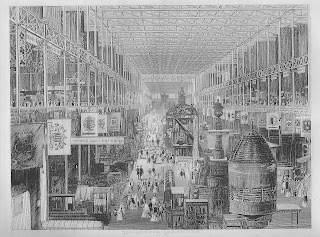
The Great Exhibition, 1851.
Once upon a time, in the reign of Queen Victoria, a fairytale palace of glass was built. 

The Great Exhibition of 1851 showed the wonders of Britain’s industry and empire.

But there was a dark truth behind this glittering display. Great Britain’s industrial might was built on the backs of men, women and little children.


In A Welsh Coal Mine.


Children of all ages worked day and night. They toiled in the silk mills, cotton factories and bleachworks. 

They toiled beneath the ground in coal mines, far from the light of day. And they toiled in the dark heart of the glasshouses, lit only by the blaze of the furnaces.

Children worked on the land, too. Their work, like helping bring in the harvest. was regulated by the seasons. 

The Gleaner, 1830s. 

It was incredible just how many different trades and industries used child labour in Britain. Children also worked in people's homes as domestic servants.

Over the next few blog posts, I’ll be taking a look at some of these occupations, and the perils that children faced in some of them.


All images from the author's collection. 


Thursday, 10 November 2011

The Right Path

During Georgian times, many people in the upper and middle classes regarded ‘the poor’ as a problem that society was lumbered with permanently, as ordained by heaven. The work ethic was all-important; idleness was frowned on. The devil ‘found work for idle hands to do.’  Families who did not use every means to support themselves, for example by making their children work, were considered improvident and a burden on the poor rates.
Educational writers such as Sarah Trimmer (1741-1810) and Hannah More (1745-1833) advocated work for young children as a good way of preventing them falling into lazy habits. Trimmer thought that schools of industry, such as the one at Lewisham (1796) which taught knitting and spinning, were a good way of setting poor children on the right path.  People were more willing to take children on as apprentices if they already had some training.
This idea continued into Victorian times; often workhouses had industrial schools attached to them where children learnt skills to help them earn a living. Many charity schools, such as the ragged schools, like the Westminster Juvenile Refuge and School of Industry gave homeless children food, a safe place to sleep and training in skills such as shoe-making, tailoring, leather-gilding, wood-turning or French-polishing.

Images: Hannah More, who opened several Sunday schools in Somerset. Lady’s Monthly Museum, July 1798.
Sarah Trimmer, a keen supporter of charity and Sunday schools. Lady’s Monthly Museum, November 1798.
The Lambeth Ragged School which opened on 5 March 1851Illustrated London News, 8 March 1851. All images from author's collection.

Tuesday, 20 September 2011

Schools Which Weren’t Really Schools

Child labour in the Victorian countryside was not confined to working on farms or in the fields. Families turned to domestic industries and handicrafts to bring in a few more pennies. Children worked for long hours in close, stuffy rooms in the straw-plaiting, shirt-button making, glove-making and pillow-lace industries. (Straw plait was used to decorate bonnets or make hats).

During the nineteenth century, thousands of women and children were employed making pillow-lace (hand-made lace) in Oxfordshire, Bedfordshire, Buckinghamshire, Northamptonshire and Devonshire.
Children as young as five years old worked in lace ‘schools’, which were really workshops.
Bedfordshire children worked an eight hour day, for which they earned just a penny or three halfpence. The children became ill and had eye problems after doing such intricate work for long hours. Sometimes the children were taught a little reading and writing, but their parents expected them to perform a minimum amount of work per day.
The ‘schoolmistress’ who supervised the children used a big stick to keep their minds on their work.

Some of the children who worked in straw-plaiting ‘schools’ were very tiny. An investigator for the Children’s Employment Commission in the 1860s found George Tompkins, aged only three and a half years old, making straw plait in a school at Houghton Regis in Bedfordshire.

There are some images of children making pillow lace, and more info on the lace schools, here.
Image: The lace on these morning dresses was almost certainly hand-made. Lady's Monthly Museum, December 1798.

Thursday, 25 August 2011

The Rich Child in His Castle, the Poor Child at His Gate

What was life like for a child growing up in Georgian and Victorian times? While researching The Children History Forgot, I was struck by the vast gulf between rich and poor. Children like this smartly dressed boy and girl, born into a genteel family, were educated at home in their early years. Sons were sent to school, then university. Daughters were often educated at home, although some later went to school to learn accomplishments suitable for their future roles as wives and mothers.
Children born into poverty were expected to earn a living from as early an age as possible, like these ‘mudlarks’ scavenging along the banks of the Thames. They collected and sold bits of coal, scrap metal or rope to try to earn a few pennies. The only schools likely to be available to them were Sunday schools, or missions like this one.


Images: Fashion plates, Ladies’ Cabinet of Fashion, Music and Romance, Vol. XII, 1837.
Children mudlarking on the Thames, Old and New London Vol.III, (Cassell, Petter & Galpin, c.1878).


Wednesday, 13 April 2011

Balmy Bala

Just got back from a lovely short break in Bala, north Wales. The weather was scorchingly hot on Sunday – hope that wasn’t the only summer we’re going to get this year! We also explored the coastal town of Barmouth, where there was a nineteenth century lock-up for malefactors. The building, built c.1834, had one cell for men and another for women.

The town lock-up or ‘bridewell’ was used to contain drunk and disorderly citizens or those waiting to go before the magistrates. Several Cheshire towns such as Nantwich, Stockport and Farndon had them, too.
I hope to have some exciting news soon – watch this space!
Photo: Nineteenth century lock-up, Barmouth. © Sue Wilkes

Tuesday, 8 February 2011

The Children History Forgot

Once upon a time, Britain forged a mighty industrial empire: built with the blood, sweat and tears of society’s most vulnerable members. The Children History Forgot explores young people’s working lives during the late Georgian and Victorian eras, when boys and girls created almost every item in our ancestors’ homes: bricks, glass, cutlery, candles, lace, cotton and more.

All over Britain, from the coal mines of Wales to the flax mills of Ireland, children toiled in factories and workshops, underground and on the land. A chosen few like Samuel Slater began new lives in America but thousands of others have been forgotten by history: killed by unguarded machinery or poisoned by metal or pottery dust. Many of these were conscript workers: pauper apprentices trapped by their poverty.
My book tells the story of the long, heartbreaking fight for reform. The story of men like Lord Shaftesbury, Richard Oastler and the tireless factory inspectors who battled, not only to improve youngsters’ working conditions and opportunities for education, but also to change society’s attitudes towards childhood. The Children History Forgot takes a fresh look at the true cost of Britain’s industrial success story.

You can pre-order The Children History Forgot at Amazon UK here, or here if living in the US.

Friday, 29 October 2010

The Children History Forgot

I am very pleased and excited to announce my book on child workers, 'The Children History Forgot', has been accepted by Robert Hale and is now going through the production stages!

The book was originally titled 'Stolen Childhoods', but we belatedly discovered there is another book with a very similar title by another author (with a different historical slant) due out next year.

'The Children History Forgot' will tell the stories of young workers (children and teenagers) during late Georgian and Victorian times in many different industries - from cotton manufacture to candle-making.
I will post an update on my blog as soon as publication date is confirmed.

Wednesday, 27 October 2010

A new Victoriana site

If you are interested in Victoriana, there's a new website crammed with images and articles from the Victorian world, including features on working life, history and fashion. Do check it out - an image gallery is planned from which you can download images for greeting cards, etc.

Wednesday, 23 June 2010

Time Off?

It seems most of Britain is going to take time off to watch the England World Cup game this afternoon. What would the Georgians and Victorians have thought? If you worked in a mill, many factory owners only allowed one or two days’ holiday per year. Some mills and collieries closed down for Whit Monday or Wakes Week. Any time off was unpaid; workers saved up all year for their annual holiday. Under the factory acts, women and child workers were allowed two whole days and eight half days holiday per year. Women and children employed in workshops were not legally entitled to any holidays.
Time off to watch a football match? Not likely!

Image: An early nineteenth century cotton mill. Reports of the Inspectors of Factories, October 1873. (Author’s collection.)

Sunday, 18 January 2009

Stolen Childhoods Talk


I’ll be giving a talk to the Gaskell Society at 1pm on 10 February at the Cross St Chapel, Manchester. During late Georgian and Victorian times, children worked long hours in many different industries: coal, cotton, glass and metal trades. I’ll be looking at their daily lives and working conditions. If you are attending the talk and have bought my book Narrow Windows, Narrow Lives, if you bring your copy I’ll sign it after the meeting has finished.

Image: Calico Printing, 1840s. Pictorial History of the County of Lancashire, 1844. Child workers in the roller printing works (illustrated here) were usually about ten years old; this little girl is probably helping her father rather than working full time.