Search This Blog

Showing posts with label Jane Austen's Regency World. Show all posts

Monday, 9 March 2026

Wickham's 'Blue Coat'


Merino sheep produced short-staple wool suitable for cloth.

My latest feature for the March/April issue of Jane Austen's Regency World is on the increasing mechanization of the woollen industry.

Wool was such a ubiquitous material that 'cloth' was synonymous with woollen fabric. 

 Despite cotton's increasing popularity, woollen cloth was still essential for warmth in Britain's unpredictable climate. Fashionable gentleman like George Wickham in Pride and Prejudice wore blue cloth coats.

A wool-carding machine.
Short-staple (short-fibre) wool was used for cloth, and a fleece required a great deal of cleaning and processing before it could be spun into thread and woven into cloth.

It was primarily the processing of the yarn which moved into the factories during late Georgian times; 'carding', 'scribbling', 'slubbing', and spinning on machines like James Hargreaves' spinning-jenny. 


A slubbing-machine or 'billy'. 


I'll be covering the innovations in the worsted industry in the May/June issue. 

Tuesday, 1 July 2025

'Your Irish' Linen


My latest feature for Jane Austen's Regency World (July/August issue) is on linen manufacture. 

Flax-drawing and flax-breaking. 

In a letter to Cassandra, (16 September 1813), Jane Austen wrote, ‘Fanny bought her Irish [linen] at Newton’s in Leicester Square, and I took the opportunity of thinking about your Irish, and seeing one piece of the yard wide at 4s…it seemed to me very good’.   

Linen was made from flax; it required a great deal of processing -  'dressing' - to turn the plant's woody stems into yarn for weaving. In the late 1780s, the first flax-spinning factories appeared in Britain. Scotland and Yorkshire were important linen manufacturing areas. 

An enormous flax mill was also opened near Shrewsbury. Ditherington Flax Mill (1796) was the first ever fireproof mill in the world. 

Ditherington Flax Mill

Linen was used for items like ladies’ shifts, nightwear, underwear, and dressing-gowns, and of course, table and bed 'linen'. 

Images:

Top: Flax-drawing in a factory (left) and flax-breaking (right). Charles Knight, Knight’s Pictorial Gallery of Arts, Vol. 1, London Printing and Publishing Co., c.1858. Author’s collection. 

The Spinning Mill at Shrewsbury Flax Mill Maltings, built c.1796. Formerly Ditherington Flax Mill, it was converted to a maltings in the late nineteenth century. © Sue Wilkes. 

Wednesday, 5 March 2025

'Hot-Pressed Paper'

My latest feature for Jane Austen's Regency World (March issue) is on the art of paper-making. Paper was needed, of course, for Jane's letters, and for her books to be printed on. 

Paper was commonly made from cotton or linen rags. Some of the process was already mechanized and powered by water - there were already paper-mills in the mid-eighteenth century - but it was a slow process. It could take up to three months to make one sheet of paper by hand, depending on its quality. 

'Hot-pressing', as mentioned in Jane's novels, involved heating a sheet of writing-paper between cast-iron plates to give a nice smooth finish. 

Louis-Nicholas Robert's 'continuous wire process' (1798) made it possible to make much larger sheets of paper by machine. Within a few years, the first paper made in a single continuous roll was made at Frogmore Mill in Hemel Hempstead. 

The paper was also cut by machinery, tended by child workers. 

And the more paper was made, the more novels could be printed!

Images from the author's collection:

Top left: Paper making by hand at Hollingworth's Turkey Mill, Maidston, Penny Magazine, 1833. 

Centre: Paper-cutting machine with child workers, Monthly Supplement of the Penny Magazine [96], 31 August to 30 September, Charles Knight, London, 1833. 

Image right: Dennison (Denison) and Harris’s Patent Paper-Making Machine, patented 1 January 1825. Luke Hebert, The Engineer’s and Mechanic’s Encyclopedia, Vol. II, Thomas Kelly, London, 1836, Nigel Wilkes Collection. 


Tuesday, 31 December 2024

Charles Lamb, plus Early Locomotives


Happy New Year, everyone! I hope you all had a peaceful Christmas and New Year. 

The January/February 2025 issue of Jane Austen's Regency World has two features by me, on two very different subjects.

The first feature is on the tragic life and career of the author Charles Lamb. 

Charles Lamb was well known for his comic essays; but his life was marked by deep personal tragedy. 

Very sadly, the Lamb family suffered from mental illness, especially his sister Mary. 

Charles's life was changed forever after Mary, while very distressed, fatally stabbed their mother. 

Nevertheless, Lamb steadily forged a writing career, publishing plays, novels, poems, and essays (under the sobriquet Elia). He also collaborated with Mary on their Tales from Shakespeare (1807), which is still in print today.

My other feature, part of my continuing series on the industrial revolution, is on the advent of railway engines, including Richard Trevithick's ground-breaking 'Catch-Me-Who-Can', and his 'tram-engine' (1804) which hauled minerals at Pen-y-Darren ironworks, South Wales.  


Images from author's collection:

Top left: ‘Charles Lamb and Samuel Taylor Coleridge’. Illustration by Archibald Standish Hartrick (1864–1950), The Letters of Charles Lamb, Simpkin, Marshall, Hamilton, Kent & Co. Ltd, London, c.1903. 

Image centre right: Interior of the Bell at Edmonton, from a sketch by J. White. A friend from the country had called upon Lamb.

Bottom. Exterior of the Bell at Edmonton, in Charles Lamb’s time. W. Carew Hazlitt, Mary and Charles Lamb: Poems, Letters and Remains, Chatto & Windus, London, 1874. 

Image Left: Trevithick's High Pressure Tram-Engine, The Engineer’s and Mechanic’s Encyclopedia, Vol. II, Thomas Kelly, London, 1836.


Friday, 1 November 2024

As Poor As A Stockinger


 My latest feature in my continuing industrial series for Jane Austen's Regency World (November issue) is on framework-knitters (stockingers). 

Framework-knitters were extremely poorly paid. In March 1819, a Leicester framework-knitter, William Jackson, told a parliamentary select committee that none of the workmen earned more than six shillings a week (36p) on average, despite working a 15-hour day. 

Children helped their parents. Leicester had a wife and six children to support. He said that he earned eight shillings a week for making 'superfine' stockings, and he had 'put three of them into the frame' [i.e., making stockings], and they earned him 'nine shillings a week more'. William's wife did some seaming, for which she earned one shilling and sixpence. So their total income was 'eighteen shillings and sixpence'. The family was behind with their rent, and were in debt, even though Jackson had sold some of his belongings to try and make ends meet. 

Washing, fulling or 'felting' stockings. 

Probably one of the best-known stockingers was Jeremiah Brandreth, who was hanged for treason in 1817 following the ill-fated Pentrich Rising. Many contemporaries believed that Brandreth (a former Luddite), and his unfortunate companions on the gallows, was entrapped by a notorious government spy

Image of a stocking weaver courtesy of the Wellcome Library

Image of washing, fulling and felting stockings from Denis Diderot and Jean le Rond d’Alembert, Recuil de Planches de l’Encyclopédie Par Order De Matières, Tome Sixième, (Panckoucke, Paris, 1786). Author’s collection. 

Tuesday, 25 June 2024

Forging A New Age of Iron

Butterley Iron Works, Derbyshire. 

My latest feature in my Industrial Revolution series for Jane Austen's Regency World (July/August issue) is on the advances made in cast-iron manufacture. In 1775, the year that Jane Austen was born, James Watt’s designs for improved steam-engines first became commercially available.  

Boulton and Watt’s Soho Foundry's steam-engines engines supplied the ‘blast’ for furnaces (instead of bellows); powered forge hammers; and later, powered rolling- and slitting-mills. 

This beach house at Sidmouth (image right) has a cast-iron balcony or 'balconette). 

The genry loved the utility and simplicity of iron. Mr Rushworth’s house in Mansfield Park has a ‘long terrace walk, backed by iron palisades…beyond the bowling-green’.  And a locked iron gate gives Henry Crawford the key to gaining Maria Bertram’s heart. 

Images: 

The Casting-house at Butterley Iron Works, Ripley, Derbyshire. The Pentrich rebels attacked the works in 1817, but were thwarted by its manager. Charles Knight’s Pictorial Gallery of Arts, Vol. 1, London, (c. 1860). Author’s collection. 

Sidmouth photo © Sue Wilkes. 


Tuesday, 14 May 2024

'A Very Pretty Spotted Muslin'


In Northanger Abbey, Miss Tilney wore a 'very pretty spotted muslin'.  My latest feature in my ongoing series for Jane Austen's Regency World (May/June issue) is on calico-printing. You will be able to find out more about the lives of child workers in the calico-printing industry in my forthcoming book, Young Workers of the Industrial Age, to be published by Pen & Sword this autumn. 


Images from the author's collection:

Above: Morning Dress, Lady’s Monthly Museum, February 1801. Figure on the right is wearing a ‘printed cotton gown’ with a ‘stone-coloured pelisse, trimmed with fur. A white velvet bonnet, crossed with green velvet bands’. 

Image right: Block printer and tierer or ‘tear girl’. Children as young as six worked for twelve hours or more helping block printers. Charles Knight’s Pictorial Gallery of Arts Vol. I, (c.1862).

Tuesday, 7 January 2020

Cato Street Conspiracy Bicentenary

This year marks the bicentenary of the Cato Street Conspiracy. My latest feature for Jane Austen's Regency World magazine looks at the story behind the capture of some of Britain's most desperate revolutionaries on 23 February 1820. 

You can see a contemporary 'Narrative' of the Conspiracy here on the British Library website, and some original documents relating to the conspirators here on the National Archives website. The Treasury Solicitor papers at the National Archives also include a weapon that was used in evidence at the trial of Arthur Thistlewood and his crew.
Arthur Thistlewood.

An exhibition on George IV's reign, 'Georgian Delights', is currently on show at the Weston Gallery, Lakeside Arts Centre, Nottingham. Dr Richard Gaunt, the exhibition curator, will give a talk on Cato Street on 24 February at the Djanogly Theatre.

You can also find out more about the background and build-up to the Cato Street Conspiracy in my book Regency Spies.

Wednesday, 21 August 2019

Review of Vignettes!

I'm absolutely thrilled with this lovely review of Vignettes in the September/October edition of Jane Austen's Regency World! A big "Thank You" to reviewer Jocelyn Bury! This edition of the magazine also includes my article on marriage and divorce in Austen's day, plus an exclusive look behind the scenes of the new TV adaptation of Sanditon, Jane Austen's last unfinished novel.

Wednesday, 15 May 2019

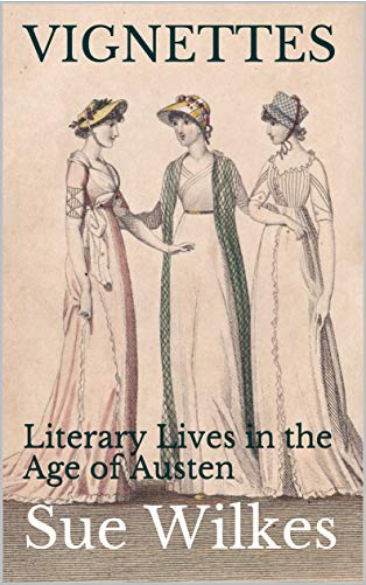
My New E-Book: VIGNETTES

I'm very pleased to announce that I've just published a new book on Amazon Kindle: 'Vignettes: Literary Lives in the Age of Austen'.

Here's a copy of the blurb:

'Jane Austen lived in a ground-breaking era for English Literature. This was the age of William Wordsworth, Percy and Mary Shelley, John Keats, and others. Austen herself drew inspiration from the writers who came before her, like Doctor Johnson, Thomson, Cowper and Fanny Burney. She faced stiff competition from the rival novelists of her day like Ann Radcliffe, Mary Brunton, and Walter Scott.
Jane Austen's House Museum, Chawton. 
Away from the novelists’ world, writers like Mary Wollstonecraft argued passionately for women’s rights, and Parson Malthus, Robert Owen and Thomas Bernard discussed how best to deal with the poor.
Based on the author’s previously published articles in Jane Austen's Regency World magazine, this lively exploration of Austen’s times also looks at popular literature. How did our tradition of Christmas ‘annuals’ begin? Were female novel-readers really the ‘slaves of vice’? Find out more in 'Vignettes'. '

Robert Burns. 
The book also discusses the career of poet Robert Burns, writer Robert Southey, and publisher Rudolph Ackermann.

I hope you enjoy reading it as much as I've enjoyed researching the stories of all these wonderful writers over the years!

Wednesday, 6 May 2015

Nelson and Emma

My latest feature for Jane Austen's Regency World looks at Emma Hamilton's affair with Lord Nelson. You can also find out more about Cheshire-born Emma Hamilton's early career here on my Jane Austen blog.


Image: Lord Nelson, Heroes of the British Navy, Frederick Warne & Co., c. 1900. Nigel Wilkes Collection.

Saturday, 1 November 2014

Going Shopping With Jane Austen!

High Change in Bond St; Courtesy Library of Congress,
The latest issue of Jane Austen's Regency World includes my feature on going shopping in Jane Austen's day, Maggie Lane explores the work of Elizabeth Inchbald, and Penny Townsend discusses Austen and William Shakespeare. There's also a review of my new book A Visitor's Guide To Jane Austen's England by Joceline Bury.  Last but not least, the magazine has lots of wonderful Christmas gift ideas for Austen fans!

Friday, 27 August 2010

Mr Knightley's Bedtime Reading?

If Jane Austen’s hero Mr Knightley (Emma) wanted an entertaining bedtime companion, he might have chosen the latest issue of the Gentleman’s Magazine, which was founded by Edward Cave under the nom-de-plume 'Sylvanus Urban'.  The first issue, which appeared in January 1731, included a report on the ‘Melancholy Effects of Credulity in Witchcraft’ concerning recent witch trials in Somerset, and Pennsylvania in America.
Dr Samuel Johnson, then an unknown, starving hack writer, was an early contributor. Johnson had no regular income until Cave took him under his wing. The magazine published essays of antiquarian interest, reviewed the latest books such as Austen’s Emma, and included human interest stories like that of ninety year old William Crossman, a Somerset man who ‘kept his coffin by him for fifty years, and used it as a cupboard.’ (July 1824).
This immensely popular publication lasted right into the twentieth century. You can find out more about the Gentleman’s Magazine success story in the latest issue of Jane Austen's Regency World. There are also some early issues of the magazine at The Internet Library of Early Journals.
Images from the author’s collection:
Edward Cave. Boswell’s Life of Johnson, (Routledge, Warnes, & Routledge, 1859).
Portrait of Joseph Cradock (1741-1826), Senior Fellow of the Society of Antiquaries, Gentleman’s Magazine Vol. XCVII, January 1827.
Frontispiece of Gentleman’s Magazine Vol. XCVIII (July-Dec 1828), depicting the newly built St Katharine’s Hospital, Regent’s Park London, the Master’s House and coats of arms.

Sunday, 11 July 2010

A fantastic review from Jane Austen’s Regency World!

I was thrilled to read Jocelyn Bury’s lovely review of Regency Cheshire in this month’s Jane Austen's Regency World!
Here is a very brief extract:

‘Sue Wilkes has produced a vivid and highly readable portrait of Jane Austen in the age of Jane Austen. …Massive social and industrial change took place in England during the Regency period, laying the foundations for the prosperity and growth of the Victorian age. Wilkes is an adept and engaging chronicler of this fascinating period in the history of Britain, mirrored in that of her home county’.
Thank you ever so much, Jocelyn!
Image: an illustration from Regency Cheshire.