Search This Blog

Showing posts with label Romantics. Show all posts

Wednesday, 29 May 2019

Free Preview of Vignettes!

Jane Austen
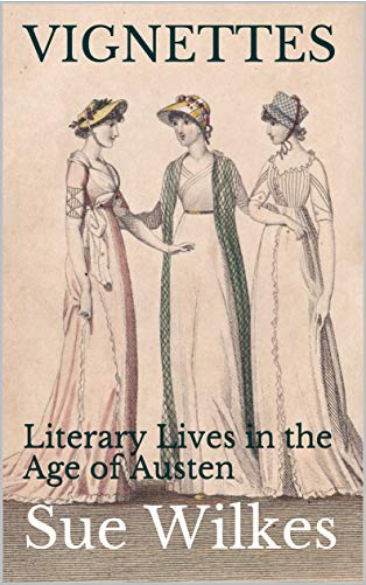
You can enjoy a free preview of my new Amazon Kindle e-book Vignettes here!  Click on the link to read a free sample and discover the wonderful literary world of Jane Austen.

Vignettes is based on the many articles I’ve written over the years for Jane Austen’s Regency World, mostly mini-biographies of famous writers who either influenced Austen, or were contemporaries of hers. The authors chosen just happen to be my own personal favourites.


Vignettes begins with a brief introduction to Austen’s life and work.

The next chapter looks at women’s education at that date, with reference to how Austen’s contemporaries discussed it. Mary Wollstonecraft’s thoughts on daughters’ schooling, Priscilla Wakefield, Mrs Barbauld and others are included. I also discuss women’s magazines and how they helped to influence and educate young women at that time. The chapter concludes by looking at some contemporary critiques of the supposed pernicious effect of novel-reading.

The following chapter looks at the lives of Hogarth, Rudolph Ackermann, Johnson and Boswell. 
The chapter after that discusses Jane’s contemporary rivals like Ann Radcliffe, Mary Brunton, Fanny Burney and Mme de Stael.

After a chapter on social ‘influencers’ like Parson Malthus, Thomas Bernard and Robert Owen, we move on to discussing the lives of Cowper and Thomson, William and Dorothy Wordsworth, John Keats, Percy and Mary Shelley, Robert Burns, Sir Walter Scott, etc. Wherever possible, I have set each author in the context of Jane’s life and works by including quotes from her letters and novels. 

Wednesday, 15 May 2019

My New E-Book: VIGNETTES

I'm very pleased to announce that I've just published a new book on Amazon Kindle: 'Vignettes: Literary Lives in the Age of Austen'.

Here's a copy of the blurb:

'Jane Austen lived in a ground-breaking era for English Literature. This was the age of William Wordsworth, Percy and Mary Shelley, John Keats, and others. Austen herself drew inspiration from the writers who came before her, like Doctor Johnson, Thomson, Cowper and Fanny Burney. She faced stiff competition from the rival novelists of her day like Ann Radcliffe, Mary Brunton, and Walter Scott.
Jane Austen's House Museum, Chawton. 
Away from the novelists’ world, writers like Mary Wollstonecraft argued passionately for women’s rights, and Parson Malthus, Robert Owen and Thomas Bernard discussed how best to deal with the poor.
Based on the author’s previously published articles in Jane Austen's Regency World magazine, this lively exploration of Austen’s times also looks at popular literature. How did our tradition of Christmas ‘annuals’ begin? Were female novel-readers really the ‘slaves of vice’? Find out more in 'Vignettes'. '

Robert Burns. 
The book also discusses the career of poet Robert Burns, writer Robert Southey, and publisher Rudolph Ackermann.

I hope you enjoy reading it as much as I've enjoyed researching the stories of all these wonderful writers over the years!

Friday, 18 May 2012

A Romantic Ruin

I have passed Tintern Abbey many times while driving down the Wye Valley, but haven’t had a chance to explore this picturesque site until very recently. Tintern, of course, has its own story to tell: it was home to the Cistercian order during the twelfth century. It is also legendary for being one of the birthplaces of Romanticism. William Wordsworth, his sister Dorothy, Samuel Taylor Coleridge and Robert Southey all visited the ruins, which inspired one of Wordsworth's most famous poems.


But this beautiful, tranquil valley was also formerly home to thriving metal industries. There was an ironworks here as early as the sixteenth century, a wireworks, and later a railway. The clatter, smoke and din of industry have all long since gone, however. If you walk away from the main road and up along the valley, there is only birdsong to disturb the silence…

Images: Tintern Abbey, Tintern Abbey furnace.   © Sue Wilkes

Friday, 14 January 2011

Erasmus Darwin

Yesterday we dropped our son off at university, and on the way back we stopped at Lichfield and explored Erasmus Darwin's House. Darwin (grandfather of Charles Darwin) was a very interesting character and deserves more widespread recognition for his contributions to science and literature. Darwin was a doctor with a busy practice, a member of the Lunar Society, , a philosopher, inventor and best-selling poet. His poems were an inspiration to the Romantics such as Coleridge and Shelley. He was also married twice, kept a mistress, and sired at least fourteen children over the years. One wonders how he ever found time to compose poetry!

Image: Erasmus Darwin’s house and garden © Sue Wilkes