Search This Blog

Showing posts with label Mary Shelley. Show all posts

Wednesday, 15 May 2019

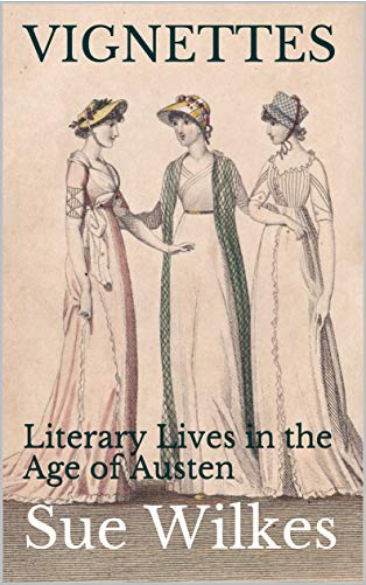
My New E-Book: VIGNETTES

I'm very pleased to announce that I've just published a new book on Amazon Kindle: 'Vignettes: Literary Lives in the Age of Austen'.

Here's a copy of the blurb:

'Jane Austen lived in a ground-breaking era for English Literature. This was the age of William Wordsworth, Percy and Mary Shelley, John Keats, and others. Austen herself drew inspiration from the writers who came before her, like Doctor Johnson, Thomson, Cowper and Fanny Burney. She faced stiff competition from the rival novelists of her day like Ann Radcliffe, Mary Brunton, and Walter Scott.
Jane Austen's House Museum, Chawton. 
Away from the novelists’ world, writers like Mary Wollstonecraft argued passionately for women’s rights, and Parson Malthus, Robert Owen and Thomas Bernard discussed how best to deal with the poor.
Based on the author’s previously published articles in Jane Austen's Regency World magazine, this lively exploration of Austen’s times also looks at popular literature. How did our tradition of Christmas ‘annuals’ begin? Were female novel-readers really the ‘slaves of vice’? Find out more in 'Vignettes'. '

Robert Burns. 
The book also discusses the career of poet Robert Burns, writer Robert Southey, and publisher Rudolph Ackermann.

I hope you enjoy reading it as much as I've enjoyed researching the stories of all these wonderful writers over the years!

Thursday, 22 March 2018

Mary Shelley's Frankenstein

Bath Abbey
My latest feature for the 2018 Discover Your Ancestors bookazine (order here) is on Mary Shelley and Frankenstein. This landmark novel was published 200 years ago (Arizona University has a celebratory project here). Frankenstein; or, the Modern Prometheus electrified the reading public when it first appeared. The story of hapless experimenter Frankenstein, his Creature’s torment, and the fearful revenge It wreaked on his creator, is now embedded in our cultural mindscape. 

The Shelley Frankenstein Festival is planning more events to commemorate Frankenstein, including a theatre production of a re-imagined version of Frankenstein, at the Shelley Theatre, Boscombe in May.


Images:
West front of Bath Abbey, Penny Magazine, 13 July 1833.  During the autumn of 1816, Mary worked on ‘Frankenstein’ while she, Shelley and Claire Claremont stayed in lodgings near the Abbey. Author’s collection.
The Galvanic apparatus.Coloured engraving, 1804, by J. Pass, after H. Lascelles. Courtesy the Wellcome Library, no. 47529i.

Sunday, 21 June 2009

Mary Shelley's Frankenstein


Jane Austen’s work has recently been given a highly dubious zombie makeover. But it was a young lady still in her teens, Mary Wollstonecraft Shelley (1797-1853), who supercharged the Gothic novel to create a new literary genre:
I saw the dull yellow eye of the creature open; it breathed hard, and a convulsive motion agitated its limbs… the beauty of the dream vanished, and breathless horror and disgust filled my heart.’ (Frankenstein, 1818.)
During the autumn of 1816, Mary worked on ‘Frankenstein’ while staying in lodgings near Bath Abbey (pictured left) with Shelley and Claire Clairmont. Mary and Shelley married later that year.
Mary's Frankenstein; or, the Modern Prometheus was published anonymously in 1818. The story of hapless experimenter Frankenstein, his Creature’s sufferings - and fearful revenge - caused a sensation. The book struck a chord with the reading public, and horror stories are still big business in the film and print media. You can find out more about Mary Shelley and the birth of her ‘hideous progeny’ in the latest issue of Jane Austen's Regency World.

Image: West front of Bath Abbey, Penny Magazine, 13 July 1833. Author’s collection.