Search This Blog

Showing posts with label Chester. Show all posts

Tuesday, 3 December 2013

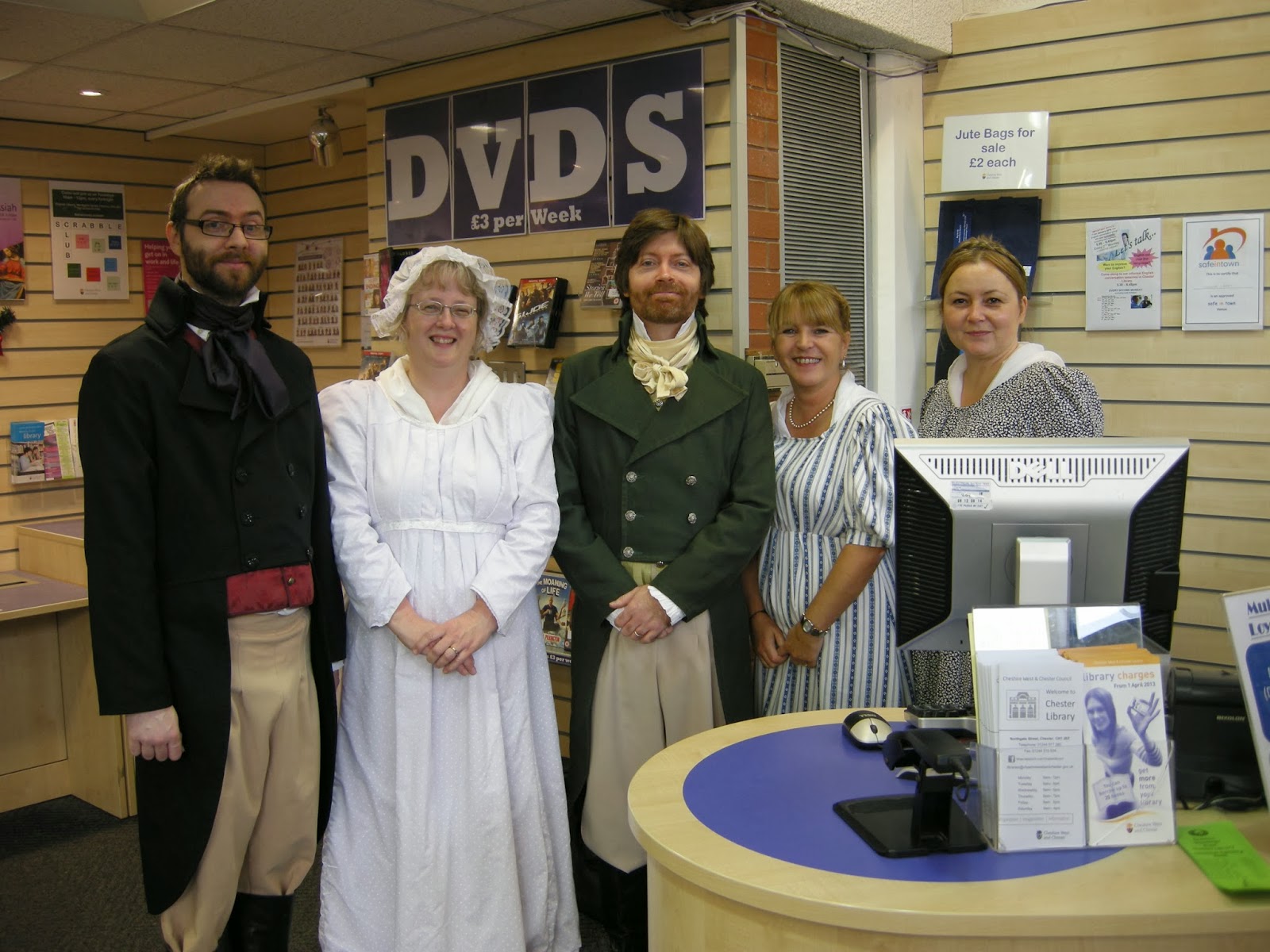
Regency Cheshire Talk - More Photos


I had a wonderful time at my Regency Cheshire talk on Saturday - a big 'thank you' to Lena Shiell and all the library staff who worked so hard to make the Jane Austen Christmas event so special.  Sadly the traffic was so bad that I only got a glimpse of the Regency dancers, but I did hear the choir singing beautifully.

You can see more photos from the day on my Jane Austen blog and on the Chester Library facebook page.


Images:
Chester Library staff and David Mitchell, the Chester town crier at the Jane Austen's Regency Christmas day (3 photos).
Sioned Webb, Welsh Triple Harpist.
The author preparing to give her talk.
All photos on this blog post are © Lena Shiell of Chester Library.


Friday, 23 August 2013

A Mighty Anglo-Saxon Lady

It was nice to see Chester featured on episode 2 of Michael Wood's series on King Alfred and the Anglo-Saxons; I am really enjoying the series.  In about 908 the Lady of the Mercians, Ethelfleda, rebuilt the abbey at Chester, which was dedicated to St Werburgh. It was probably on the site of today's Chester Cathedral. The abbey was rededicated to St Oswald and St Werburgh, and a set of secular canons put in the place of the nuns who lived there.  The nuns are said to have taken refuge in St Mary's Convent nearby. Ethelfleda refortified the city walls, too.

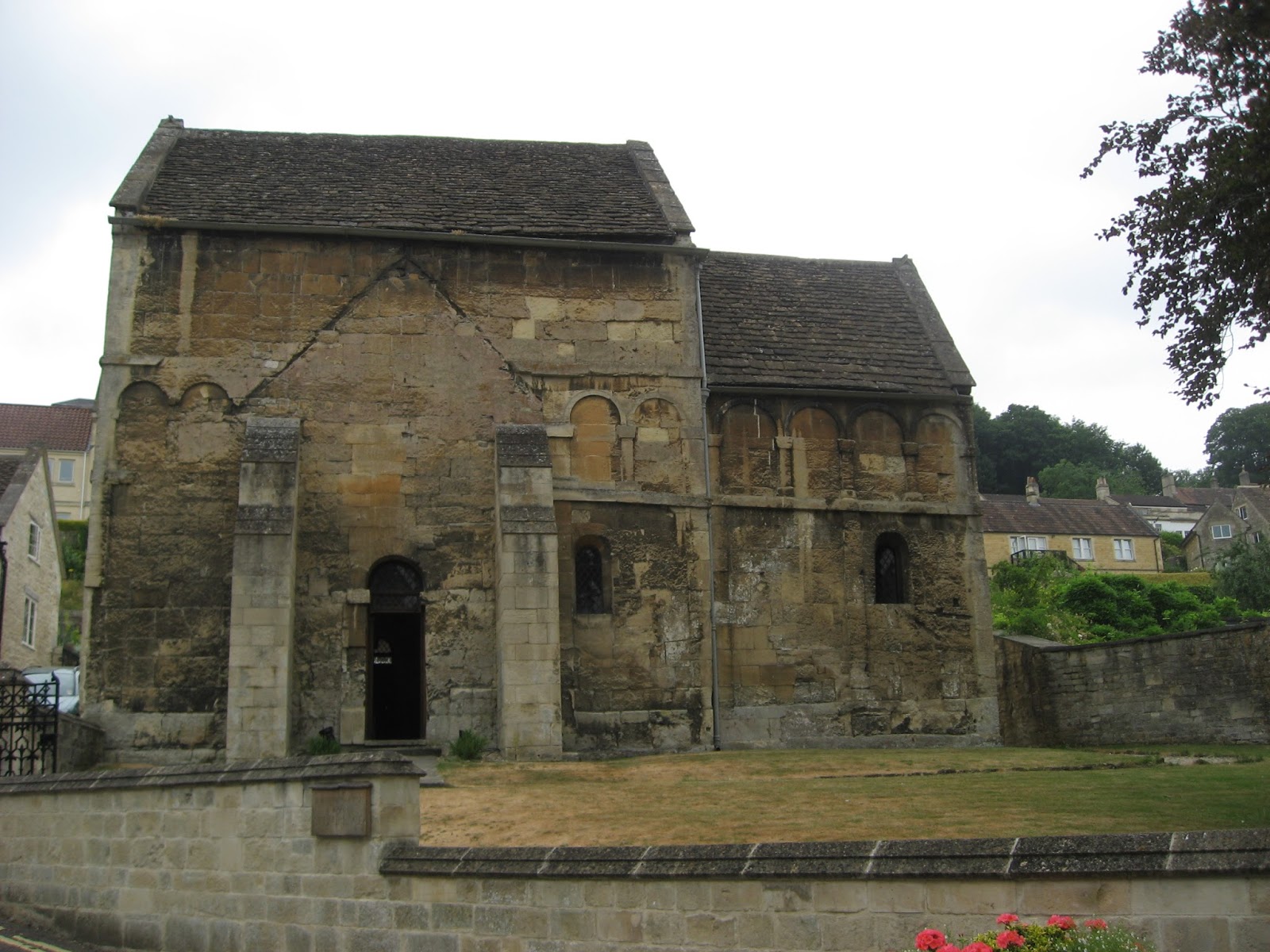
We recently visited the beautiful Anglo-Saxon church at Bradford-on-Avon, St Laurence's, which probably dates back to the 11th century, but there may have been a church on this site, or nearby, during Ethelfleda's era.  It is amazing that the building has survived at all; it was used as a boys' school during the nineteenth century. The church was restored during Victorian times.  As you stand within its cool stone walls, it has a wonderful, peaceful atmosphere all its own: a real 'sense of place'.


Images:

S.E. View of Chester Cathedral from the city walls. Engraving by Batenham for A Visit to the Cathedral Church of Chester, c. 1828.

St Laurence's Church, Bradford on Avon. 

© Sue Wilkes.

Thursday, 18 April 2013

Chester's Bid for City of Culture 2017

Chester has launched its bid to become UK City of Culture in 2017.  You can find out more and show your support for the bid here.


The city is packed with amazing history to explore, such as its Roman amphitheatre and its unique Rows, and I wish it all the best for its bid.
Images: Watergate St, Chester.

Stranger’s Companion in Chester, 4th edition, c. 1828.
Photo:

The Rows on Bridge St. © Sue Wilkes.

Monday, 4 March 2013

Talks in 2013

So far this year I have got two talks lined up, so please make a note in your diaries.  On Thursday 13 June I will be giving a talk on 'Stolen Childhoods'  to Witton Women's Institute at St Wilfred's Parish Centre (Witton Street) in Northwich; the meeting opens at 7.45 pm and my talk begins at 8pm.  I'll be discussing child labour in northwest England during the industrial revolution.

And on Saturday 30 November, Chester Library is holding a Jane Austen's Christmas event.  At 2pm I'll be giving a talk on Christmas time in Austen's day, and will read some extracts from my book Regency Cheshire.  Hope to see you there!


Images:

Mule Spinning Room, 1860s. Child piecers and scavengers at work in a cotton spinning mill, supervised by the overlooker. Charles Knight’s Pictorial Gallery of Arts Vol. I, (c.1862).
Rows in Watergate St, Chester. Stranger’s Companion in Chester, 4th edition, c.1828

Thursday, 10 March 2011

Chester's Historic Legacy

An interesting new report has just been published on Chester's use of its heritage, with some suggestions for maximising its potential, such as using the Roman Ampitheatre as part of an 'Chester History Experience Centre' and revamping the old harbour and canal to bring in more visitors to the city.
Image: The Rows on Eastgate St, Chester, Saturday Magazine, 1836.

Tuesday, 7 September 2010

Georgian Chester

A reminder that there are only a few days remaining if you would like to visit the Grosvenor Museum’s ‘Georgian Chester: the City in Art’ exhibition which closes on 12 September. Also, next weekend there’s a great opportunity for Cheshire history fans to explore some of the county’s hidden treasures. Free access to buildings of special historic interest and special guided tours are available as part of the Heritage Open Days festival.

Images: Park House, built in 1715, just one of the many spectacular buildings which sprang up in Georgian Chester. Park House was formerly the Albion Hotel. The Duke of Wellington stayed here when he visited the city in 1820. The Hotel had an assembly room. It was also the HQ of the Independent party, deadly foes of the Grosvenor family interest in the bloodthirsty political rivalries which split the city in Regency Cheshire. © Sue Wilkes.
An illustration from Regency Cheshire: Thomas Harrison’s Chester Castle works. The Propylea Gate is on the very far left. The county gaol, jury rooms and prothonotary’s office are in the building on the left. The Shire Hall with its massy Doric columns is to the right. The east wing (left) of the Hall was the military barracks; the west wing was the armoury. Stranger’s Companion in Chester, 4th edition, c. 1828.

Monday, 26 April 2010

Election Fever III

As the election race hots up, we should perhaps be grateful that electioneering has calmed down somewhat since Regency times. In Chester, the Exchange was often the focus of ‘disgraceful scenes’ in which ‘all the low ribaldry, coarse wit, and vulgarism’ of the populace was vented on respectable citizens. The hustings for the city elections were erected at the Exchange. Chester historian Joseph Hemingway commented that :‘many a broad and uncourteous joke has been played off, by our city wits of the lower grade, during those scenes of ardent conflict, when every tinker and cobler (sic) thinks himself of as high consequence and importance as any lord of the manor.’ Food and drink flowed freely at election time. The corporation and parliamentary elections were characterised by shameless bribery as rival candidates ‘treated’ the electorate to help win their votes. Edward ‘Teddy’ Hall, an ‘immoveable’ foe of the Grosvenor faction, was completely overcome by the excitement of the 1812 election, and became well known in Chester for his drunken antics.
Image: Plan of the city of Chester, c. 1828. Stranger’s Companion in Chester, 4th edition, c. 1828.

Wednesday, 10 February 2010

Chester’s Ancient Rows

Chester’s famous Rows have attracted visitors to the city for centuries. The Rows are situated on Watergate St, Eastgate St and Northgate St, Bridge St and (in earlier times) Lower Bridge St. Antiquarian Thomas Pennant was greatly intrigued by the Rows’ peculiar construction, which probably dates back to the mid-thirteenth century; carved stone under-crofts are still visible inside some shops. As time went by, the Row architecture fell in and out of fashion; writers such as Celia Fiennes and Daniel Defoe thought the Rows looked ugly. In Regency Cheshire , the Rows were extremely prosperous; all the best shops were found there.


Chester lost one Row without warning in 1821. Part of Lamb Row fell into the street ‘with a loud crash’ and ‘an immense volume of dust’ (Gentleman’s Magazine, December 1824.) Luckily, no-one was injured.

Chester historian Joseph Hemingway, writing in 1831, described how old dilapidated shop fronts were replaced by shining glass windows and elegant new shops: ‘drapers, clothiers, jewellers, perfumers, booksellers as respectable as the kingdom can produce.’ William and Henry Brown, silk mercers and milliners, opened a splendid new shop in Eastgate Row which was compared with ‘the magnificence of Regent St.’  There are tips for researching your Chester and Cheshire family history in my Chester feature in this month’s Discover My Past England.

Images from author’s collection: The Rows on Eastgate St, Chester. Saturday Magazine, 1836.
Lamb Row, Chester, built c.1655 by Randle Holme on the west side of Bridge St. It collapsed in 1821. Gentleman’s Magazine (Supplement), December 1824.

Wednesday, 9 April 2008

Chester Walls are tumbling down!


I was very worried to hear that Chester Walls are having a midlife crisis, according to this BBC News report. I hope they can be mended. I think the affected section is near the Eastgate Clock. It would be interesting to know the date of the section which has collapsed, as the walls have had a number of makeovers over the centuries.

My book Narrow Windows, Narrow Lives has been getting some good press; it's been featured in Lancashire Life and the Lancashire Evening Post gave it a terrific review. All good news!
Image of Eastgate Clock © Sue Wilkes.