Search This Blog

Showing posts with label museum. Show all posts

Monday, 8 January 2018

William Cowper's House

Hares sculpture, Cowper Museum garden.
Happy New Year to all my readers! I hope you had a good Christmas.

If  you pop over to my Jane Austen blog, you can read about my visit to the Cowper and Newton Museum, Olney.

The museum has an exhibition devoted to the local lace-making industry; little girls worked very long hours making lace in the eighteenth and nineteenth centuries. 
Lace on display at the Cowper and Newton museum.

Monday, 1 June 2015

The Lion Salt Works Re-opens!

Restored Stove House 5, with salt pan in foreground.
Last week I was lucky enough to enjoy a sneak preview of the Lion Salt Works' fabulous new visitor site at Northwich. Over £10 million has been spent on this mammoth restoration project, and the result is an outstanding new heritage attraction - unique in the UK.
The Salt Works, founded by the Thompson family in 1894, made salt by boiling brine in large open pans.
Open pan salt making, 1850.
The brine for the pans was pumped up from underneath the site, and you can still see the remains of the 'nodding donkey' pump. The site was in a very poor state of preservation prior to its restoration, but now visitors can explore two restored pan houses and three stove houses.


The former Red Lion pub at the site entrance has displays relating to the salt workers, and local artefacts, including a pretty salt ship.
The Salt Works will open to the public on Friday 5 June. There are lots of fun interactive exhibits for children in the museum, and a playground, and butterfly garden to explore. Entrance is free to the cafe and play area.
Huge salt crushing mill, Lion Salt Works.


There's a special offer, too, if you are a Salt. f you can show photo ID proof that your name is Salt, you can visit the museum free of charge. (This offer runs until 31 May 2016).
All author photos © Sue Wilkes. Video courtesy of West Cheshire museums.

Friday, 6 February 2015

A Wonder of the Waterways


Top of Foxton Locks.

Last year I enjoyed a wonderful visit to Foxton Canal Locks and the site of its former boat lift. The staircase of locks at Foxton (on the Grand Union Canal, near Market Harborough) were a bottleneck for commerce as they were only constructed wide enough to permit one narrow boat to enter at a time. 
The bottom of the former inclined plane.
To speed things up, an inclined plane or boat lift was constructed. This major engineering feat, designed by Gordon Cale Thomas, opened on 10 July 1900. Two giant tanks of water, which counterbalanced each other, carried either one wide boat or two narrow boats per tank. A steam engine provided extra 'oomph' to power the lift. 

Sadly the boat lift became uneconomic to use, and it closed just over a decade after its grand opening. (The Anderton Boat Lift in Cheshire had a much longer working life, and is now back in working order again).
The Foxton Inclined Plane Trust cares for the site’s preservation, and hopes to create a digital model of the boat lift. 

Top of inclined plane, looking down.
Unfortunately it seems most unlikely that this wonder of the waterways will be restored to its former glory owing to the prohibitive cost. 
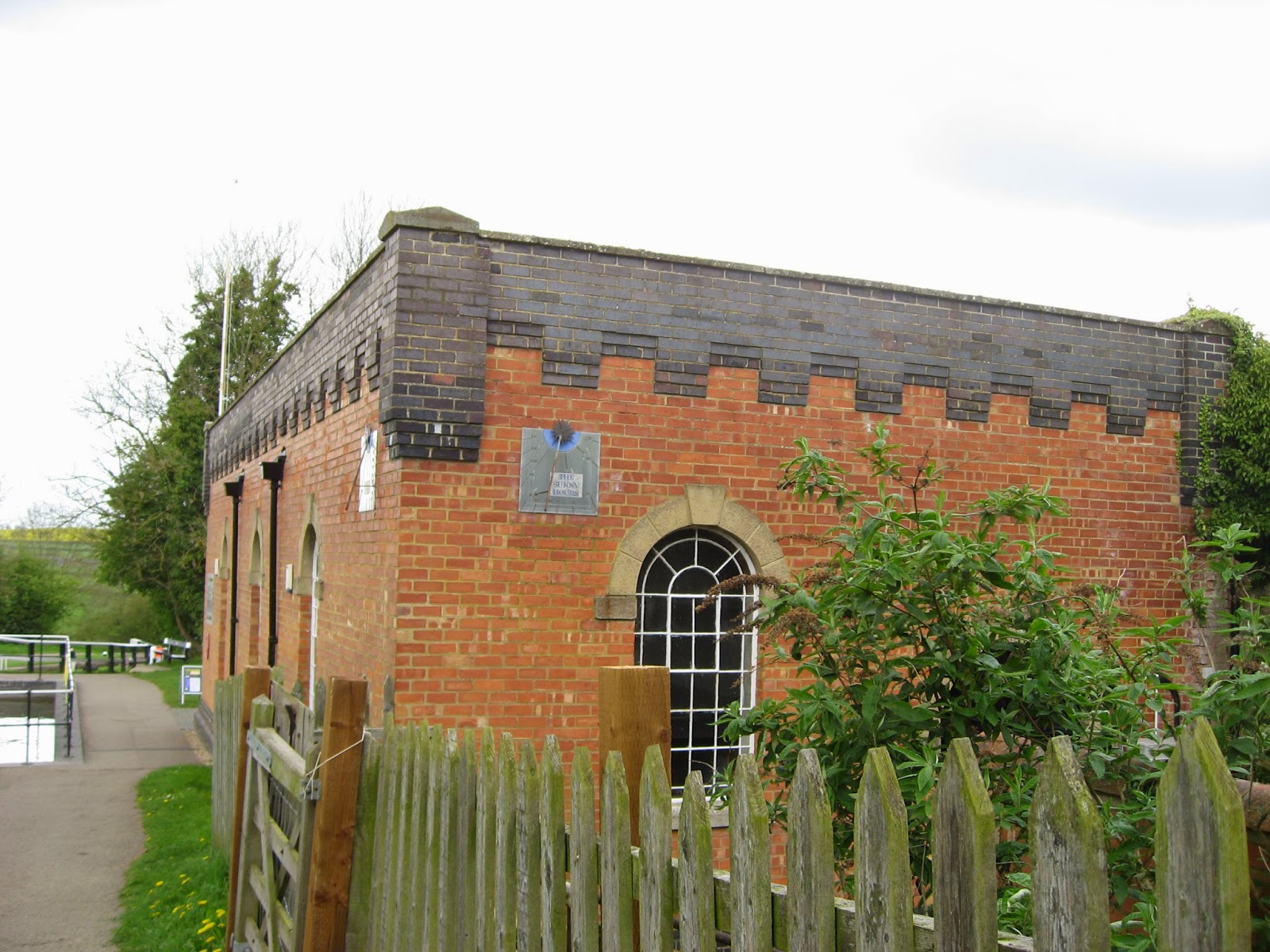
Former boiler house, now a museum.


But the site is extremely interesting to explore.The museum (in the old boiler house for the steam engine) gives a wonderful insight into the days of working boats, and if you have canal ancestors you will really enjoy a visit.


The hull of this old boat (left) illustrates the level at which boats entered the lift.
Former lock-keeper's cottage, now a cafe.


When a canal was frozen over, an ice boat like the Gordon Thomas (left) was rocked from side to side by boatmen to break the ice so that traffic could resume.
All photos copyright Sue Wilkes.

Sunday, 7 October 2012

Exploring Chawton

Very recently Chawton House Library held a heritage open day, and luckily I was in the area that weekend, as it’s a place I’ve wanted to visit for ages. It was a beautiful sunny day, perfect for exploring the House and gardens.


The House was the former home of Jane Austen’s brother, Edward Austen-Knight, and it has some wonderful collections in The Library. It was a real privilege to explore inside. Sadly photography was not permitted the House, but you can see some photos of the interior and the fabulous library here. After visiting the gardens we peeked inside the church of St Nicholas – Jane Austen’s sister and mother are buried in the graveyard.

On the next day we returned to Chawton so that we could visit Chawton Cottage (Jane Austen's House Museum), where Jane lived for eight years. The weather was not as kind that day, but I didn’t mind. It has been many years since I last went inside the Cottage and it was so lovely to see it again.

As always when following in Jane’s footsteps, I have to resist the temptation to shriek ‘Jane Austen was here!’ and just hug myself inside, if you know what I mean. I stood next to Jane’s writing table and hoped that some of her incredible genius might somehow magically waft across to me, like the scent of the flowers in her garden. The museum has personal relics of the family, including the famous topaz crosses bought for Jane and Cassandra by their sailor brother Charles Austen.

It goes without saying that there is a wonderful gift shop, too, where you can stock up on goodies and books related to Austen and her works.

And in breaking news: Janeites will know that 2013 is the bicentenary of the publication of Austen’s Pride and Prejudice. A new, beautifully illustrated book by Hazel Jones and Maggie Lane, Celebrating Jane Austen’s Pride and Prejudice: 200 Years of Jane’s Darling Child will be published by Lansdown Media this autumn.

Thursday, 31 May 2012

Lion Saltworks Rises from Ashes

There’s great news for Cheshire history fans – funding to restore Northwich’s famous Lion Saltworks at Marston has been agreed at last. There’s a new blog where you can see updates on the works and photos of the restoration work.

Salt was made by evaporation in huge pans at the works, which were owned by the Thompson family. Salt was transported in narrowboats along the Trent & Mersey Canal down to the Anderton Boat Lift, then continued its journey along the River Weaver.
If your ancestors were Cheshire salt workers, I recently wrote a feature for BBC Who Do You Think You Are? on tracing your family tree.

There are plans to open the restored salt works to visitors again in 2014 as a ‘living museum’. It would be great if the new visitor centre could include salt-making demonstrations, but we’ll have to wait until more details are available to find out.
Update June 2014: the proposed opening date for the newly restored Lion Saltworks is now spring 2015. We drove past the site recently and it's beginning to look very spick and span.

Photo: Lion Saltworks prior to restoration. A salt waggon at the Lion Saltworks, Marston. © Sue Wilkes.