Merry Christmas to all my readers! And 'peace and goodwill' to everyone, all over the world.
Image: 'The lieutenant skating', Hugh Thomson illustration for Mary Russell Mitford, Our Village, Macmillan & Co., 1893.
I'm an author specialising in family history, social history, industrial history and literary biography. Real stories; real people; real lives.
Search This Blog
Friday, 23 December 2016
Thursday, 15 December 2016
Jane Austen On Display
![]() |
Tuesday, 8 November 2016
The Crystal Palace
My latest feature for Discover Your Ancestors magazine tells the story of the Crystal Palace. The first Palace was the brainchild of Joseph Paxton, designed for the Great Exhibition of 1851, and was later re-erected at Sydenham. The Palace, with its wonderful gardens, sculptures, concerts and entertainments, was a great favourite with the public for many years.
Then on the night of 30 November 1936, horrified onlookers watched as the Palace suffered a catastrophic fire, with flames reaching over 100ft high. The Palace's glory days were over.
Image: The Crystal Palace at Sydenham. Old and New London Vol. VI, Cassell,
Petter & Galpin, c.1893.
Tuesday, 25 October 2016
Roman Catholic Ancestors
| Liverpool Metropolitan Cathedral. |
My latest feature for Your Family History magazine (November
issue) is on tracing Roman Catholic ancestors.
In 1534 Henry VIII severed the country’s links with Rome and
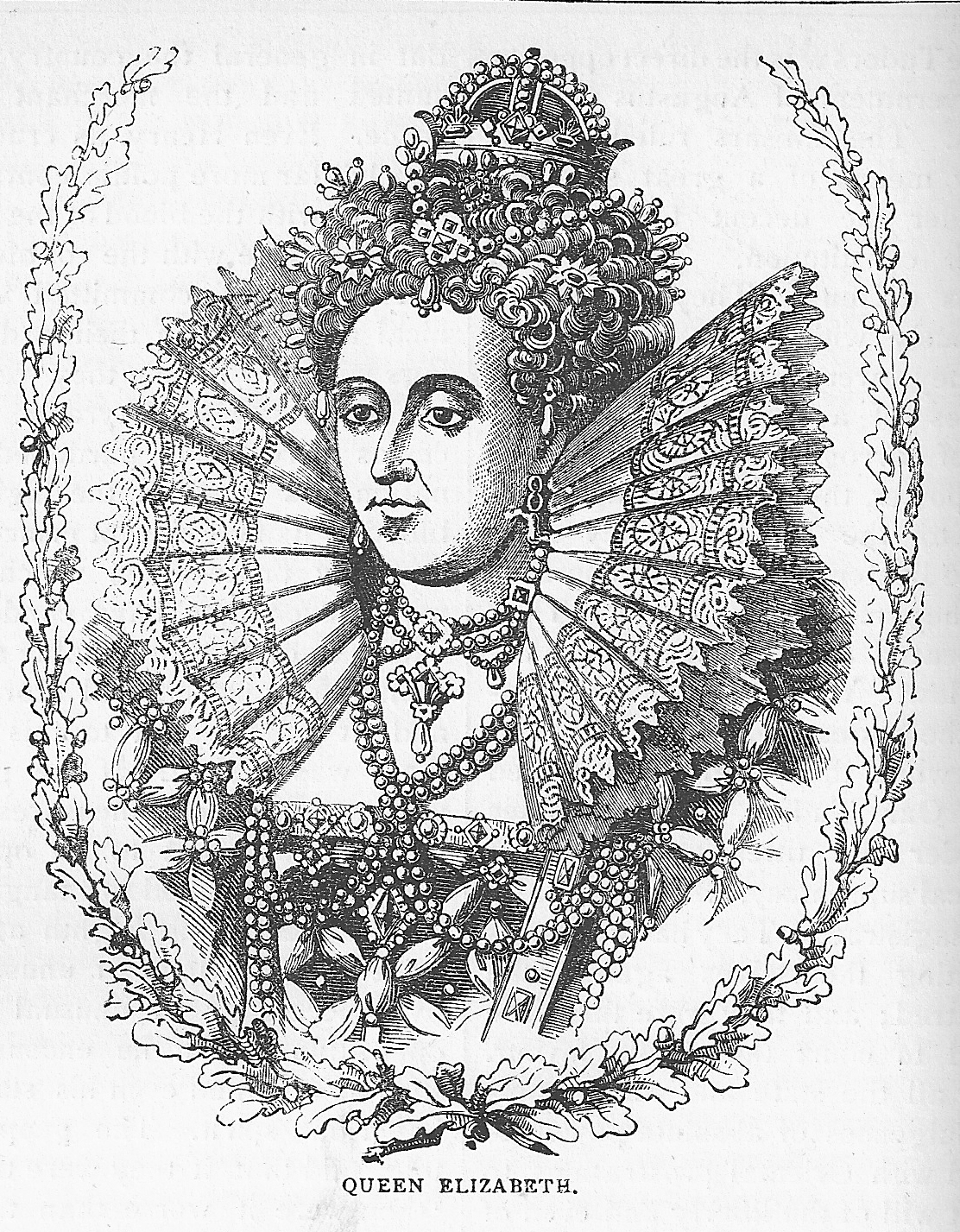
the Pope, and the Anglican Church was born. Elizabeth I confirmed the Anglican
Church’s status with the Act of Supremacy (1559), and the introduction of the
Book of Common Prayer.
Although there were penalties for ‘recusancy’, Roman
Catholics wished to be baptized and married according to the rites of their
church. Lancashire families in particular clung on stubbornly to the ‘old
religion’. So your Catholic ancestors may have been baptized, or married, once
in an Anglican church, and again in a Catholic church in secret.
Things improved for Catholics following the Catholic Emancipation Act of 1829.
![]() |
| Furness Abbey. |
I’ll be exploring this subject further in Tracing Your Manchester and Salford
Ancestors, which will be published by Pen and Sword in the spring of next
year. In the meantime, the MLFHS website has a free list of RC churches in Manchester and Salford, with addresses and dates of their opening
and closure, and name changes.
Images:
Liverpool Metropolitan Cathedral, consecrated in 1967. © Sue
Wilkes.
Elizabeth I. Pictorial
Record of Remarkable Events, (Frederick Warne & Co., 1896).
Chapter House, Furness Abbey. Engraved by R. Sands from a
drawing by T. Allom. People’s Gallery of Engravings Vol.2 (Fisher, Son &
Co., 1845).
Monday, 3 October 2016
A Visit to Rousham Park
| Temple of Echo, Rousham Park. |
Thursday, 29 September 2016
Invisible Women?
| Mary Wollstonecraft |
Mary Wollstonecraft (1759–97) was one of the few women who spoke out during the
turbulent era of Regency Spies to demand greater rights, and better education,
for the female sex. Mary’s Vindication of
the Rights of Man (1790) was a fiery reply to Edmund Burke’s reactionary
response to the French Revolution’s ideals, Reflexions
on the Revolution in France. Two years later, her Vindication of the Rights of Woman made her famous at home and
abroad. But her untimely death following the birth of her daughter Mary,
followed by husband William Godwin’s no-holds-barred biography, led to her ideas disappearing from view for many years.
But what did
ordinary women think? Did they dream of a better society – or even of
revolution? Sadly I did not have the space (or time) to explore this topic in
Regency Spies, as noticed by Emma Jolly in her insightful review earlier this year.
We know from
newspaper reports that women like Hannah Smith (hanged at Lancaster Castle in
1812 for a Manchester food riot) sometimes took direct action during times of
hardship. And female reformers from Oldham and Manchester were part of the vast
crowd at Peterloo. (There’s more information on ‘Radical Women’, including
Chartists, in my recent article in the September issue of Your Family History).
![]() |
| Peterloo Massacre |
While
researching Regency Spies, I found that women were only rarely mentioned as
spies in the Home Office papers I studied (although as noted in my book, some
evidence from this period is missing).
One instance
of a female spy is ‘Mary Brown’, listed in a ‘Key to Agents’ Names in Hampden Clubs’ in 1817. Women were seemingly more likely to act as informants; landladies
sometimes had useful information for the authorities, as Radical meetings were
often held in their pubs. (If any readers know of the exploits of any female spies,
I would love to hear from you!).
Women were
only occasionally mentioned by spies like William Oliver in their reports to
the Home Office on rebel/revolutionary meetings. Oliver took great care to list
all the men present, but this does not necessarily mean that women were absent;
it could just mean that he thought that men were more of a threat to law and
order.
| Mary Lee HO42/168 |
Also amongst the
Home Office papers is a statement made by Mary Lee of Holmfirth (HO42/168, 5
July 1817). She had to give evidence regarding the planned uprising in the
Huddersfield area that year; her husband Richard was knee-deep in the
preparations. She told the authorities that the first time’ she ‘heard anything
of a Revolution’ was on 19 May, when a man called and told Richard
that ‘the Revolution was put off’. But Richard claimed that he ‘did not know there
was to be a Revolution’.
It must have
been very difficult for women like Mary to give evidence on oath, knowing that
their evidence could have dire consequences for their menfolk.
Images:
Mary
Wollstonecraft.
Dr Syntax in
an inn listening to reformers’ talk. Courtesy Library of Congress LC-USZC4-3647.
The Peterloo
massacre. The Yeomanry slash men, women and children with their sabres at a
meeting to demand parliamentary reform at St Peter’s Field, Manchester as the
Riot Act is read from a window. J. L. Marks, No. 2 Sandy's Row Bishopsgate St.,
1819. Courtesy Library of Congress. LC-USZ62-138639
Deposition
of Mary Lee at the National Archives, Kew. HO42/168.
Monday, 5 September 2016
Lancashire's Heritage Crisis
| Weaving shed, Queen St Mill. |
The mill, a Grade I listed building, is home to a nationally important collection of textile machinery, along with its sister site, Helmshore Mills at Rossendale (another fantastic museum, which I visited while researching my book Narrow Windows, Narrow Lives).
| The mill chimney. |
Queen Street Mill originally housed 1,000 powerlooms; it was built in 1894 for the Queen St Mill Manufacturing Company.
You can see 'Peace', the 500hp engine which powers the weaving shed, and the boiler house is still home to the original Lancashire boiler. It was stiflingly hot in the boiler house (2 newer Lancashire boilers, made at Hyde in 1901, heat the water for the engine). Water is supplied from the mill pond.
When the engine is 'in steam', you can see several looms at work; the weaving shed houses about 300 looms. The noise was absolutely deafening, so it must have been unbelievably loud when all the looms were in use. The warehouse has several examples of different looms, including a Jacquard loom capable of weaving a tapestry. I was also very interested to see a demonstration of terry-towelling weaving, which I haven't seen before. You can buy towels, aprons and fabric woven at the mill in the gift shop.
| Lancashire boilers need a lot of coal for fuel. |
| Peace, the 500hp mill engine. |
The closure of these five museums - now in a last-ditch fight to save their collections - will save the council just £64.2million, according to the Museums Association.
It seems a relatively small price to pay to keep these irreplaceable heritage sites open to the public, so if you happen to be a multi-millionaire or billionaire philanthropist with some spare cash, please contact the museums if you would like to help.
Queen St Mill and many other sites nationwide are open free of charge next weekend as part of the Heritage Open Days event, so do take this opportunity to visit.
| Terry-towelling loom at Queen St mill. |
| Jacquard loom at Queen St Mill. |
All photos © Sue Wilkes.
Subscribe to:
Posts (Atom)