You can read the story here on my Jane Austen blog.
I'm an author specialising in family history, social history, industrial history and literary biography. Real stories; real people; real lives.
Search This Blog
Thursday, 31 October 2013
Cheshire Soulcakers
The quiet Cheshire villages
of Antrobus and Comberbach have their own very special celebrations for All
Hallows’ Eve - the Soul-cakers - a tradition dating back hundreds of years.
The Soul-cakers, or Soul
Gangs, tour local pubs with their ancient Mummers' Play and its star
performer, the supernatural Wild Horse. Country
folk in Cheshire and parts of Derbyshire once believed their ancestors’ souls
could return to the family fireside at this time; they made special ‘soul-cakes’
as offerings to appease the family spirits.
The tradition differed from
village to village. Before WWI, around
Malpas, Tarporley and Frodsham, children and adults marched from house to
house, singing traditional ‘soul-caking’ songs in return for small, spicy ‘soul-cakes’
(similar to parkin cake).
‘Soul a soul a soul cake
Please good missus, a soul
cake...’
In other villages, ‘Mummers’
plays were performed by the Soul-cakers, going from house to house. Afterwards they passed the hat round for a
collection - and some soul-cakes.
Over forty Cheshire villages
are thought to have had versions of the play, but the Great War proved
disastrous for the tradition; so many men never returned. Luckily Major Arnold
Boyd, a Cheshire naturalist and author in the 1920s, was interested in the
play. Major Boyd wrote down the words,
called a ‘nominy,’ which had been passed down through the generations, and
helped the play survive.
The Play has many unusual
characters, for example, the Letter-in, Black Prince, King George, the Quack
Doctor, and ‘Dick’ the Wild Horse and his Driver, resplendent in Cheshire Hunt
livery. All the parts, played by men, are thought to represent the souls of the
dead.
Wild Horse’s head is a horse’s
skull, with its jaws wired so it can ‘snap’ its teeth alarmingly at the
audience, and is worked by a man covered with a blanket. His legs form the horse’s back legs, and a
short pole supports the skull at the horse’s front end.
Nowadays, the Soul-cakers
play in local pubs, beginning on Hallowe’en, instead of house to house. The
Antrobus Soul-cakers have raised hundreds of pounds for charity over the years.
The plays have enjoyed a revival in other Cheshire towns and villages like
Chester, Comberbach, Alderley, and Mobberley. You can search for forthcoming events here on
the Master Mummers Directory.
Image © Sue Wilkes: the Comberbach
Mummers performing in 2000, with ‘Wild Horse’.
'Riding a Mumming'. From J. Brand, Popular Antiquities, London, 1841.
Tuesday, 22 October 2013
Baby Days
The new royal baby, Prince George, will be baptised on Wednesday 23 September at the Chapel Royal in St James's Palace. Although your ancestors are unlikely to have made their first public appearance in a blaze of publicity and media attention like the young prince, your ancestors' parents may have placed a birth notice in a local or national newspaper.
Publications such as the Gentleman's Magazine printed birth, marriage and death notices for the middle classes, gentry and aristocracy. Magazines like these can be very useful for tracing ancestors before civil registration was introduced, and before census records were kept.
However, the name of a person's wife and child is rarely given in old newspapers (see this example from the Gentleman's Magazine, below left): just the child's gender is usually mentioned.
Local record offices and archives keep copies of old newspapers, but it can be very time-consuming to search through these unless you know an approximate birth date already. However, you can now search many old newspapers online at websites like the British Newspaper Archive and Welsh Newspapers .
Baptisms were recorded in parish registers (local record offices) from 1538 onwards, and many local family history societies have transcribed parish registers. Familysearch and FreeReg are both useful free websites for searching for baptismal records, too. Remember that baptisms may have taken place several months or even years after they were born (one of my ancestor's children was baptised at Manchester Cathedral seven years after her birth!)
You can order birth certificates for children born after 1837 (when civil registration was introduced) from the General Register Office or local register offices (the latters' indexes are the most accurate). There's a list of sites offering access to the General Register Office indexes here, and some local indexes are listed at UK BMD. Children born in institutions like hospitals and workhouses were recorded in registers of births, too.
And of course, there's lots more info on how to find out more about your ancestor's baby days in Tracing Your Ancestors' Childhood.
Images:
Undated photo postcard of a child and baby. Author's collection.
Gentleman's Magazine, December 1827, Vol. XCVII, Part 2, Author's collection.
Publications such as the Gentleman's Magazine printed birth, marriage and death notices for the middle classes, gentry and aristocracy. Magazines like these can be very useful for tracing ancestors before civil registration was introduced, and before census records were kept.
However, the name of a person's wife and child is rarely given in old newspapers (see this example from the Gentleman's Magazine, below left): just the child's gender is usually mentioned.
Local record offices and archives keep copies of old newspapers, but it can be very time-consuming to search through these unless you know an approximate birth date already. However, you can now search many old newspapers online at websites like the British Newspaper Archive and Welsh Newspapers .
Baptisms were recorded in parish registers (local record offices) from 1538 onwards, and many local family history societies have transcribed parish registers. Familysearch and FreeReg are both useful free websites for searching for baptismal records, too. Remember that baptisms may have taken place several months or even years after they were born (one of my ancestor's children was baptised at Manchester Cathedral seven years after her birth!)
You can order birth certificates for children born after 1837 (when civil registration was introduced) from the General Register Office or local register offices (the latters' indexes are the most accurate). There's a list of sites offering access to the General Register Office indexes here, and some local indexes are listed at UK BMD. Children born in institutions like hospitals and workhouses were recorded in registers of births, too.
And of course, there's lots more info on how to find out more about your ancestor's baby days in Tracing Your Ancestors' Childhood.
Images:
Undated photo postcard of a child and baby. Author's collection.
Gentleman's Magazine, December 1827, Vol. XCVII, Part 2, Author's collection.
Tuesday, 8 October 2013
A-Z of Earning A Living
Guilds like the London Livery Companies were founded during the medieval period, and there's a free online database of apprentices and freemen where you can check for your ancestors' names. Companies included at present are the Clothworkers, (1545-1908), Drapers (c.1400-1900), and the Mercers (1339-1900), with some data from the Goldsmiths' Company (1600-1700).Thousands of children worked during Victorian times: they worked as domestic servants, on the land, in coal mines, factories, and in metal manufactures, to name just a few. Many were apprentices, compulsorily bound to a master by the parish authorities.
The age at which your ancestor began work depended on the date; the 1944 Education Act raised the school leaving age to fifteen (an earlier attempt was forestalled by WW2).
In the September issue of Discover Your History, I discussed agricultural labourers, bakers, cotton workers, dockers, dyers and engineers. My feature in the new October issue explores the world of fishermen, gas workers, haberdashers, half-timers, hawkers, iron workers, jewellers and joiners. You'll have to buy the magazine to find out more!
Images from the author's collection:
Carpenters and joiners at work. French
engraving, c.1820.
Whitby fishermen, Punch,
23 September 1882.
Retorts at a Lancashire Gas Works. Lancashire Industrial & Commercial, 1935.
Labels:
Ancestors’ Childhood,
bakers,
carpenters,
Children History Forgot,
cotton,
dockers,
dyers,
engineers,
factories,
fishermen,
gas,
haberdashers,
half-timers,
hawkers,
iron workers,
livery companies,
schools
Friday, 27 September 2013
Tracing Your Ancestors' Childhood reviews
'Sue Wilkes has produced a very detailed book on how to trace your
ancestors’ childhood...The book is divided into two
parts. The first is in chapters, each dealing with issues that might
affect a child’s life; e.g. The Poor Law, Growing up at Work, Education
and, very topically, Children in Wartime. This detailed book will help to provide a broad brush picture of life for your ancestors as children in a particular period. The second part of the book is a Research Guide which lists many of
those Archives and Repositories. It lists useful addresses, twelve
pages of web-sites (some free!), Education Sources and more, under
helpful group headings...definitely one for your bookshelf to dip into now and in the future as a reference source'. Ann Gynes, FFHS, December 2013.
'Over the years, many books have described how children and young people lived in the past. Many others have shown us technically how to trace the lives of our ancestors of one sort or another. This book does both, pulling off the now fashionable - and, it must be said, deeply satisfying - meshing of the two genres of social history and genealogy with aplomb.
While Wilkes helpfully begins by recapping on the basic genealogical sources (censuses, certificates and parish records), these soon take an almost subsidiary place among a panoply of other illuminating records from the archives. From cradle rolls and vaccination records, to school exemption certificates, apprenticeship books and records of transportation, 19th and 20th century sources for the study of childhood and youth seem endless...
The eight chapters of part one, themed around different aspects of social history, are vibrantly written, peppered with examples and 'case studies' of real youngsters who grin or grimace briefly at us from the records.
The second half of the book is an unrivalled resource pack for the family historian on the location and accessibility of relevant archives and repositories, as well as list of useful websites, addresses and places to visit...
While child mortality is obviously discussed, the emphasis here is on the way young people of the past survived and triumphed over their varied early experiences, to the point where they grew up and were able to become our ancestors'. Ruth A. Symes, Who Do You Think You Are?, November 2013.
'Over the years, many books have described how children and young people lived in the past. Many others have shown us technically how to trace the lives of our ancestors of one sort or another. This book does both, pulling off the now fashionable - and, it must be said, deeply satisfying - meshing of the two genres of social history and genealogy with aplomb.
While Wilkes helpfully begins by recapping on the basic genealogical sources (censuses, certificates and parish records), these soon take an almost subsidiary place among a panoply of other illuminating records from the archives. From cradle rolls and vaccination records, to school exemption certificates, apprenticeship books and records of transportation, 19th and 20th century sources for the study of childhood and youth seem endless...
The eight chapters of part one, themed around different aspects of social history, are vibrantly written, peppered with examples and 'case studies' of real youngsters who grin or grimace briefly at us from the records.
The second half of the book is an unrivalled resource pack for the family historian on the location and accessibility of relevant archives and repositories, as well as list of useful websites, addresses and places to visit...
While child mortality is obviously discussed, the emphasis here is on the way young people of the past survived and triumphed over their varied early experiences, to the point where they grew up and were able to become our ancestors'. Ruth A. Symes, Who Do You Think You Are?, November 2013.
Monday, 2 September 2013
When Did Your Ancestor Leave School?
The school leaving age in the UK has changed to 17 years; there's more info here. The age when your ancestor was allowed to leave school and start work was critical for working-class families if they were on the breadline, because then young people could earn a full week's wage for the family. Boys from more affluent homes could go on to university if their parents could afford it; it was not until the late 1870s that the first women were permitted to study for a degree.
If you are trying to trace your ancestor's childhood, then it's a good idea to check what the school leaving age was at the date you are interested in, because that will determine whether you should look for school records such as registers, or employment records, e.g. wage books.
But there may be a period of overlap because children who reached a set educational standard were allowed to work part-time, and you may find school exemption certificates (above) amongst family papers or in local archives.
You may be surprised how young your ancestor was when they began full-time work; the 1918 Education Act raised the school leaving age from 12 to 14. As late as 1861, although the minimum age of starting work in a coal mine was nominally age twelve, ten- to twelve-year-old lads were permitted to work underground if they had a school certificate to prove that they had reached a sufficiently high standard of literacy.
Images:
Girl with slate and schoolbook. Early twentieth century postcard. Author’s collection.
Collier’s phthisis. A Manchester doctor’s sketch of ‘black lung’ from a 65 year old collier. Reports of the Factory Inspectors, 31 October 1871.
If you are trying to trace your ancestor's childhood, then it's a good idea to check what the school leaving age was at the date you are interested in, because that will determine whether you should look for school records such as registers, or employment records, e.g. wage books.
But there may be a period of overlap because children who reached a set educational standard were allowed to work part-time, and you may find school exemption certificates (above) amongst family papers or in local archives.
You may be surprised how young your ancestor was when they began full-time work; the 1918 Education Act raised the school leaving age from 12 to 14. As late as 1861, although the minimum age of starting work in a coal mine was nominally age twelve, ten- to twelve-year-old lads were permitted to work underground if they had a school certificate to prove that they had reached a sufficiently high standard of literacy.
Images:
Section of a school exemption certificate dated 4 April 1894 permitting a Manchester schoolchild to work one day per week.
Girl with slate and schoolbook. Early twentieth century postcard. Author’s collection.
Collier’s phthisis. A Manchester doctor’s sketch of ‘black lung’ from a 65 year old collier. Reports of the Factory Inspectors, 31 October 1871.
Friday, 23 August 2013
A Mighty Anglo-Saxon Lady
It was nice to see Chester featured on episode 2 of Michael Wood's series on King Alfred and the Anglo-Saxons; I am really enjoying the series. In about 908 the Lady of the Mercians, Ethelfleda, rebuilt the abbey at Chester, which was dedicated to St Werburgh. It was probably on the site of today's Chester Cathedral. The abbey was rededicated to St Oswald and St Werburgh, and a set of secular canons put in the place of the nuns who lived there. The nuns are said to have taken refuge in St Mary's Convent nearby. Ethelfleda refortified the city walls, too.
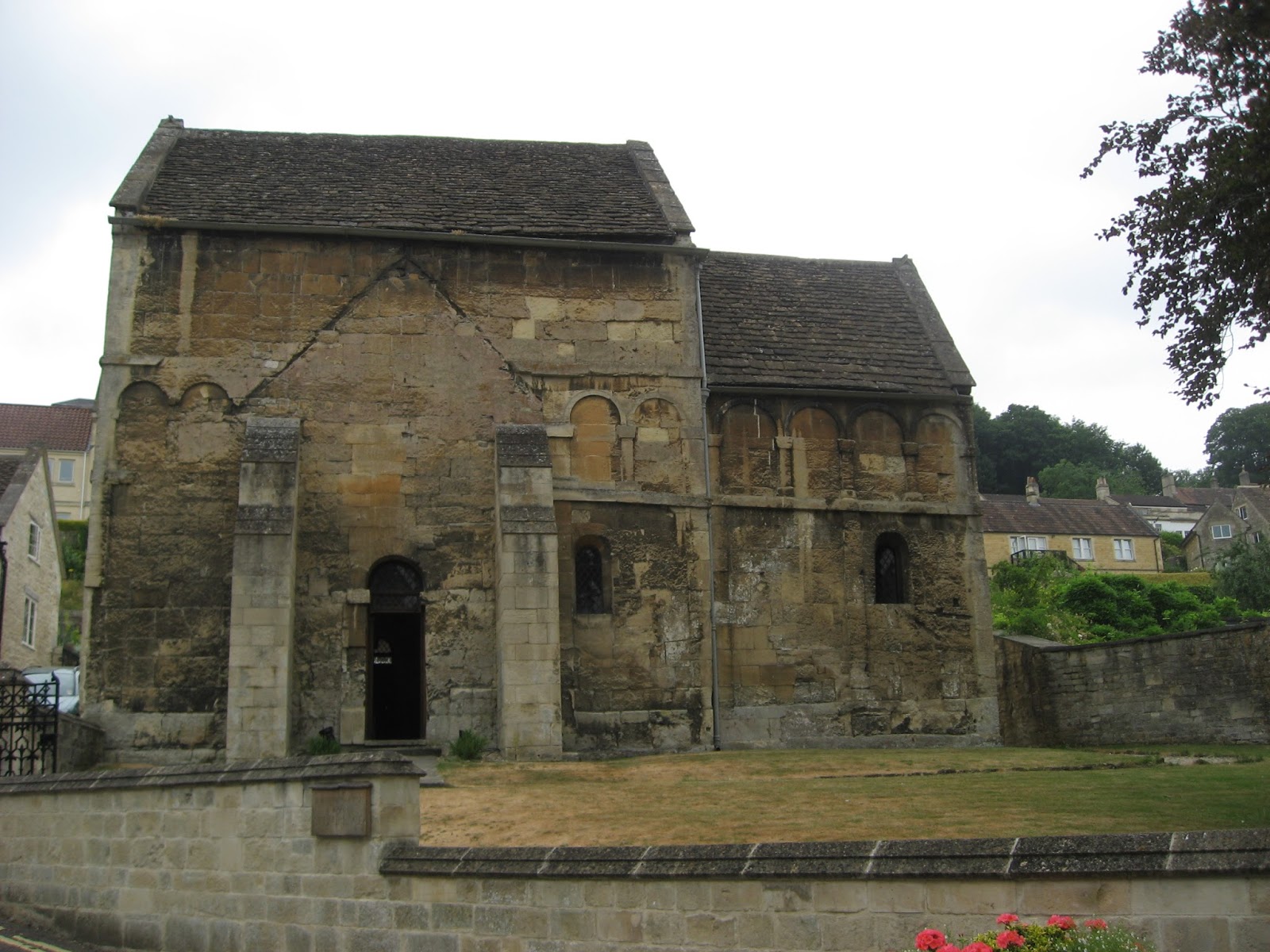
We recently visited the beautiful Anglo-Saxon church at Bradford-on-Avon, St Laurence's, which probably dates back to the 11th century, but there may have been a church on this site, or nearby, during Ethelfleda's era. It is amazing that the building has survived at all; it was used as a boys' school during the nineteenth century. The church was restored during Victorian times. As you stand within its cool stone walls, it has a wonderful, peaceful atmosphere all its own: a real 'sense of place'.
Images:
S.E. View of Chester Cathedral from the city walls. Engraving by Batenham for A Visit to the Cathedral Church of Chester, c. 1828.
St Laurence's Church, Bradford on Avon.
We recently visited the beautiful Anglo-Saxon church at Bradford-on-Avon, St Laurence's, which probably dates back to the 11th century, but there may have been a church on this site, or nearby, during Ethelfleda's era. It is amazing that the building has survived at all; it was used as a boys' school during the nineteenth century. The church was restored during Victorian times. As you stand within its cool stone walls, it has a wonderful, peaceful atmosphere all its own: a real 'sense of place'.
Images:
S.E. View of Chester Cathedral from the city walls. Engraving by Batenham for A Visit to the Cathedral Church of Chester, c. 1828.
St Laurence's Church, Bradford on Avon.
© Sue Wilkes.
Subscribe to:
Posts (Atom)