Search This Blog

Friday, 27 September 2013

Tracing Your Ancestors' Childhood reviews

 'Sue Wilkes has produced a very detailed book on how to trace your ancestors’ childhood...The book is divided into two parts. The first is in chapters, each dealing with issues that might affect a child’s life; e.g. The Poor Law, Growing up at Work, Education and, very topically, Children in Wartime. This detailed book will help to provide a broad brush picture of life for your ancestors as children in a particular period. The second part of the book is a Research Guide which lists many of those Archives and Repositories. It lists useful addresses, twelve pages of web-sites (some free!), Education Sources and more, under helpful group headings...definitely one for your bookshelf to dip into now and in the future as a reference source'. Ann Gynes, FFHS, December 2013. 

'Over the years, many books have described how children and young people lived in the past. Many others have  shown us technically how to trace the lives of our ancestors of one sort or another.  This book does both, pulling off the now fashionable - and, it must be said, deeply satisfying - meshing of the two genres of social history and genealogy with aplomb.
While Wilkes helpfully begins by recapping on the basic genealogical sources (censuses, certificates and parish records), these soon take an almost subsidiary place among a panoply of other illuminating records from the archives. From cradle rolls and vaccination records, to school exemption certificates, apprenticeship books and records of transportation, 19th and 20th century sources for the study of childhood and youth seem endless...
The eight chapters of part one, themed around different aspects of social history, are vibrantly written, peppered with examples and 'case studies' of real youngsters who grin or grimace briefly at us from the records.
The second half of the book is an unrivalled resource pack for the family historian on the location and accessibility of relevant archives and repositories, as well as list of useful websites, addresses and places to visit...
While child mortality is obviously discussed, the emphasis here is on the way young people of the past survived and triumphed over their varied early experiences, to the point where they grew up and were able to become our ancestors'.  Ruth A. Symes, Who Do You Think You Are?, November 2013.

Monday, 2 September 2013

When Did Your Ancestor Leave School?

The school leaving age in the UK has changed to 17 years; there's more info here.  The age when your ancestor was allowed to leave school and start work was critical for working-class families if they were on the breadline, because then young people could earn a full week's wage for the family. Boys from more affluent homes could go on to university if their parents could afford it; it was not until the late 1870s that the first women were permitted to study for a degree.

If you are trying to trace your ancestor's childhood, then it's a good idea to check what the school leaving age was at the date you are interested in, because that will determine whether you should look for school records such as registers, or employment records, e.g. wage books.

But there may be a period of overlap because children who reached a set educational standard were allowed to work part-time, and you may find school exemption certificates (above) amongst family papers or in local archives.

You may be surprised how young your ancestor was when they began full-time work; the 1918 Education Act raised the school leaving age from 12 to 14.  As late as 1861, although the minimum age of starting work in a coal mine was nominally age twelve, ten- to twelve-year-old lads were permitted to work underground if they had a school certificate to prove that they had reached a sufficiently high standard of literacy.

Images:


Section of a school exemption certificate dated 4 April 1894 permitting a Manchester schoolchild to work one day per week. 

Girl with slate and schoolbook.  Early twentieth century postcard.  Author’s collection.

Collier’s phthisis. A Manchester doctor’s sketch of ‘black lung’ from a 65 year old collier. Reports of the Factory Inspectors, 31 October 1871.


Friday, 23 August 2013

A Mighty Anglo-Saxon Lady

It was nice to see Chester featured on episode 2 of Michael Wood's series on King Alfred and the Anglo-Saxons; I am really enjoying the series.  In about 908 the Lady of the Mercians, Ethelfleda, rebuilt the abbey at Chester, which was dedicated to St Werburgh. It was probably on the site of today's Chester Cathedral. The abbey was rededicated to St Oswald and St Werburgh, and a set of secular canons put in the place of the nuns who lived there.  The nuns are said to have taken refuge in St Mary's Convent nearby. Ethelfleda refortified the city walls, too.

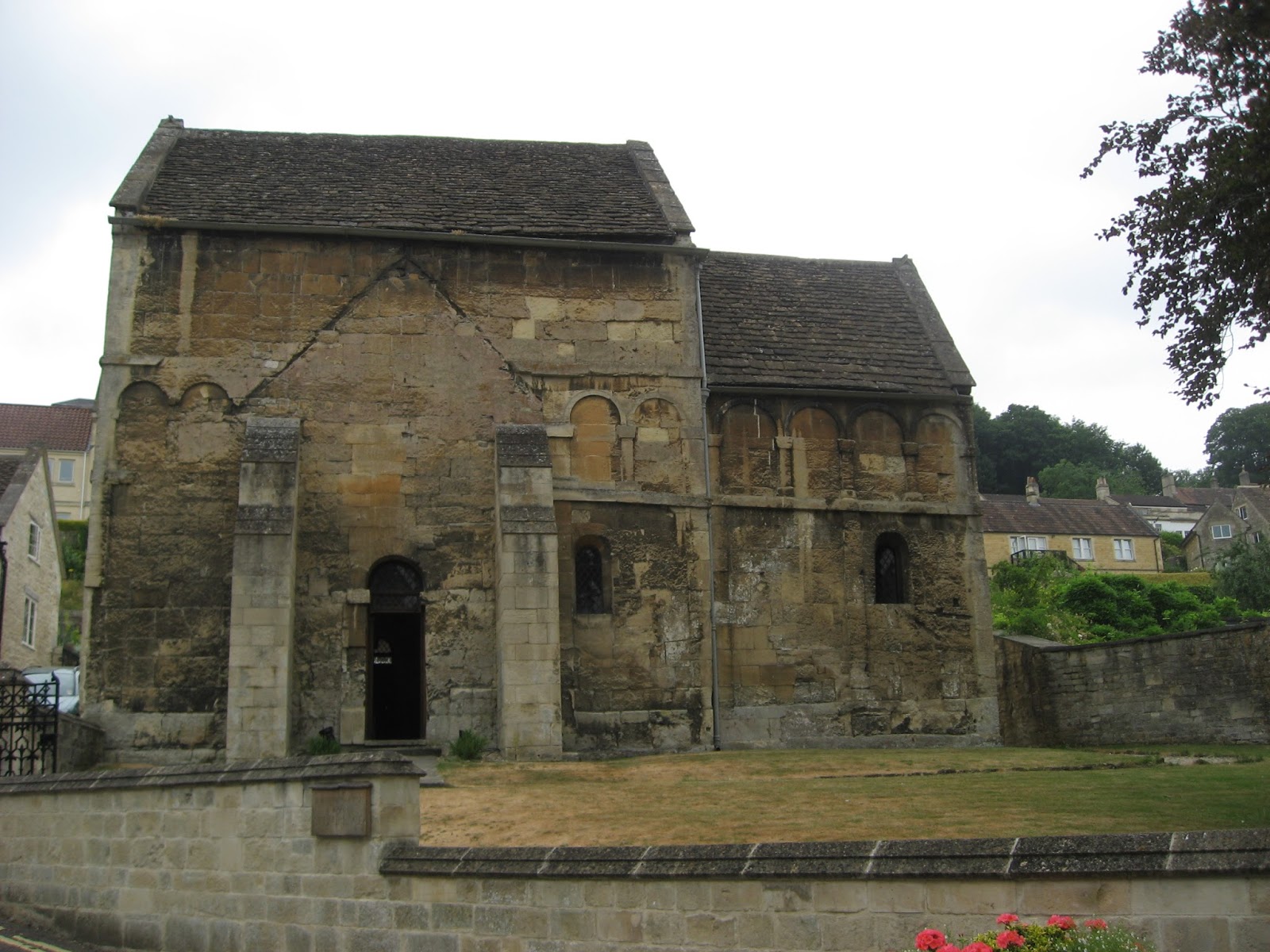
We recently visited the beautiful Anglo-Saxon church at Bradford-on-Avon, St Laurence's, which probably dates back to the 11th century, but there may have been a church on this site, or nearby, during Ethelfleda's era.  It is amazing that the building has survived at all; it was used as a boys' school during the nineteenth century. The church was restored during Victorian times.  As you stand within its cool stone walls, it has a wonderful, peaceful atmosphere all its own: a real 'sense of place'.


Images:

S.E. View of Chester Cathedral from the city walls. Engraving by Batenham for A Visit to the Cathedral Church of Chester, c. 1828.

St Laurence's Church, Bradford on Avon. 

© Sue Wilkes.

Thursday, 1 August 2013

Children of the Pits Exhibition

Last week we visited the 'Children of the Pits' exhibition at Radstock Museum. I was particularly looking forward to seeing the exhibition because it was inspired by my book The Children History Forgot, and we were not disappointed.

We were given a tremendous welcome by exhibition organiser Wendy Walker, researcher Anny Northcote and chairman Clem Maidment.


A big 'thank you' to everyone who took the time to chat to us, and particularly Wendy, who showed us round the museum.
The exhibition was put together by a team of researchers, and illustrated with photos and artefacts from the museum collection, and artwork by Kilmersdon Art Group. It shows the conditions endured by the young child miners of the Somerset coalfield in the nineteen and twentieth centuries.

Somerset was once a busy mining area, and even in comparatively modern times, young lads pulled sledges (putts) loaded with coal underground using the notorious 'guss and crook' (below), a harness made of rope (which went around the waist) and a chain, which was attached to the putt. 

In 1907 at Dunkerton, the carting boys went on strike for higher wages. The boys were paid one penny a ton for the first 50 yards they dragged the coal, then halfpenny per ton for each succeeding 50 yards. The loads they dragged weighed 10-12 tons; this type of work was done by machinery or animals in other areas.  One can imagine what hard, exhausting work it was. 

This was a long, bitter dispute: strikers were fired on by the mine manager's son, and the boys did not win any extra money. The 'guss and crook' was used in the Somerset area until the late 1940s.

The 'Children of the Pits' exhibition runs until the end of August.  There are lots of interesting displays showing how people in the Radstock area lived and worked, and some Napoleonic era artefacts.  Do drop in and visit if you get the chance.

The Children History Forgot explores working conditions for children in many different industries in the nineteeth century, and reformers' battles to improve their lives and help them go to school.
And if you would like to research your own ancestors' working lives when they were children, my new book Tracing Your Ancestors' Childhood will be out soon: you can pre-order it from Amazon or direct from Pen and Sword.

All photos © Sue Wilkes. My photos of the Museum's displays and exhibits taken by kind permission of Wendy Walker. 
Images:
Model of a young miner pulling a sled with the guss and crook at Radstock Museum.
Wendy Walker and Anny Northcote pictured at the museum with the exhibition poster and some artwork by Kilmersdon Art Group.
Guss and crook exhibit.
Photo of child miners in the 1900s - Radstock Museum exhibit (above left).
Pit winding gear wheel from Kilmersdon Colliery.
Radstock Museum (below).


Miner's cap and candle exhibit (right).  Miners carried a candle pushed into their cap for light.


Thursday, 25 July 2013

Trouble At T'Mill

A new drama, The Mill, airs on Channel 4 on Sunday 28 July. It's based on the true-life stories of Esther Price and Lucy Garner, two parish apprentices who lived and worked at Quarry Bank Mill, Cheshire. The drama was filmed at Quarry Bank Mill, which was owned by the Greg family. The Gregs built a school for their child workers. There's more info on the drama and clips here. I for one can't wait to see it!


Photo of Quarry Bank Mill © Sue Wilkes.