The new royal baby, Prince George, will be baptised on Wednesday 23 September at the Chapel Royal in St James's Palace. Although your ancestors are unlikely to have made their first public appearance in a blaze of publicity and media attention like the young prince, your ancestors' parents may have placed a birth notice in a local or national newspaper.
Publications such as the Gentleman's Magazine printed birth, marriage and death notices for the middle classes, gentry and aristocracy. Magazines like these can be very useful for tracing ancestors before civil registration was introduced, and before census records were kept.
However, the name of a person's wife and child is rarely given in old newspapers (see this example from the Gentleman's Magazine, below left): just the child's gender is usually mentioned.
Local record offices and archives keep copies of old newspapers, but it can be very time-consuming to search through these unless you know an approximate birth date already. However, you can now search many old newspapers online at websites like the British Newspaper Archive and Welsh Newspapers .
Baptisms were recorded in parish registers (local record offices) from 1538 onwards, and many local family history societies have transcribed parish registers. Familysearch and FreeReg are both useful free websites for searching for baptismal records, too. Remember that baptisms may have taken place several months or even years after they were born (one of my ancestor's children was baptised at Manchester Cathedral seven years after her birth!)
You can order birth certificates for children born after 1837 (when civil registration was introduced) from the General Register Office or local register offices (the latters' indexes are the most accurate). There's a list of sites offering access to the General Register Office indexes here, and some local indexes are listed at UK BMD. Children born in institutions like hospitals and workhouses were recorded in registers of births, too.
And of course, there's lots more info on how to find out more about your ancestor's baby days in Tracing Your Ancestors' Childhood.
Images:
Undated photo postcard of a child and baby. Author's collection.
Gentleman's Magazine, December 1827, Vol. XCVII, Part 2, Author's collection.
I'm an author specialising in family history, social history, industrial history and literary biography. Real stories; real people; real lives.
Search This Blog
Tuesday, 22 October 2013
Tuesday, 8 October 2013
A-Z of Earning A Living
Guilds like the London Livery Companies were founded during the medieval period, and there's a free online database of apprentices and freemen where you can check for your ancestors' names. Companies included at present are the Clothworkers, (1545-1908), Drapers (c.1400-1900), and the Mercers (1339-1900), with some data from the Goldsmiths' Company (1600-1700).Thousands of children worked during Victorian times: they worked as domestic servants, on the land, in coal mines, factories, and in metal manufactures, to name just a few. Many were apprentices, compulsorily bound to a master by the parish authorities.
The age at which your ancestor began work depended on the date; the 1944 Education Act raised the school leaving age to fifteen (an earlier attempt was forestalled by WW2).
In the September issue of Discover Your History, I discussed agricultural labourers, bakers, cotton workers, dockers, dyers and engineers. My feature in the new October issue explores the world of fishermen, gas workers, haberdashers, half-timers, hawkers, iron workers, jewellers and joiners. You'll have to buy the magazine to find out more!
Images from the author's collection:
Carpenters and joiners at work. French
engraving, c.1820.
Whitby fishermen, Punch,
23 September 1882.
Retorts at a Lancashire Gas Works. Lancashire Industrial & Commercial, 1935.
Labels:
Ancestors’ Childhood,
bakers,
carpenters,
Children History Forgot,
cotton,
dockers,
dyers,
engineers,
factories,
fishermen,
gas,
haberdashers,
half-timers,
hawkers,
iron workers,
livery companies,
schools
Friday, 27 September 2013
Tracing Your Ancestors' Childhood reviews
'Sue Wilkes has produced a very detailed book on how to trace your
ancestors’ childhood...The book is divided into two
parts. The first is in chapters, each dealing with issues that might
affect a child’s life; e.g. The Poor Law, Growing up at Work, Education
and, very topically, Children in Wartime. This detailed book will help to provide a broad brush picture of life for your ancestors as children in a particular period. The second part of the book is a Research Guide which lists many of
those Archives and Repositories. It lists useful addresses, twelve
pages of web-sites (some free!), Education Sources and more, under
helpful group headings...definitely one for your bookshelf to dip into now and in the future as a reference source'. Ann Gynes, FFHS, December 2013.
'Over the years, many books have described how children and young people lived in the past. Many others have shown us technically how to trace the lives of our ancestors of one sort or another. This book does both, pulling off the now fashionable - and, it must be said, deeply satisfying - meshing of the two genres of social history and genealogy with aplomb.
While Wilkes helpfully begins by recapping on the basic genealogical sources (censuses, certificates and parish records), these soon take an almost subsidiary place among a panoply of other illuminating records from the archives. From cradle rolls and vaccination records, to school exemption certificates, apprenticeship books and records of transportation, 19th and 20th century sources for the study of childhood and youth seem endless...
The eight chapters of part one, themed around different aspects of social history, are vibrantly written, peppered with examples and 'case studies' of real youngsters who grin or grimace briefly at us from the records.
The second half of the book is an unrivalled resource pack for the family historian on the location and accessibility of relevant archives and repositories, as well as list of useful websites, addresses and places to visit...
While child mortality is obviously discussed, the emphasis here is on the way young people of the past survived and triumphed over their varied early experiences, to the point where they grew up and were able to become our ancestors'. Ruth A. Symes, Who Do You Think You Are?, November 2013.
Monday, 2 September 2013
When Did Your Ancestor Leave School?
The school leaving age in the UK has changed to 17 years; there's more info here. The age when your ancestor was allowed to leave school and start work was critical for working-class families if they were on the breadline, because then young people could earn a full week's wage for the family. Boys from more affluent homes could go on to university if their parents could afford it; it was not until the late 1870s that the first women were permitted to study for a degree.
If you are trying to trace your ancestor's childhood, then it's a good idea to check what the school leaving age was at the date you are interested in, because that will determine whether you should look for school records such as registers, or employment records, e.g. wage books.
But there may be a period of overlap because children who reached a set educational standard were allowed to work part-time, and you may find school exemption certificates (above) amongst family papers or in local archives.
You may be surprised how young your ancestor was when they began full-time work; the 1918 Education Act raised the school leaving age from 12 to 14. As late as 1861, although the minimum age of starting work in a coal mine was nominally age twelve, ten- to twelve-year-old lads were permitted to work underground if they had a school certificate to prove that they had reached a sufficiently high standard of literacy.
Images:
Girl with slate and schoolbook. Early twentieth century postcard. Author’s collection.
Collier’s phthisis. A Manchester doctor’s sketch of ‘black lung’ from a 65 year old collier. Reports of the Factory Inspectors, 31 October 1871.
If you are trying to trace your ancestor's childhood, then it's a good idea to check what the school leaving age was at the date you are interested in, because that will determine whether you should look for school records such as registers, or employment records, e.g. wage books.
But there may be a period of overlap because children who reached a set educational standard were allowed to work part-time, and you may find school exemption certificates (above) amongst family papers or in local archives.
You may be surprised how young your ancestor was when they began full-time work; the 1918 Education Act raised the school leaving age from 12 to 14. As late as 1861, although the minimum age of starting work in a coal mine was nominally age twelve, ten- to twelve-year-old lads were permitted to work underground if they had a school certificate to prove that they had reached a sufficiently high standard of literacy.
Images:
Section of a school exemption certificate dated 4 April 1894 permitting a Manchester schoolchild to work one day per week.
Girl with slate and schoolbook. Early twentieth century postcard. Author’s collection.
Collier’s phthisis. A Manchester doctor’s sketch of ‘black lung’ from a 65 year old collier. Reports of the Factory Inspectors, 31 October 1871.
Friday, 23 August 2013
A Mighty Anglo-Saxon Lady
It was nice to see Chester featured on episode 2 of Michael Wood's series on King Alfred and the Anglo-Saxons; I am really enjoying the series. In about 908 the Lady of the Mercians, Ethelfleda, rebuilt the abbey at Chester, which was dedicated to St Werburgh. It was probably on the site of today's Chester Cathedral. The abbey was rededicated to St Oswald and St Werburgh, and a set of secular canons put in the place of the nuns who lived there. The nuns are said to have taken refuge in St Mary's Convent nearby. Ethelfleda refortified the city walls, too.
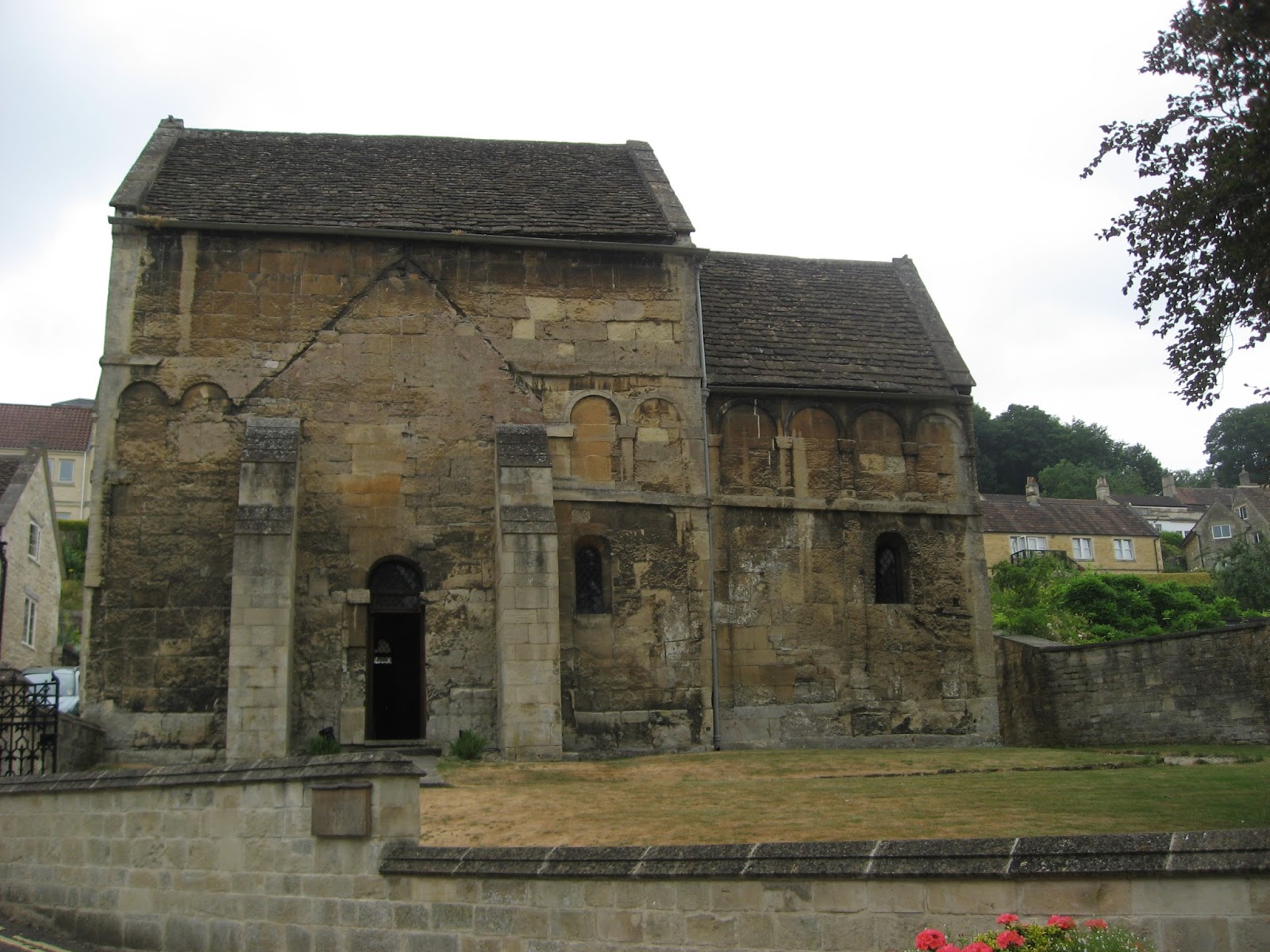
We recently visited the beautiful Anglo-Saxon church at Bradford-on-Avon, St Laurence's, which probably dates back to the 11th century, but there may have been a church on this site, or nearby, during Ethelfleda's era. It is amazing that the building has survived at all; it was used as a boys' school during the nineteenth century. The church was restored during Victorian times. As you stand within its cool stone walls, it has a wonderful, peaceful atmosphere all its own: a real 'sense of place'.
Images:
S.E. View of Chester Cathedral from the city walls. Engraving by Batenham for A Visit to the Cathedral Church of Chester, c. 1828.
St Laurence's Church, Bradford on Avon.
© Sue Wilkes.
Thursday, 1 August 2013
Children of the Pits Exhibition
We were given a tremendous welcome by exhibition organiser Wendy Walker, researcher Anny Northcote and chairman Clem Maidment.
A big 'thank you' to everyone who took the time to chat to us, and particularly Wendy, who showed us round the museum.
The exhibition was put together by a team of researchers, and illustrated with photos and artefacts from the museum collection, and artwork by Kilmersdon Art Group. It shows the conditions endured by the young child miners of the Somerset coalfield in the nineteen and twentieth centuries.
In 1907 at Dunkerton, the carting boys went on strike for higher wages. The boys were paid one penny a ton for the first 50 yards they dragged the coal, then halfpenny per ton for each succeeding 50 yards. The loads they dragged weighed 10-12 tons; this type of work was done by machinery or animals in other areas. One can imagine what hard, exhausting work it was.
This was a long, bitter dispute: strikers were fired on by the mine manager's son, and the boys did not win any extra money. The 'guss and crook' was used in the Somerset area until the late 1940s.
The 'Children of the Pits' exhibition runs until the end of August. There are lots of interesting displays showing how people in the Radstock area lived and worked, and some Napoleonic era artefacts. Do drop in and visit if you get the chance.
The Children History Forgot explores working conditions for children in many different industries in the nineteeth century, and reformers' battles to improve their lives and help them go to school.
And if you would like to research your own ancestors' working lives when they were children, my new book Tracing Your Ancestors' Childhood will be out soon: you can pre-order it from Amazon or direct from Pen and Sword.
All photos © Sue Wilkes. My photos of the Museum's displays and exhibits taken by kind permission of Wendy Walker.
Images:
Model of a young miner pulling a sled with the guss and crook at Radstock Museum.
Wendy Walker and Anny Northcote pictured at the museum with the exhibition poster and some artwork by Kilmersdon Art Group.
Guss and crook exhibit.
Photo of child miners in the 1900s - Radstock Museum exhibit (above left).
Pit winding gear wheel from Kilmersdon Colliery.
Radstock Museum (below).
Subscribe to:
Posts (Atom)